tampatra/iStock via Getty Images
tampatra/iStock via Getty Images
Almost one year ago, Kazuo Ueda assumed his current position as the Governor of the Bank of Japan (BOJ).
He was replacing Haruhiko Kuroda, who served for ten years as the BOJ Governor, and was instrumental in pushing Japan’s ultra loose monetary policy by aggressively executing Quantitative Easing through increasing Japanese Government Bond (JGB) purchases, lowering the BOJ policy rate to negative territory at -0.1%, and implementing the Yield Curve Control Policy (YCC) which set a target yield for the 10-year JGB at 0.0%.
These measures were reasonable when initiated, because Japan was experiencing a period of low inflation, with Core Core CPI in a range between 1.0% to -1.0%. However, by the end of Kuroda’s term, these loose policies were no longer appropriate.
Trading Economics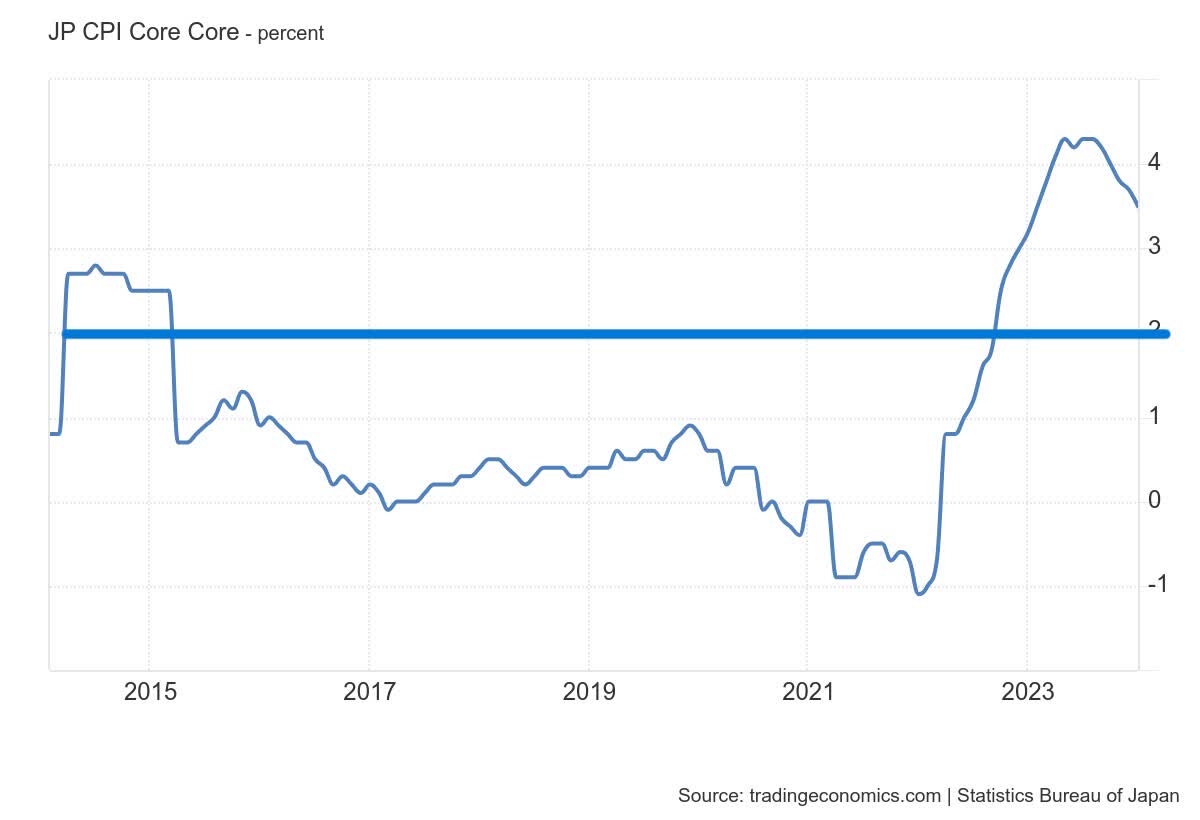
Core Core CPI had spiked above the 2.0 % target by September 2022, then as pressure from speculators built that BOJ would raise rates, BOJ was pushed to expand their JGB purchases above their monthly goal to keep yields within their YCC framework.
BOJ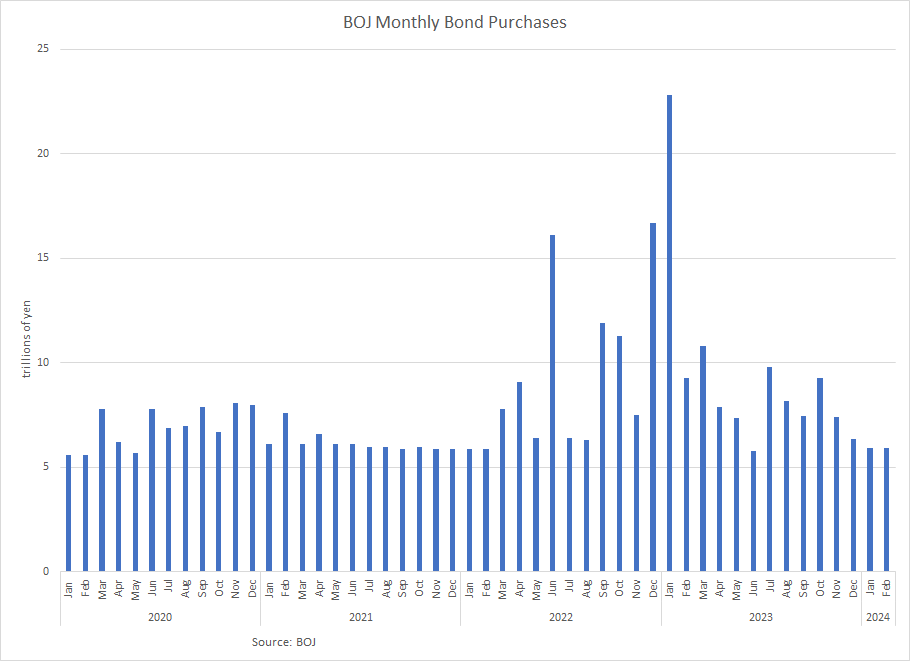
When that wasn’t enough, in December 2022, in a surprise move, Kuroda was forced to widen the YCC band by doubling it from +/- 25 basis points to +/- 50 basis points.
By the time Ueda assumed his current role in April 2023, there were many reasons for the BOJ to abandon their loose money policies. But Ueda, in his first Policy Meeting as BOJ Governor, decided to do nothing.
Ueda’s first action as BOJ Governor came in July 2023, when BOJ “tweaked” policy by doubling again the YCC band, increasing it to +/- 100 basis points around the target rate of 0.0%.
BOJ and Bloomberg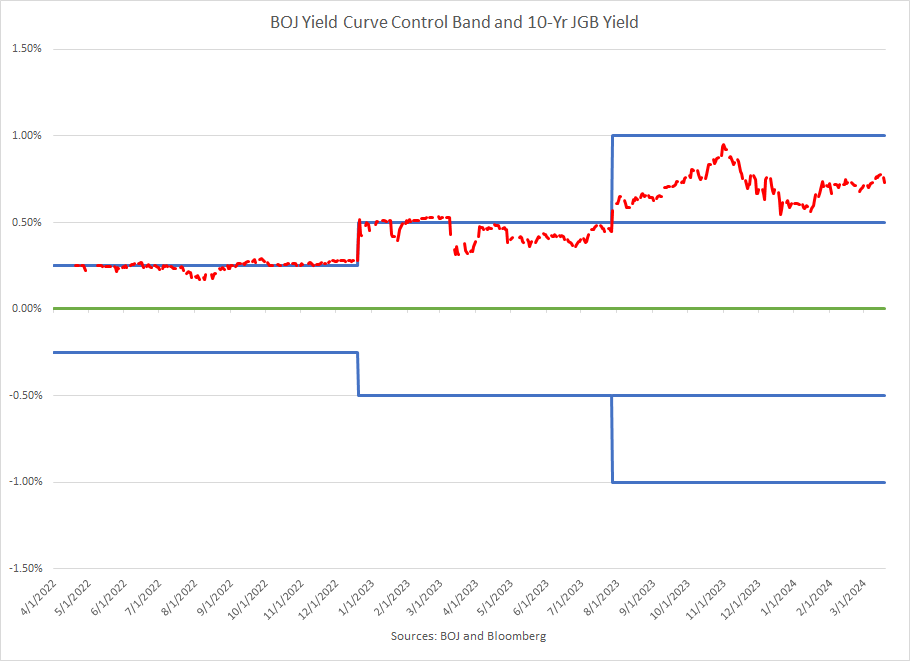
Ten-year JGB yields quickly climbed to the top end of the new band, again exerting pressure for policy action.
Although Core Core CPI showed modest improvement after peaking at 4.3% in August 2023, it remained stubbornly high, above the 2.0% target for 18 consecutive months.
At the March 19, 2024 Monetary Policy Meeting, the Policy Board of the BOJ, in a 7-2 vote, succumbed to the existing pressures and raised short rates from -0.1% to 0.1%
Bank of Japan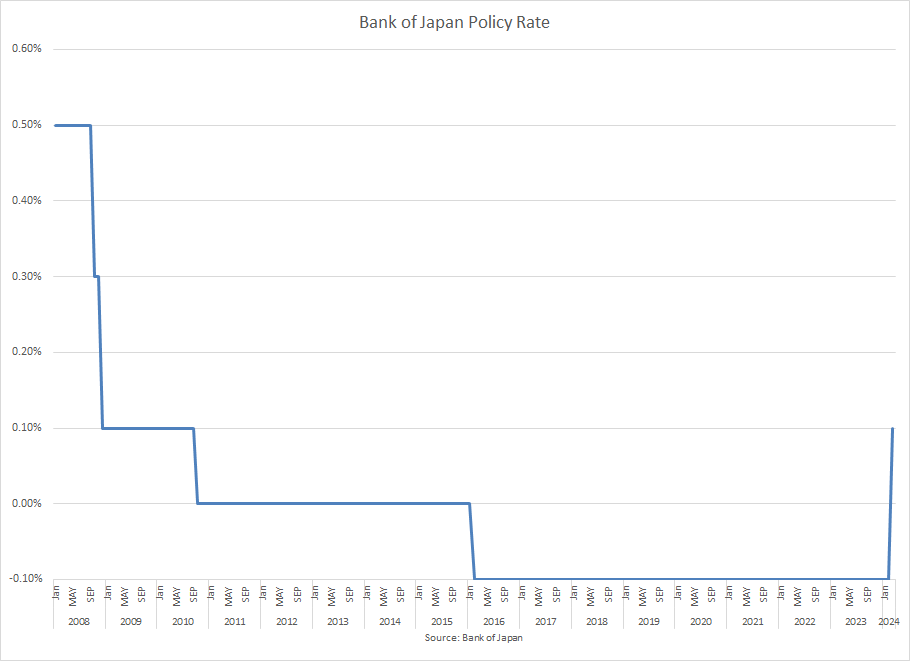
With this move the BOJ became the last central bank to exit a Negative Interest Rate Policy. Short rates had been negative for eight years.
The BOJ move was also their first rate hike in seventeen years.
It also signaled the end to the most aggressive monetary stimulus program in modern history.
The primary catalyst for the BOJ policy move was a sharp increase in wages.
Rengo, the country’s largest union group, which represents 771 unions, announced first round results to annual wage negotiations, which increased by 5.3%, wildly exceeding expectations. This was the biggest gain in thirty-three years.
Japanese Trade Union Confederation, Rengo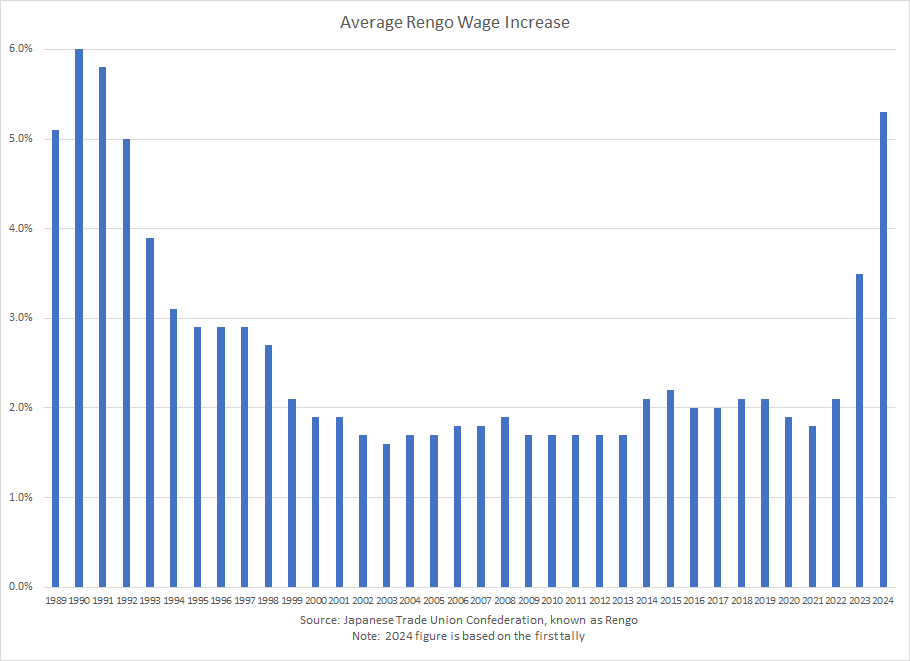
While inflation, as measured by Core Core CPI has been stubbornly strong for quite some time, Ueda was reluctant to make a change until he was convinced inflation on the labor side was equally sustained above 2.0%. The initial Rengo wage hikes at 5.3% convinced him.
In addition to hiking the base rate to the range of 0.0% to 0.1%, the BOJ announced several other changes to policy.
-BOJ will abolish YCC.
-BOJ will stop buying Exchange Traded Funds and Japan Real Estate Investment Trusts.
-BOJ will gradually reduce purchases of Commercial Paper and Corporate Bonds, and will end purchases in one year.
-BOJ will provide loans under Fund-Provisioning Measure to Stimulate Bank Lending at 0.1% for one year.
-BOJ will pay interest of 0.1% to Current Account Balances of financial institutions excluding Required Reserves.
Ueda was careful to signal that policy would remain accommodative. BOJ will continue with its JGB purchases in broadly the same amount as before. They reserve the right “in case of a rapid rise in long-term interest rates, it will make nimble responses ..(by) increasing the amount of JGB purchases … regardless of the monthly schedule.”
There were no indications of future rate hikes.
The Japanese Yen was not impressed with the policy change, as it slumped to 151.8, its weakest level since 1990.
Bloomberg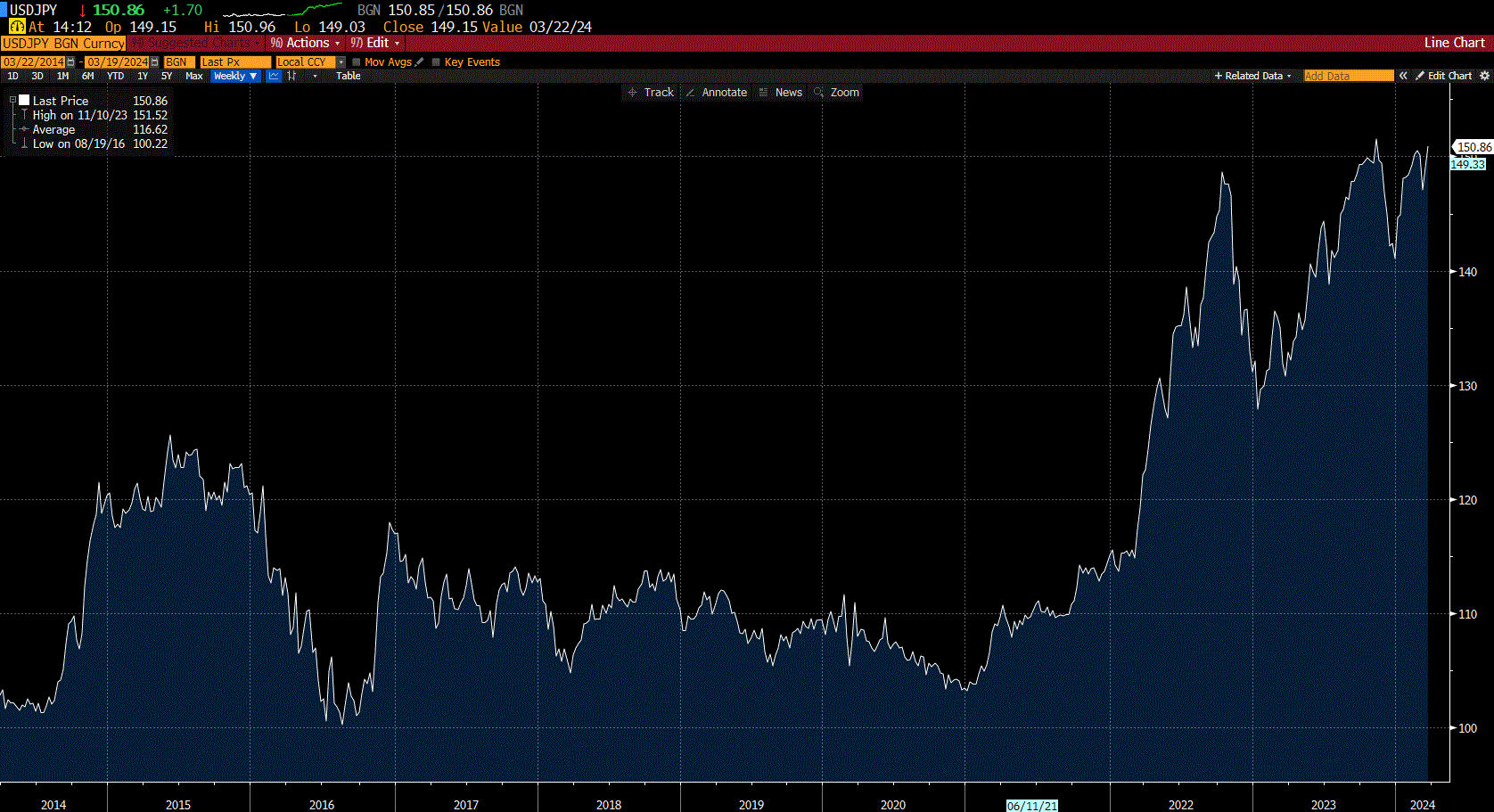
This step is viewed as a dovish hike, with traders now focusing on the gap between US Treasury and JGB bond yields.
In addition, the continued JGB purchases will only increase the BOJs dominant share of JGB ownership. Currently, the BOJ owns 54% of all outstanding JGBs. When Kuroda came to office and aggressively started loosening monetary policy, BOJ only owned 11% of the JGB market.
Bloomberg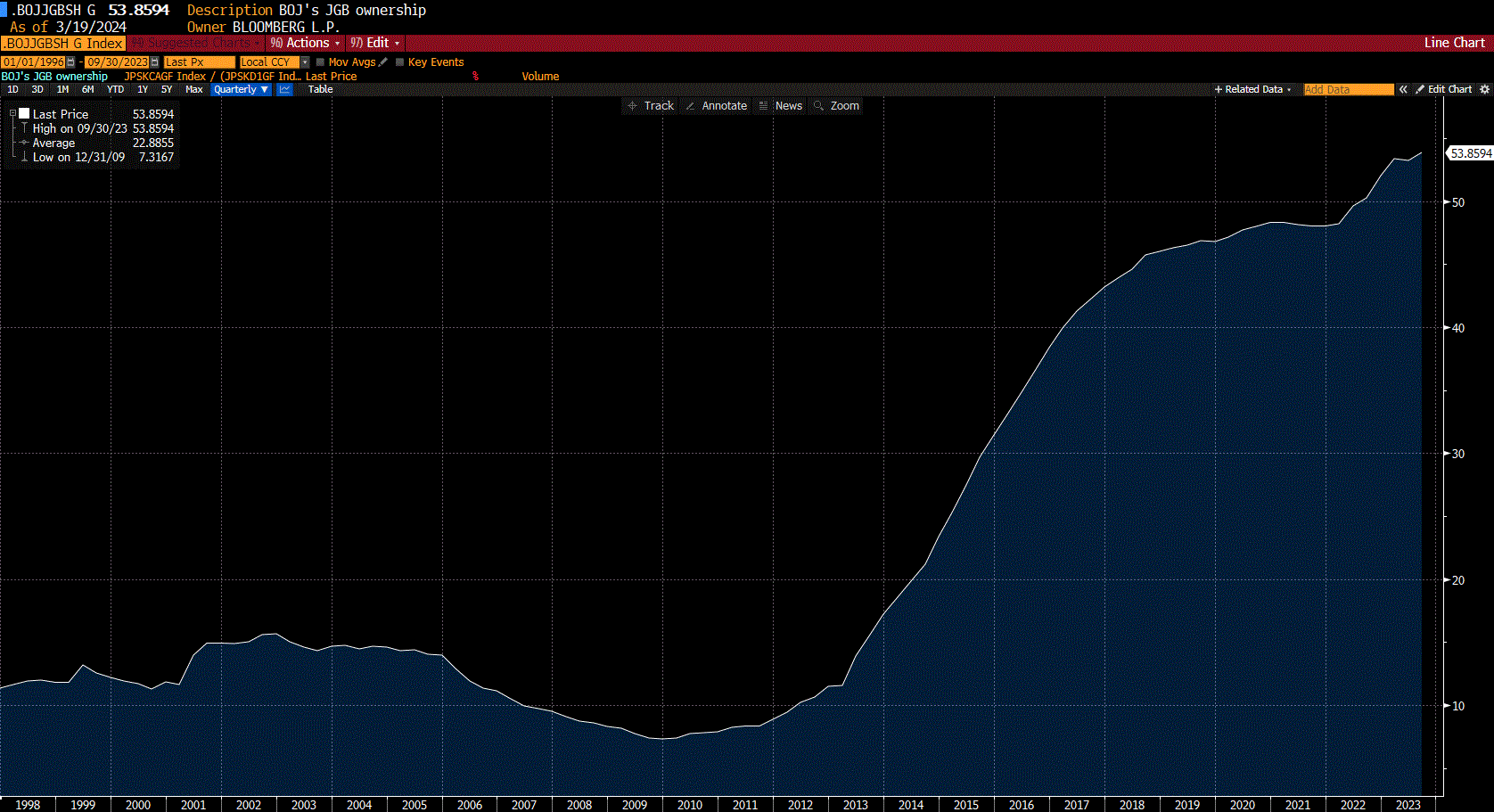
Since Ueda became BOJ Governor, interest rates in Japan have risen significantly. Along the JGB yield curve, short rates have risen by 20 basis points, going from negative yields to 0.06%. The 10-year JGB yield, no longer under the oppressive YCC, has risen by 43 basis points, more than doubling to 0.73%. And 30 year JGB yields have increased by 55 basis points to 1.81%
Bloomberg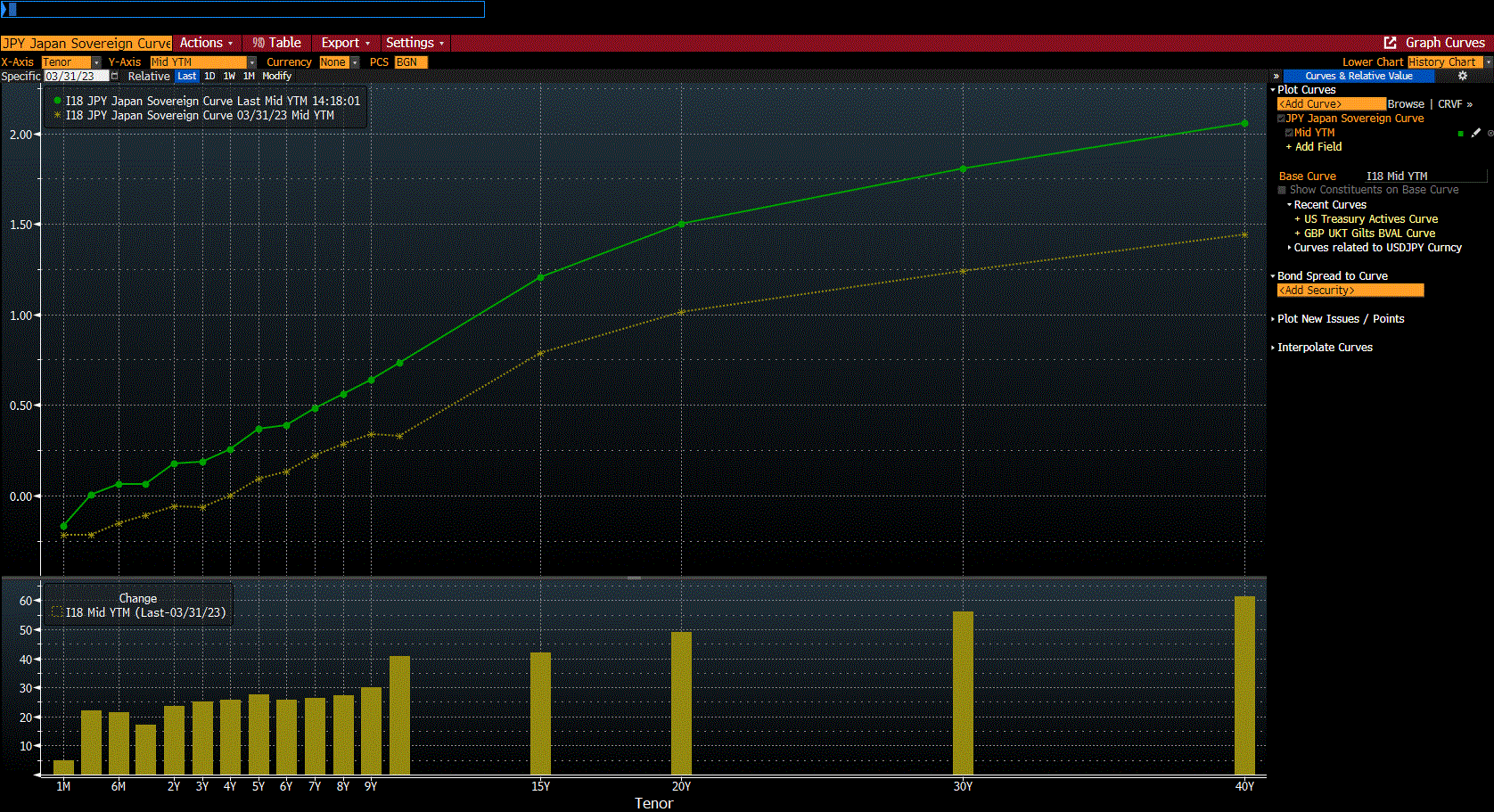
With inflation remaining above target, and yield gaps with U.S. Treasury bonds still wide, there is risk to JGB yields rising further.
BOJ has shown no indication of balance sheet reduction, which is the step other central banks have taken to Policy Normalization.
This is a concern for BOJ, as they already have the largest relative balance sheet among the major central banks.
BOJ’s total assets are 756 trillion yen, which equate to 127% of GDP. By contrast, the Fed’s huge balance sheet of $7.5 trillion is only 29% of GDP. Proportionally, the BOJ is 4.5 times larger than the Fed, and growing while the Fed is shrinking.
Fred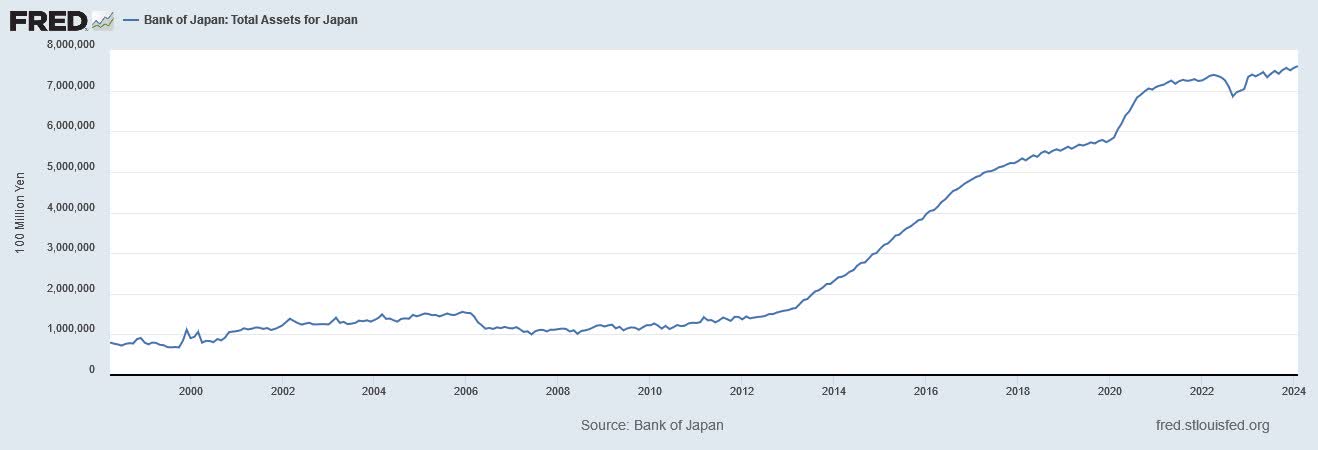
As the BOJ remains accommodative, despite their raising rates, the Yen may continue to weaken.
Ueda has indicated that BOJ will move slowly, although more needs to be done.
Deeply negative real rates and the weakness in the yen support further rate hikes.