
Peach_iStock
Peach_iStock
This article was coproduced with Leo Nelissen.
It's time to combine two important things:
Starting with the first bullet point, one of the biggest macroeconomic developments we have been discussing since 2021 is elevated inflation.
In 2021, I was in the camp of people who expected inflation to rise faster than the market anticipated. That turned out to be correct - unfortunately.
Since last year, I have been among the people who believe that we are in a new environment of prolonged elevated rates and sticky inflation. Initially, it looked like I was dead wrong, as inflation came down rather quickly.
However, that didn't last, as the market is now getting used to the idea that inflation is here to stay.
As we can see below, inflation has worked its way through the economy. Even without energy and food inflation, inflation is stuck close to 3%, as services inflation now accounts for almost the entire surge in inflation.
Bloomberg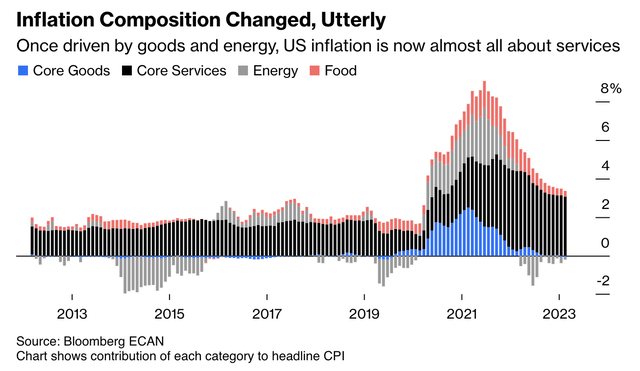
Even worse, the market is pricing in a higher-for-longer scenario as well, as the 5-year breakeven inflation rate is stuck close to 2.4%. Before the pandemic, that number was consistently below 2.0%.
TradingView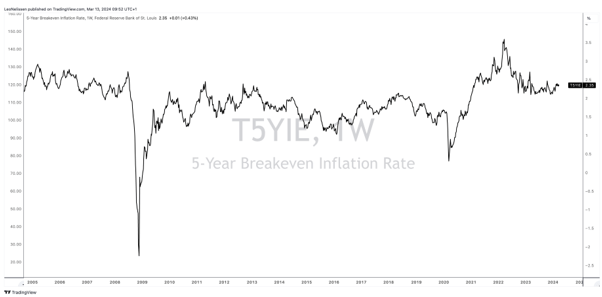
Essentially, this means that the market expects inflation over the next five years to average 2.4%. That's 40 basis points above the Fed's target.
Although I would be lying if I said I wasn't glad that my thesis is working out as expected, I'm not rooting for elevated inflation.
After all, it would create a scenario where the Fed has to keep rates at elevated levels for longer, putting more stress on the economy.
Hence, in a just-released article, the Wall Street Journal asked a very important question.
"The Fed's Challenge: Has It Hit the Brakes Hard Enough"?
Wall Street Journal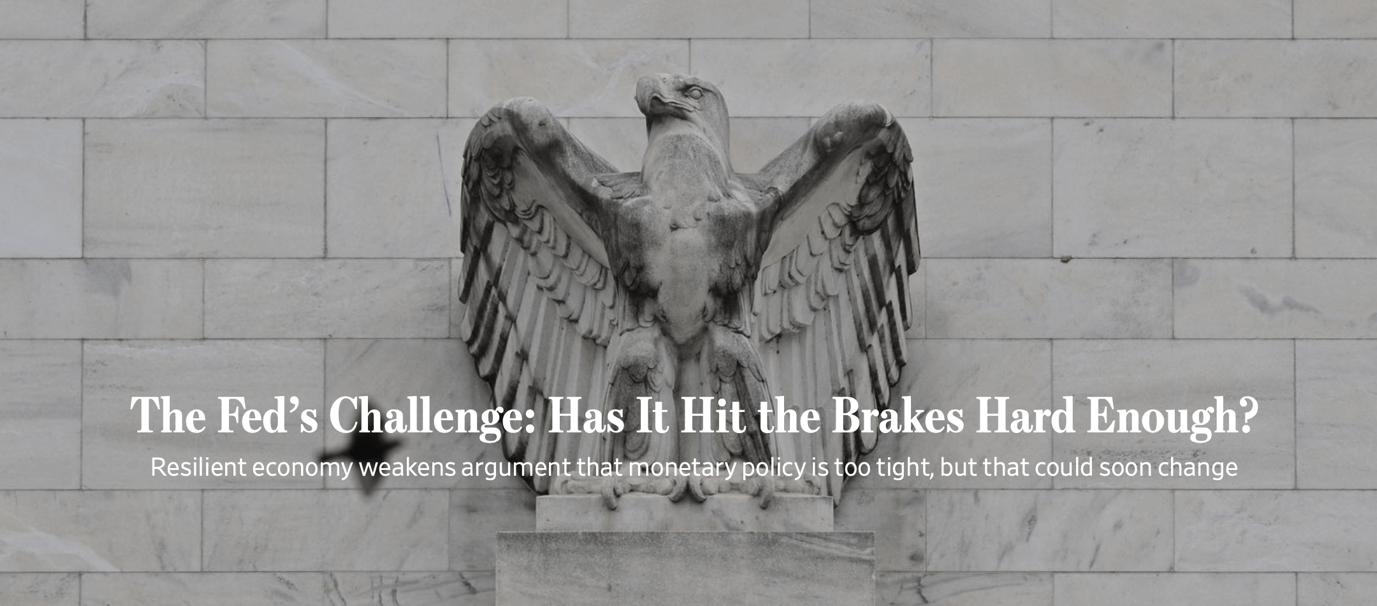
While recent inflationary pressures suggest caution, indicators like the Federal funds rate target and consumers' resilience argue against significant rate cuts.
Moreover, the effectiveness of the Fed's past rate hikes in curbing inflation and moderating economic growth will likely become clearer in the coming months.
After all, the Fed isn't just trying to fight inflation, but it also needs to keep the economy from suffering.
The Fed is dealing with a very tricky mix of tailwinds and headwinds, including factors like elevated government spending, a tight housing market, and declining credit conditions.
In other words, the Fed's aggressive rate hikes did not impact the economy the way it intended.
via Twitter (@FrogNews)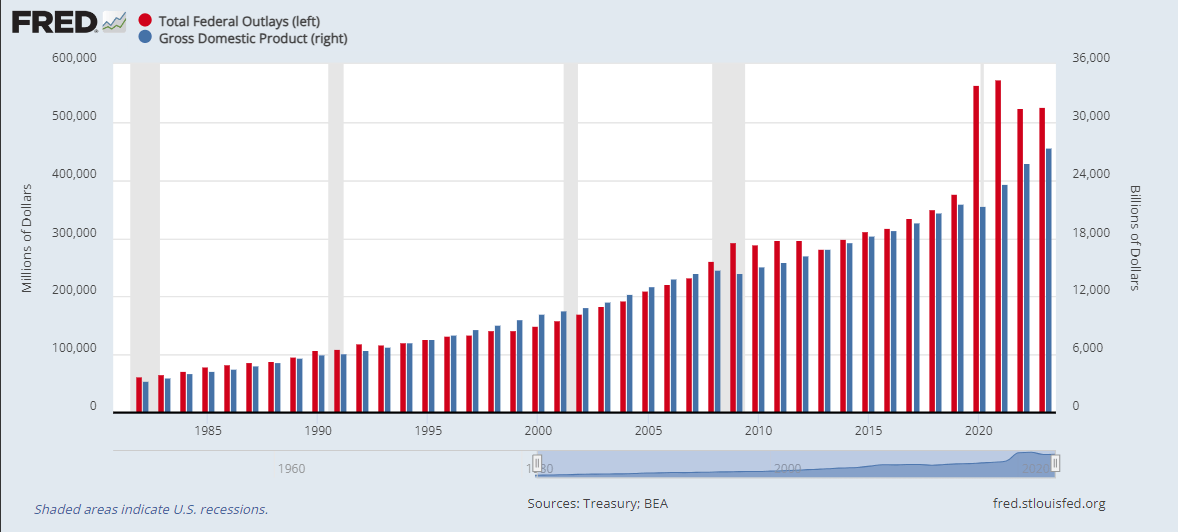
However, while certain economic indicators point to strength, including rising housing prices and a booming stock market, others signal potential weakness.
Commercial real estate values have weakened, and banks are increasingly careful when it comes to consumer lending.
Especially lower-income households face financial strain as pandemic savings buffers are depleted.
For example, credit card delinquencies are at new post-Great Financial Crisis highs in every income segment. We have clearly gone from post-pandemic normalization to "something is not right."
Bloomberg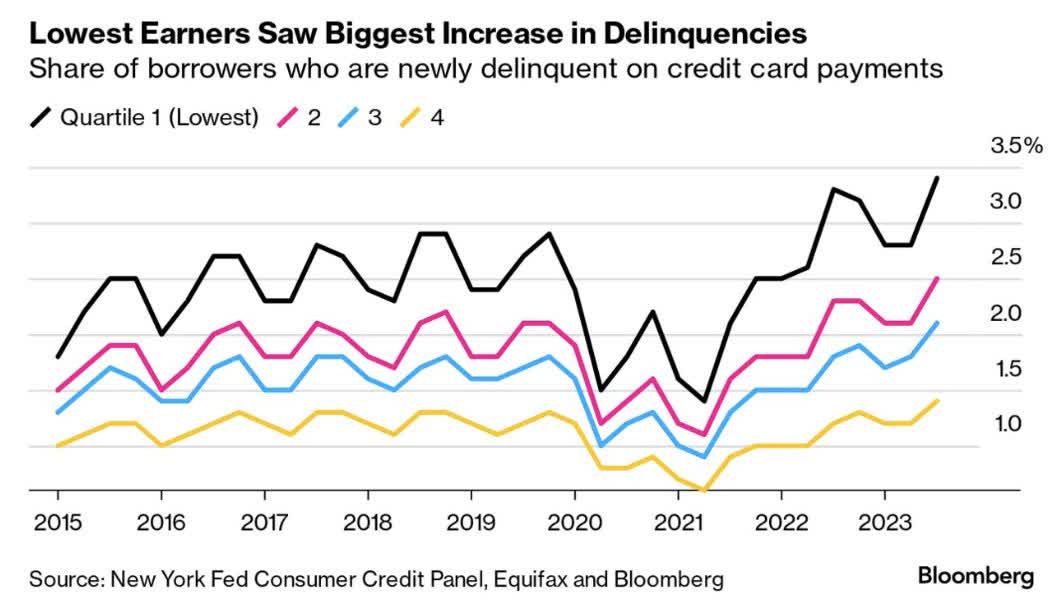
In the meantime, we're also seeing cracks in other areas, including full-time employment. Excluding the pandemic, the U.S. is witnessing the steepest decline in full-time employment since the Great Financial Crisis.
Twitter (@spomboy)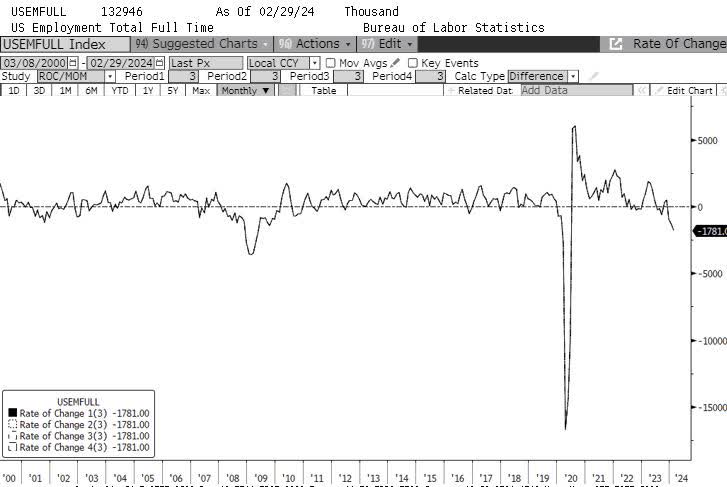
In other words, the Fed is running out of time. It has to keep up the fight against inflation while keeping the economy from weakening too much.
I believe the road ahead could be very bumpy, as the Fed is on a path to potentially "break something."
The longer it takes to fight inflation, the bigger the pressure on commercial real estate, consumers, government lending, and other areas.
Sure, inflation may come down to 2% and stay there. However, I don't think that's likely.
Compared to pre-pandemic years, we have a number of inflation tailwinds, including structural employment shortages, economic re-shoring, a split between the West and non-West nations, and slower oil supply growth, among other issues.
Hence, I'm increasingly careful when it comes to investing.
For example, I stay away from stocks with unhealthy balance sheets.
However, I am not selling anything. Despite elevated risks, I continue to be a long-term investor, as I believe that time in the market always beats timing the market.
With all of this in mind, one great strategy to lower overall portfolio risks without giving up the chance to beat the market is low-volatility investing.
Essentially, low-volatility investing is about generating superior returns with subdued risks.
This may sound too good to be true.
However, it's true.
Basically, low volatility investing, also known as low-vol investing, is an investment strategy that focuses on selecting stocks with historically lower price volatility compared to the broader market.
For example, in 2021, CIBC Asset Management wrote a paper on the "low volatility effect."
They found that empirical research has shown that stocks with lower volatility historically outperform stocks with higher volatility on a risk-adjusted basis.
Between April 1995 and August 2021, the S&P Global Low Volatility Index beat the MSCI World Index by a huge margin!
In other words, not only did investors beat the market on a risk-adjusted basis, but they also beat the market outright.
Corporate Finance Institute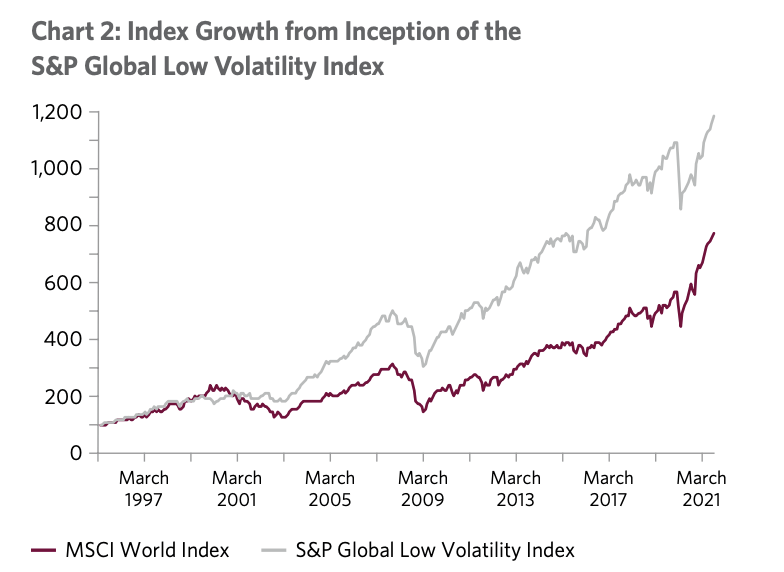
To measure risk-adjusted returns, we can use the Sharpe Ratio. This ratio compares the return on an investment with its risk.
For example, if you have two investments that each return 10% per year, you will always pick the one with a lower risk profile. The Sharpe Ratio makes it easy to compare assets on a risk-adjusted basis, as we can see that it relies on the risk-free rate of return and the standard deviation of an asset.
Corporate Finance Institute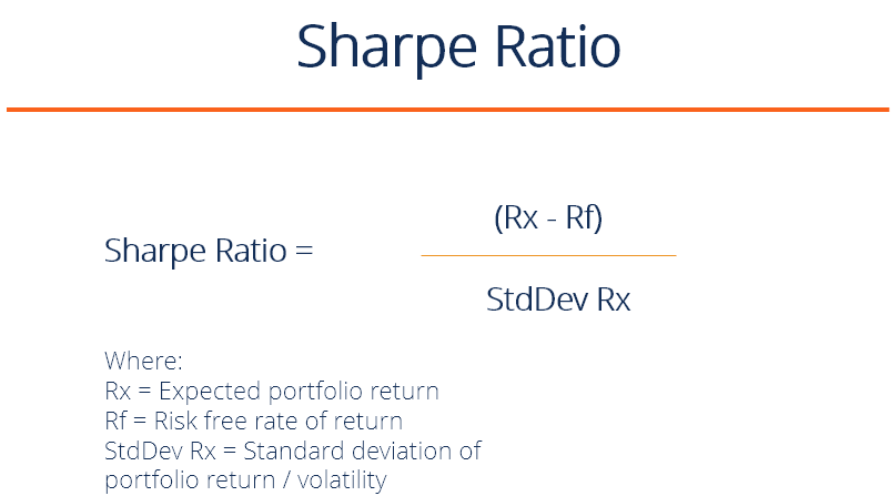
As we can see below, low-vola stocks have the best Sharpe Ratio on the market, beating "quality" by a wide margin.
CBIC Asset Management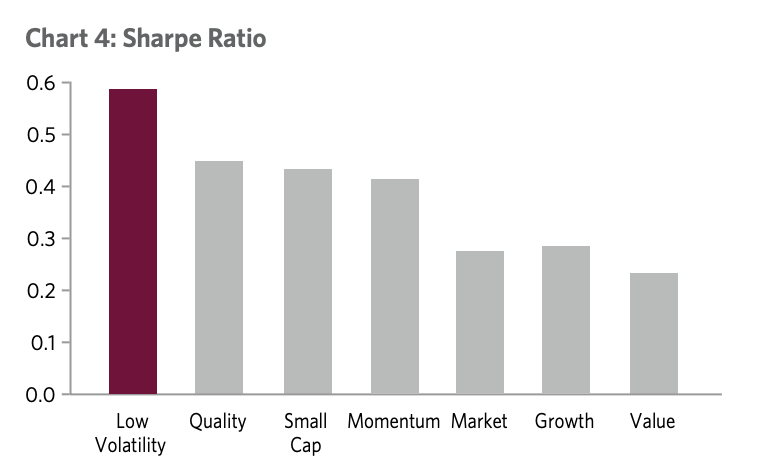
MSCI Inc. (MSCI) confirms this, as it shows that low-volatility stocks not only beat the MSCI World index on a long-term basis but also beat the index during every single recession.
MSCI Inc.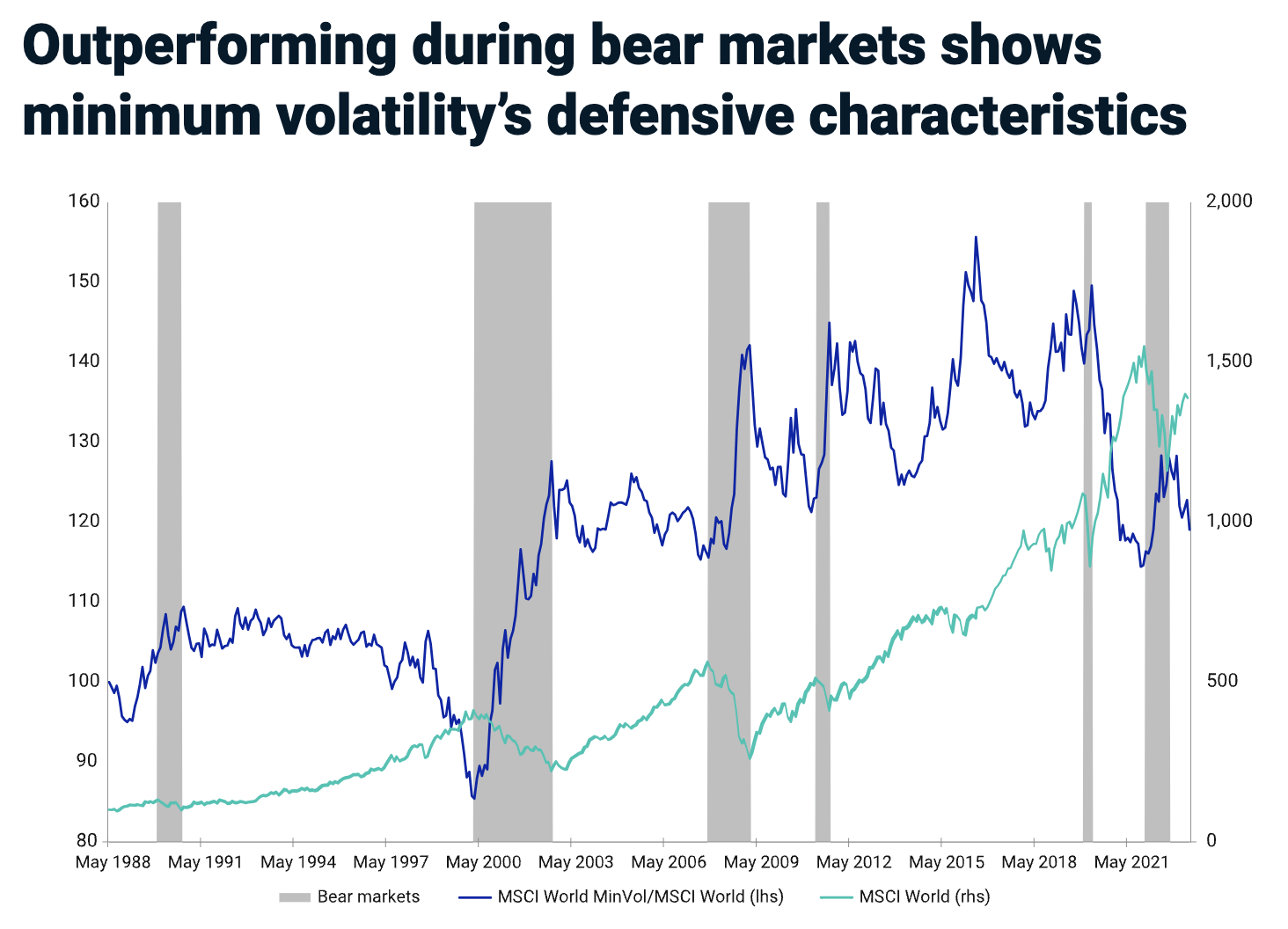
Even better, CIBC makes the case that some low-volatility strategies, especially those combined with dividend investing, can provide a steady income stream.
Dividend-paying stocks, often included in low-volatility portfolios, tend to be associated with quality characteristics, such as consistent profitability and strong cash flows, making them attractive for income-oriented investors.
In other words, if we can combine low-volatility attributes with steadily rising income, we can, technically speaking, build a fantastic portfolio!
By now, you're probably wondering where to find good low-volatility stocks.
One great way to start is by looking under the hood of the iShares MSCI USA Min Vol Factor ETF (USMV). This ETF has $25 billion in assets under management, or AUM, making it one of the biggest ETFs on the market - across all themes.
The objective of this ETF is to track the investment results of U.S. equities that have lower volatility than the broader market.
Holding 165 stocks, the ETF is highly diversified, as its largest holding, Broadcom (AVGO), accounts for just 2.0% of the total value.
iShares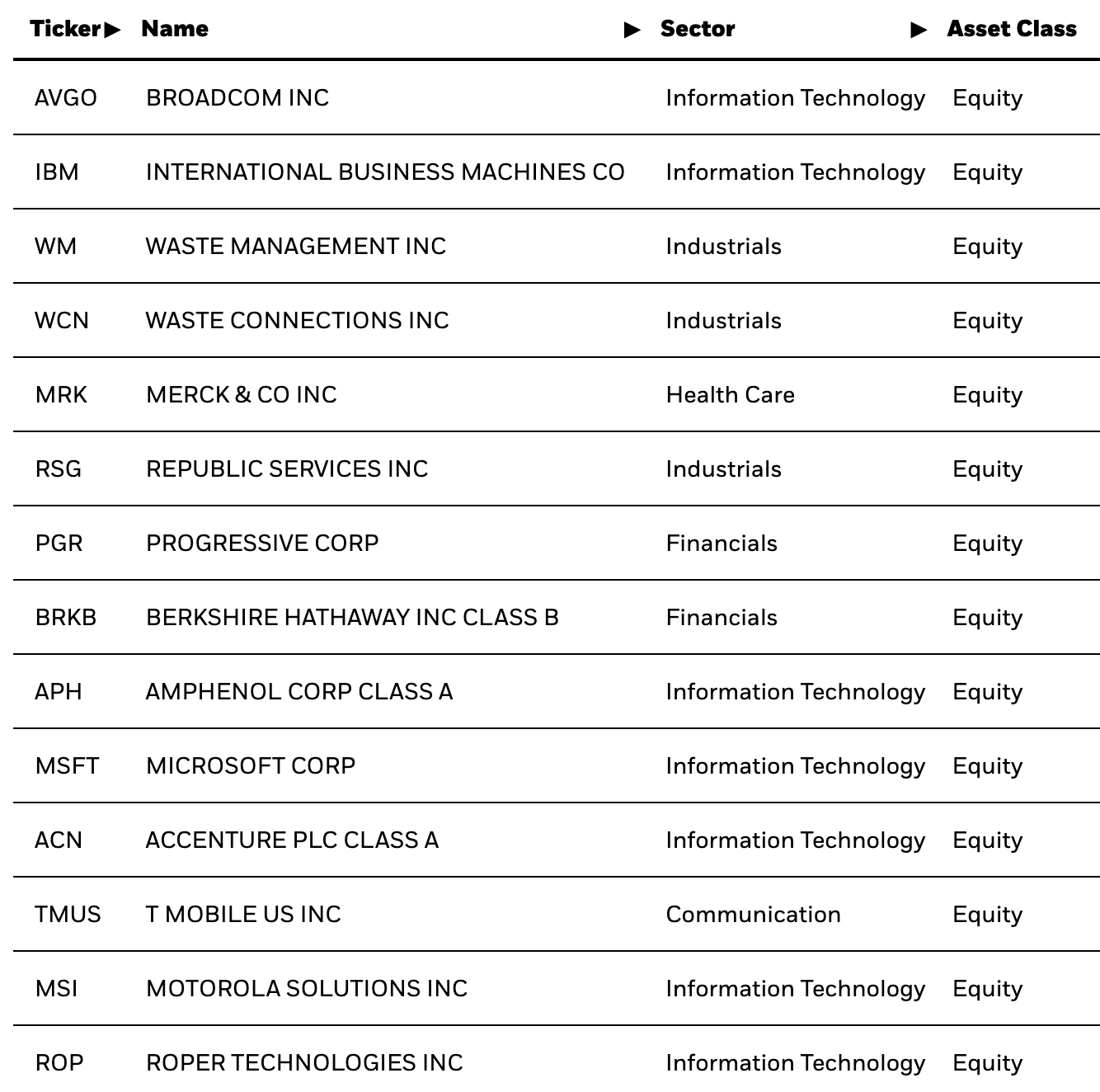
When looking at its largest holdings, a few things come to mind:
In fact, a quarter of holdings are information technology holdings, followed by healthcare, financials, and defensive consumer staples.
iShares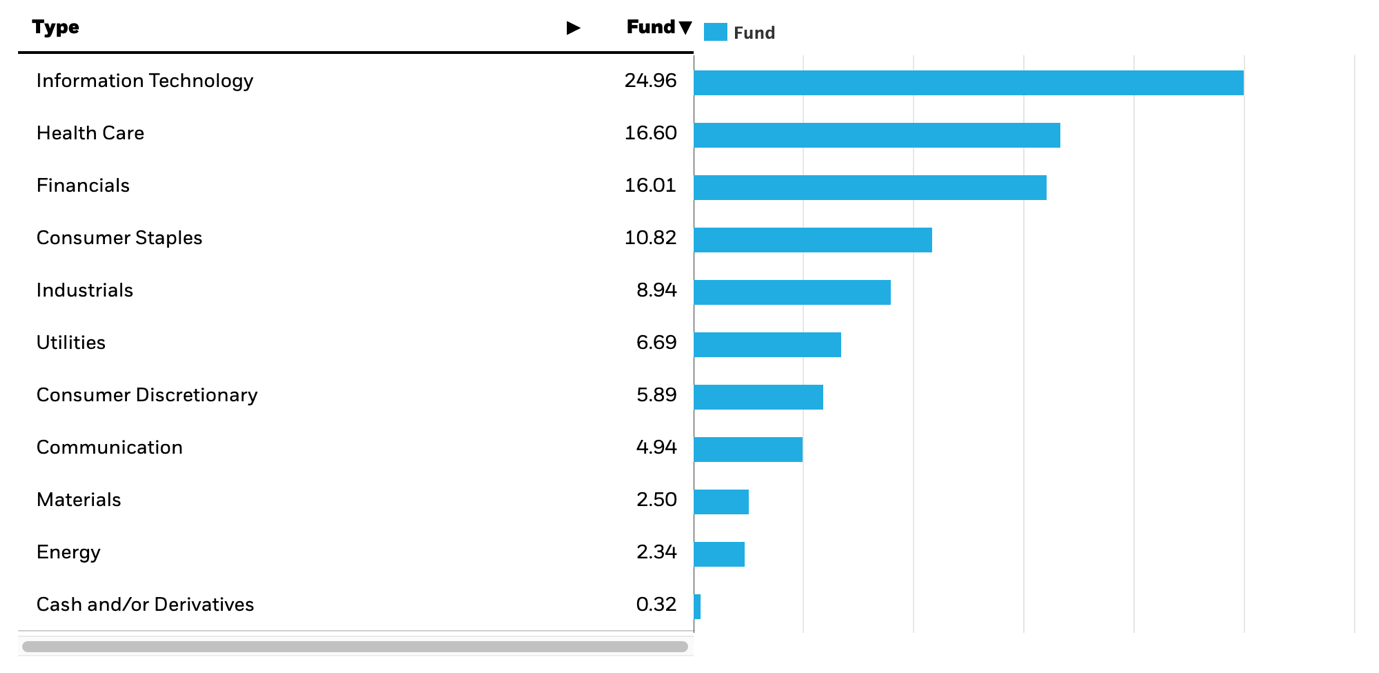
Based on this context, let me show you ten of my all-time favorite low-volatility stocks. I either own these stocks or have them on my watchlist. Although I cannot go into depth in this article (it would get way too long), I'll provide some info on what makes these picks special for further research.
Equity LifeStyle Properties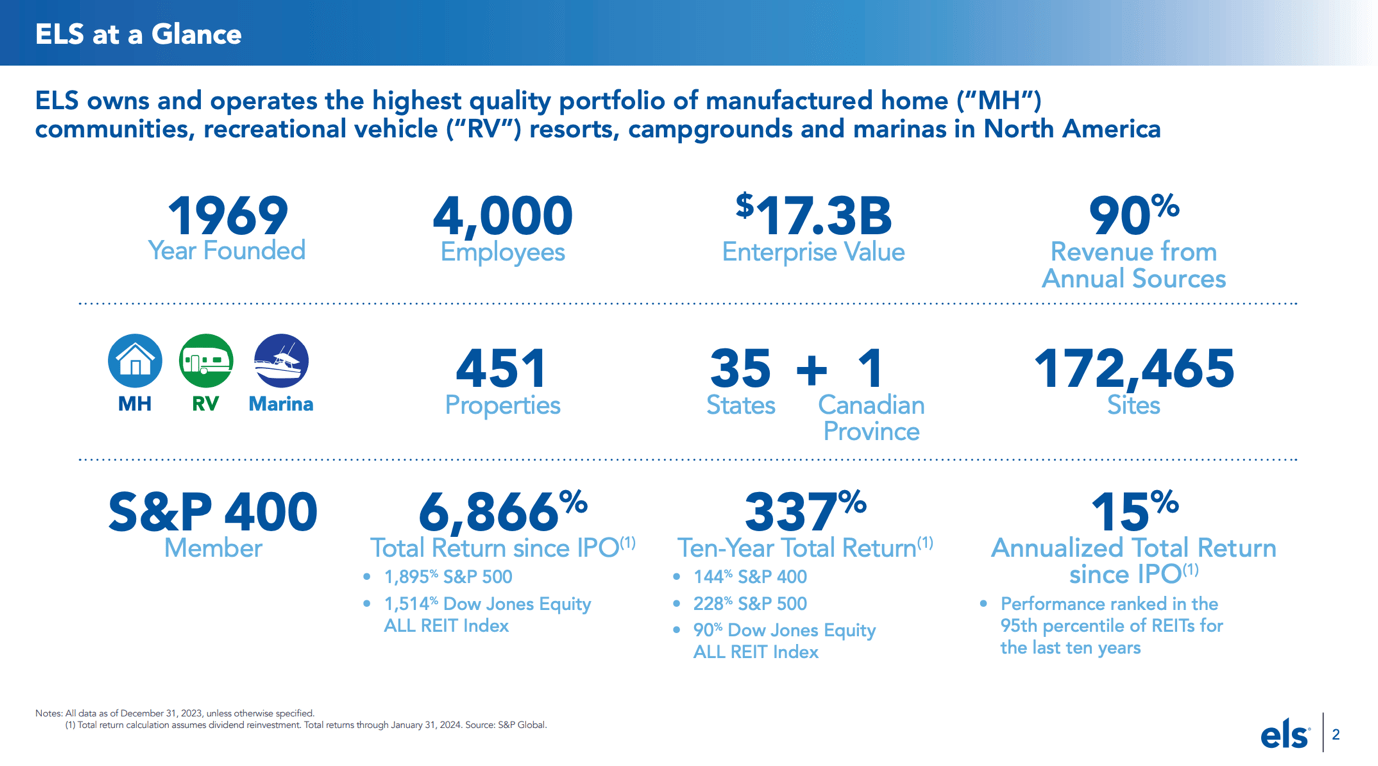
Waste Management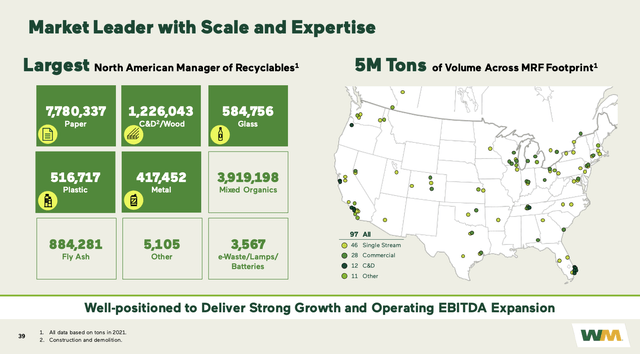
Amphenol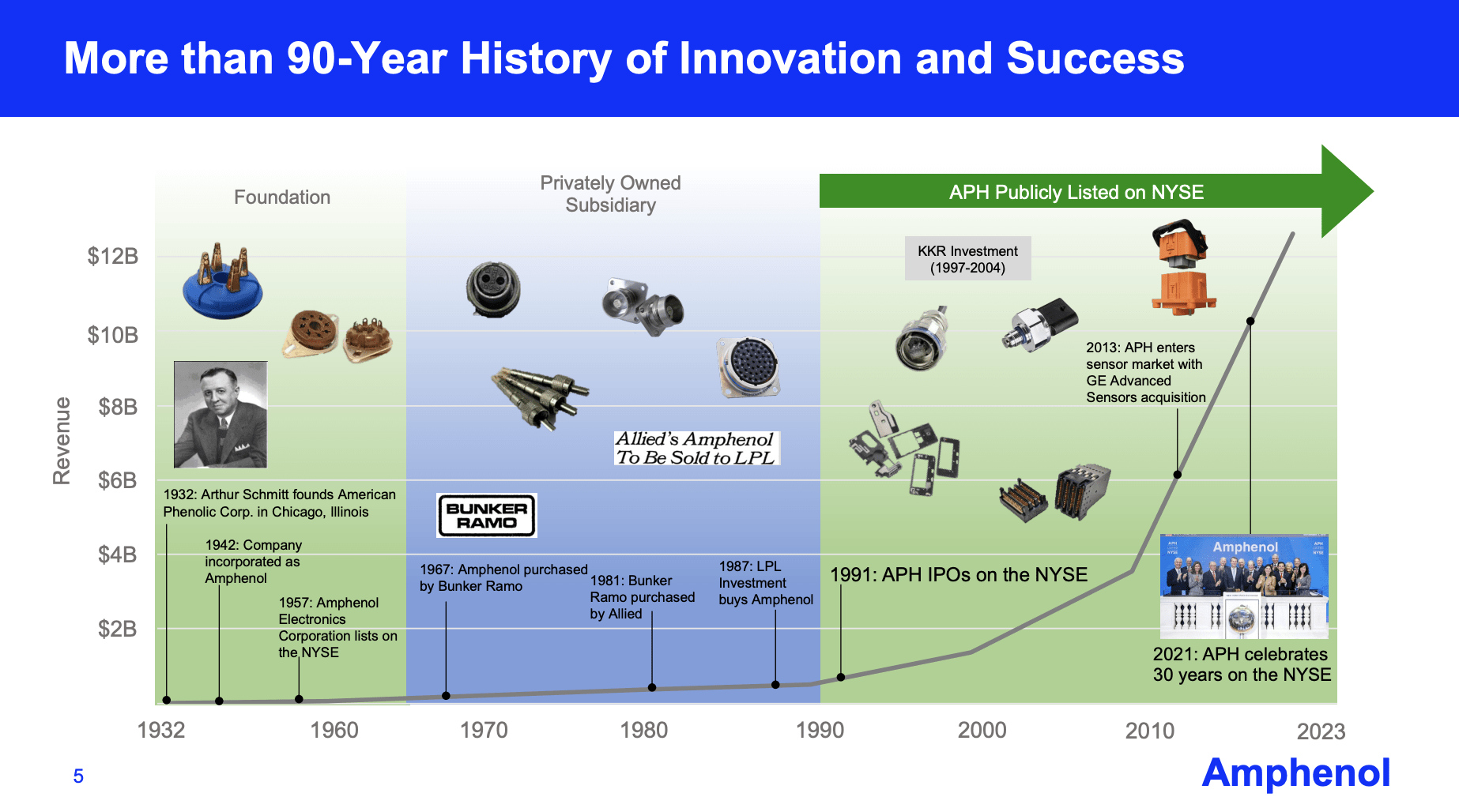
CBOE Global Markets
Home Depot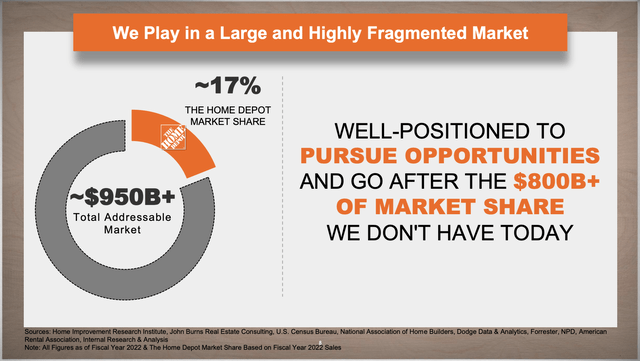
When combined in an equal-weight portfolio, these ten picks have returned 18% per year since 2011! That's with 0% technology exposure.
This turned $10,000 into $88,000.
Even better, during this period, the S&P 500 (SP500) returned 13.2% per year with a standard deviation of 14.5%. This portfolio had a standard deviation of 12.1%.
In other words, a higher return with lower risks.
Portfolio Visualizer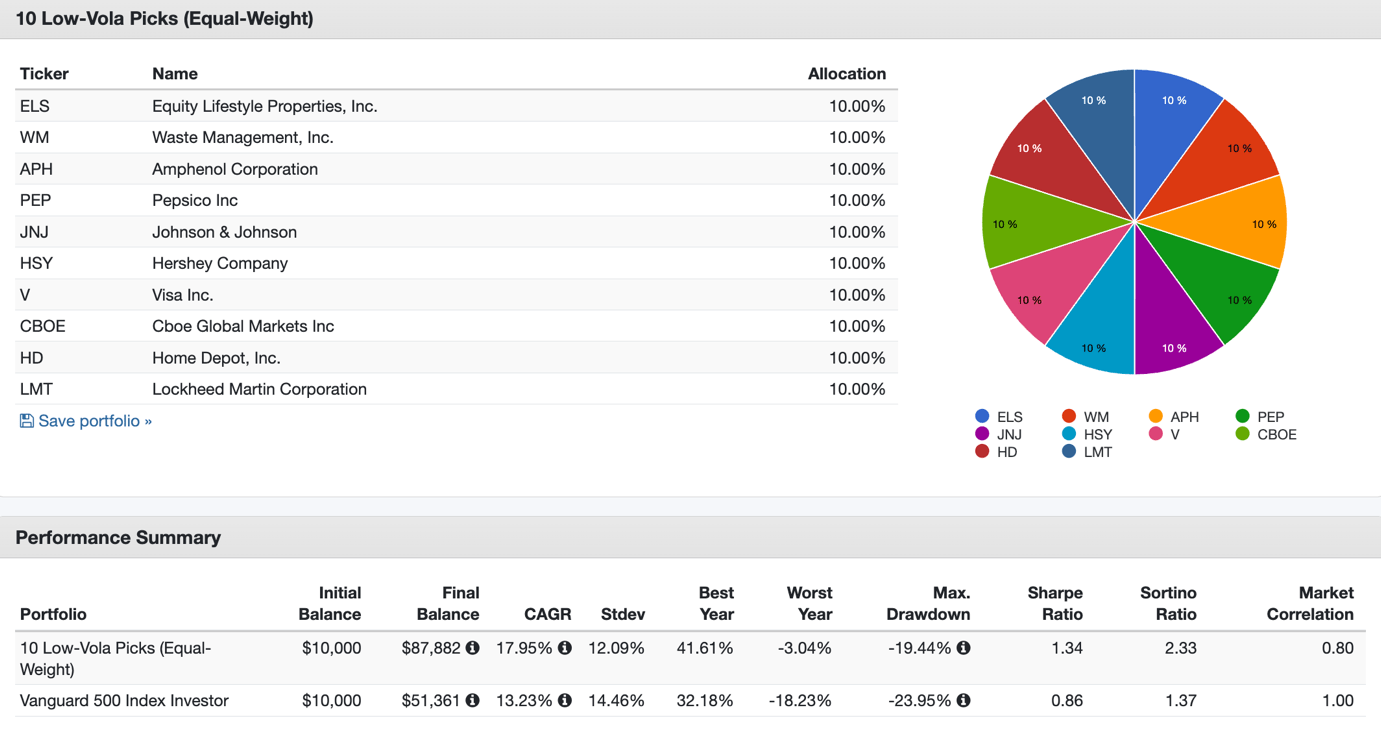
Even better, the biggest drawdown was just 19.4% versus -24.0% for the S&P 500.
The worst year was -3.0%. That's much better than the S&P 500's -18.2%.
On top of that, during all stock market drawdowns, the low-vola portfolio performed better.
Portfolio Visualizer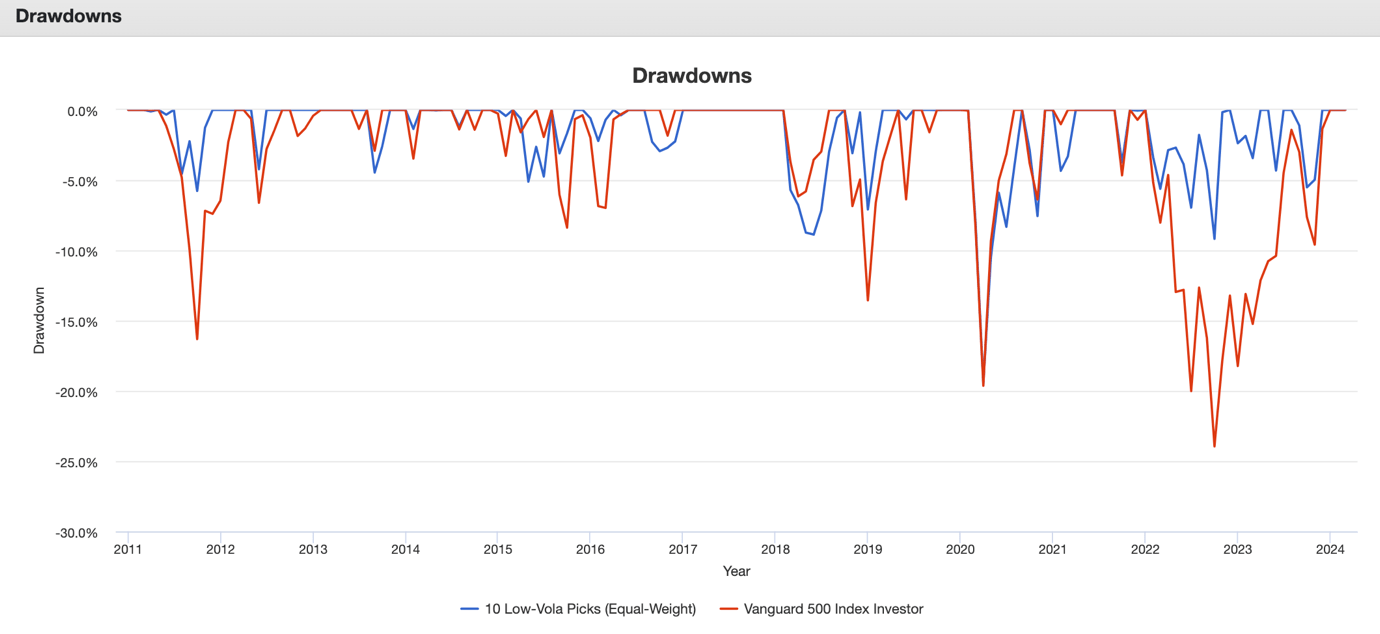
This isn't a call to get everyone to buy these ten stocks.
However, I wanted to show you some of the stocks I like and explain why it makes sense to use a low-vol strategy to lower risks without underperforming the market.
Especially in the current economic environment, I believe that we're in for more volatility down the road. That's why I focus on safety, including companies with strong business models, healthy balance sheets, anti-cyclical demand, and pricing power.
Going forward, we'll focus a lot more on these strategies and ways to incorporate them into one's portfolio.
In today's volatile economic landscape, where inflationary pressures and uncertain market conditions persist, adopting a low-volatility investment strategy may be a smart choice.
By focusing on stocks with historically lower price volatility, investors can mitigate downside risks while still potentially achieving superior returns.
Research indicates that low-volatility stocks consistently outperform their more volatile counterparts, providing a compelling option for long-term investors seeking stability and growth.
Moreover, diversified portfolios consisting of carefully selected low-volatility stocks, such as those highlighted in this article, have shown resilience during market downturns and delivered attractive risk-adjusted returns.
As the market continues to deal with challenges, prioritizing safety through low-volatility investing can offer a reliable path to financial success.