
Viktor Aheiev
Viktor Aheiev
When it comes to investing in the bond market, investors often seek out opportunities that offer stability, income generation, and tax benefits. Stability has been nearly impossible over the last two years given the bond market disruption we've just gone through in terms of the duration crash. On a go-forward basis this likely reverse. That's why the muni bond space may be worth looking deeper into. The Vanguard Tax-Exempt Bond ETF (NYSEARCA:VTEB) is a fund that focuses on municipal bonds. And I think it's one to consider as long as you are bearish on other parts of the marketplace.
Launched in 2015, VTEB seeks to track the performance of the S&P National AMT-Free Municipal Bond Index. It represents a diversified portfolio of over 8,300 municipal bonds, providing investors with broad exposure to the U.S. municipal bond market. The fund has a strong focus on investment-grade bonds, thereby ensuring a relatively low credit risk.
The primary objective of VTEB is to provide income exempt from federal income taxes. This is achieved by investing in municipal bonds issued by state and local governments or agencies. These bonds are primarily used to fund public infrastructure projects such as schools, highways, and water treatment facilities.
VTEB has assets exceeding $30 billion and charges a minimal expense ratio of 0.03%, making it a cost-effective option for investors. It offers a dividend yield of 2.84%, providing a steady income stream for investors.
ycharts.com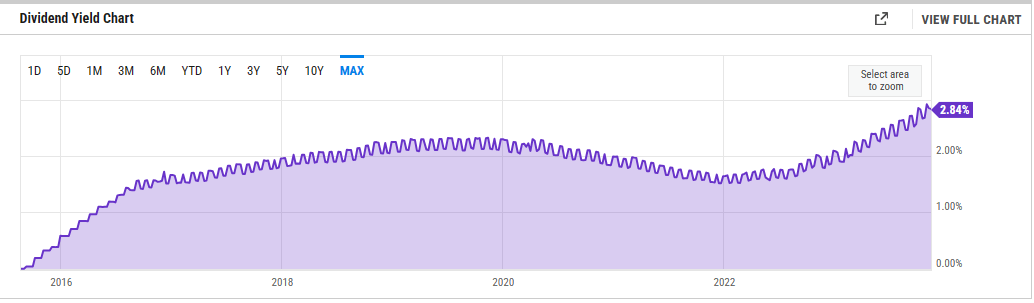
VTEB's holdings are largely diversified across a variety of municipal bonds. The fund holds bonds from every state in the U.S., except Montana, thereby spreading the risk across different issuers and geographic regions.
VTEB's top five individual positions include bonds from California, Texas, and Illinois. This diversification across different states helps reduce the impact of any single bond default.
vanguard.com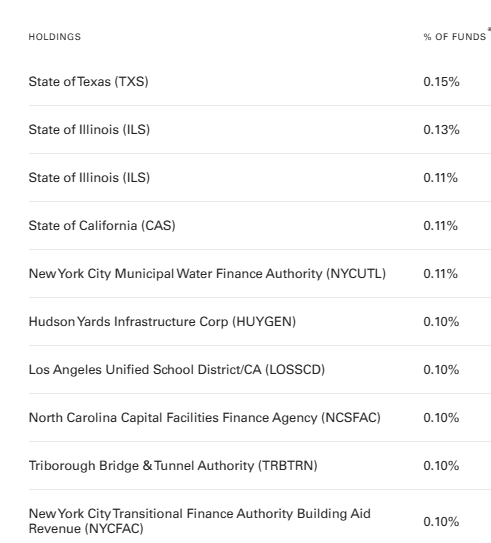
The sector composition of VTEB is also quite diverse, with holdings in various sectors such as education, utilities, transportation, healthcare, and others. This allows the fund to benefit from different sectors' growth potential and shield itself from sector-specific downturns.
When comparing VTEB with similar ETFs, it's crucial to consider factors such as return, yield, and risk profile. For instance, the Nuveen Quality Municipal Income Fund (NAD) and the Nuveen Select Tax-Free Income Portfolio (NXP) are two other popular funds in this space. While NAD may employ up to 35% leverage to enhance yield, NXP does not use leverage, making it a less risky option.
In terms of return, VTEB has outperformed NAD despite the leverage used that, but underperformed NXP. Investors seeking lower price volatility over return may find VTEB a more suitable option.
stockcharts.com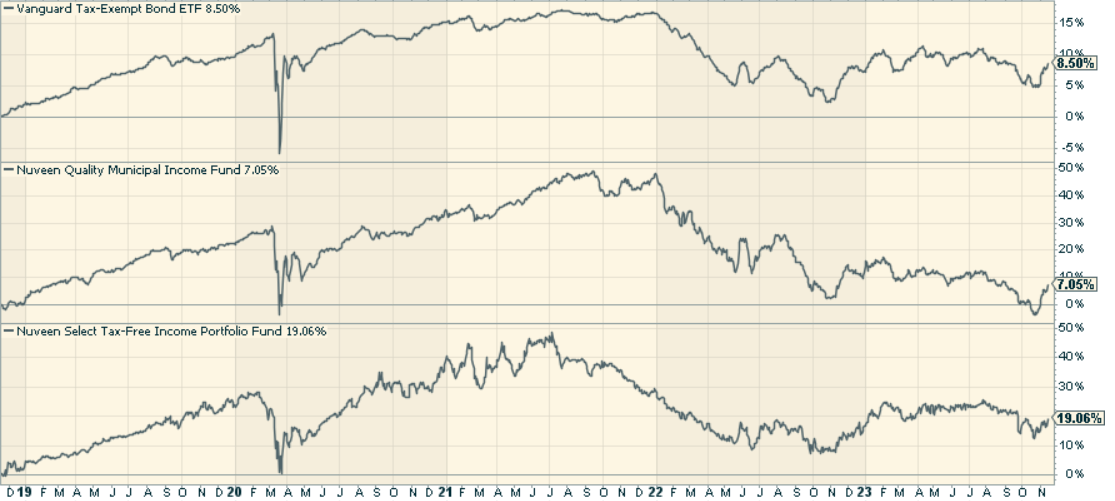
VTEB presents an attractive investment option for those seeking a steady income stream, tax benefits, and diversified exposure to the municipal bond market. Investors preferring lower volatility might find VTEB a suitable choice. On the other hand, those willing to take on a bit more risk for higher returns might consider other parts of the bond market space that are more exposed to a potential long duration comeback.