Justin Sullivan/Getty Images News
Justin Sullivan/Getty Images News
Toyota Motor Corporation (NYSE:TM) is presently navigating a unique market landscape. While Tesla (TSLA) accelerates the world's transition towards an EV future, consumer hesitation remains a prevalent factor. This uncertainty creates a temporary boost for Toyota, known for its reliable and relatively efficient hybrid vehicles. With this temporary boost in hybrid demand, the question arises: Is Toyota's current valuation a reflection of this short-term surge, or an indication of long-term stability in a shifting market?
Toyota announced record-breaking financial projections for the fiscal year ending in March. The company forecasts a staggering $30.3 billion net profit, attributed to the substantial increase in hybrid vehicle sales across all major markets. This favorable outlook reflects the current consumer preference for the hybrid technology as the market transitions toward a fully electric future.
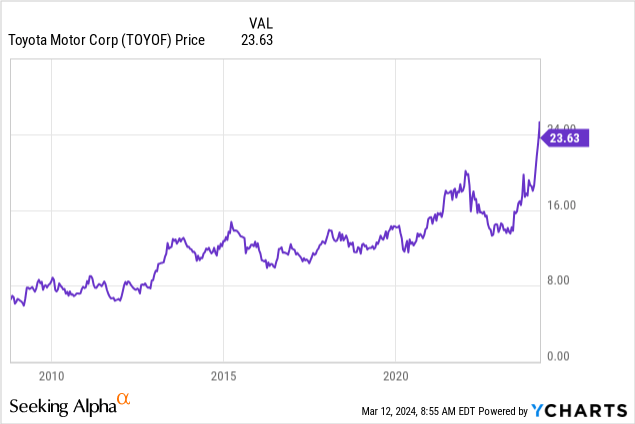
The announcement had a marked impact on the stock market. Toyota shares soared 4.8% in Tokyo, ultimately closing at a record high:
The following list summarizes Toyota's current product lineup:
With Toyota's offerings in mind, let's take a closer look at Toyota's growth.
Data shows that more buyers are choosing to buy hybrids that offering a bridge between gas-powered cars and electric vehicles.
The following chart from the US Bureau of Transportation Statistics illustrates that hybrid sales have exceeded electric vehicle sales in every year in the last decade ended 2021 (data for more recent years follow):
US Bureau of Transportation Statistics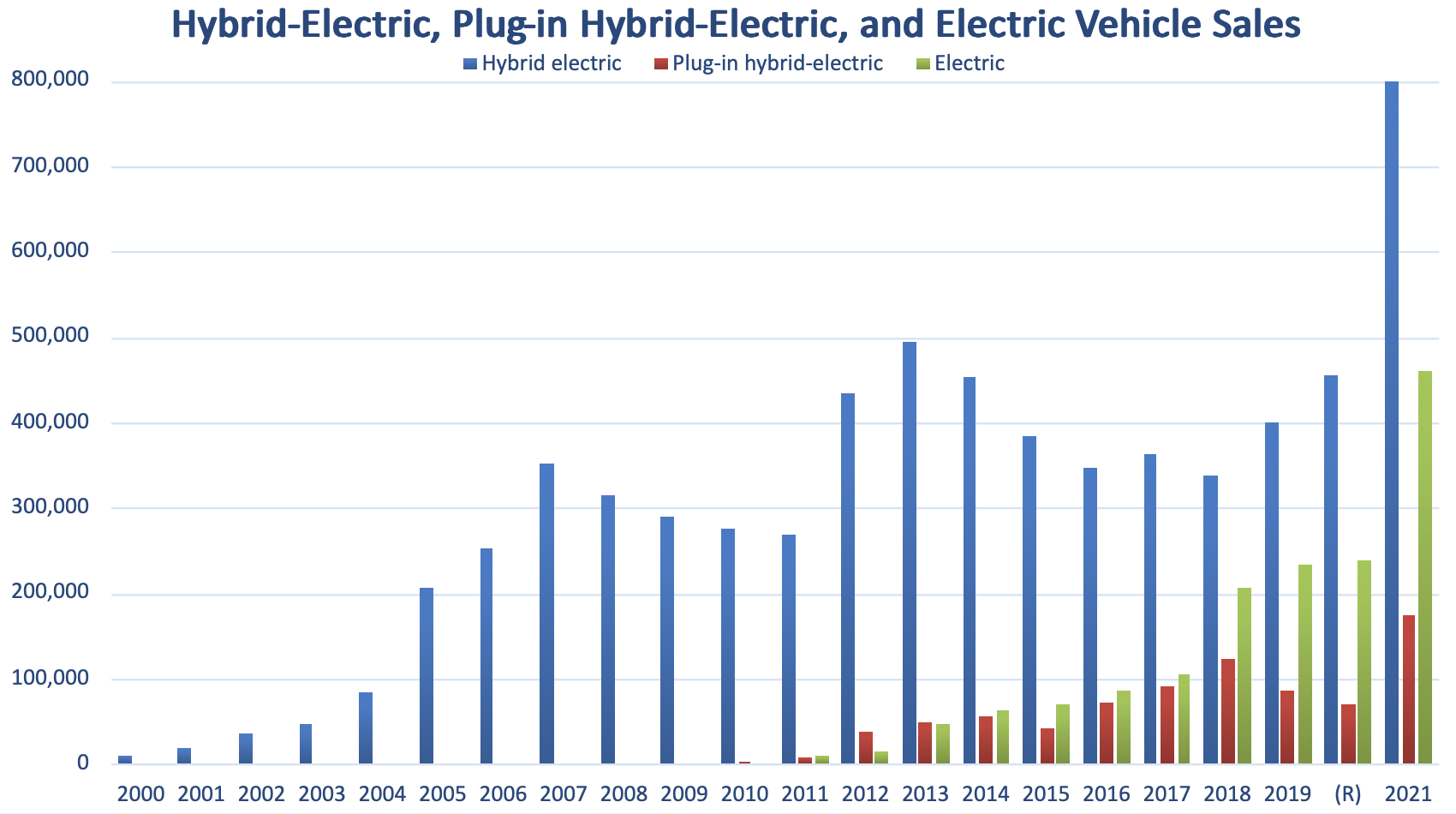
The following chart that includes recent data shows that even though EV sales growth rate picked up in 2022, hybrid sales have continued exceed EV sales:
Associated Press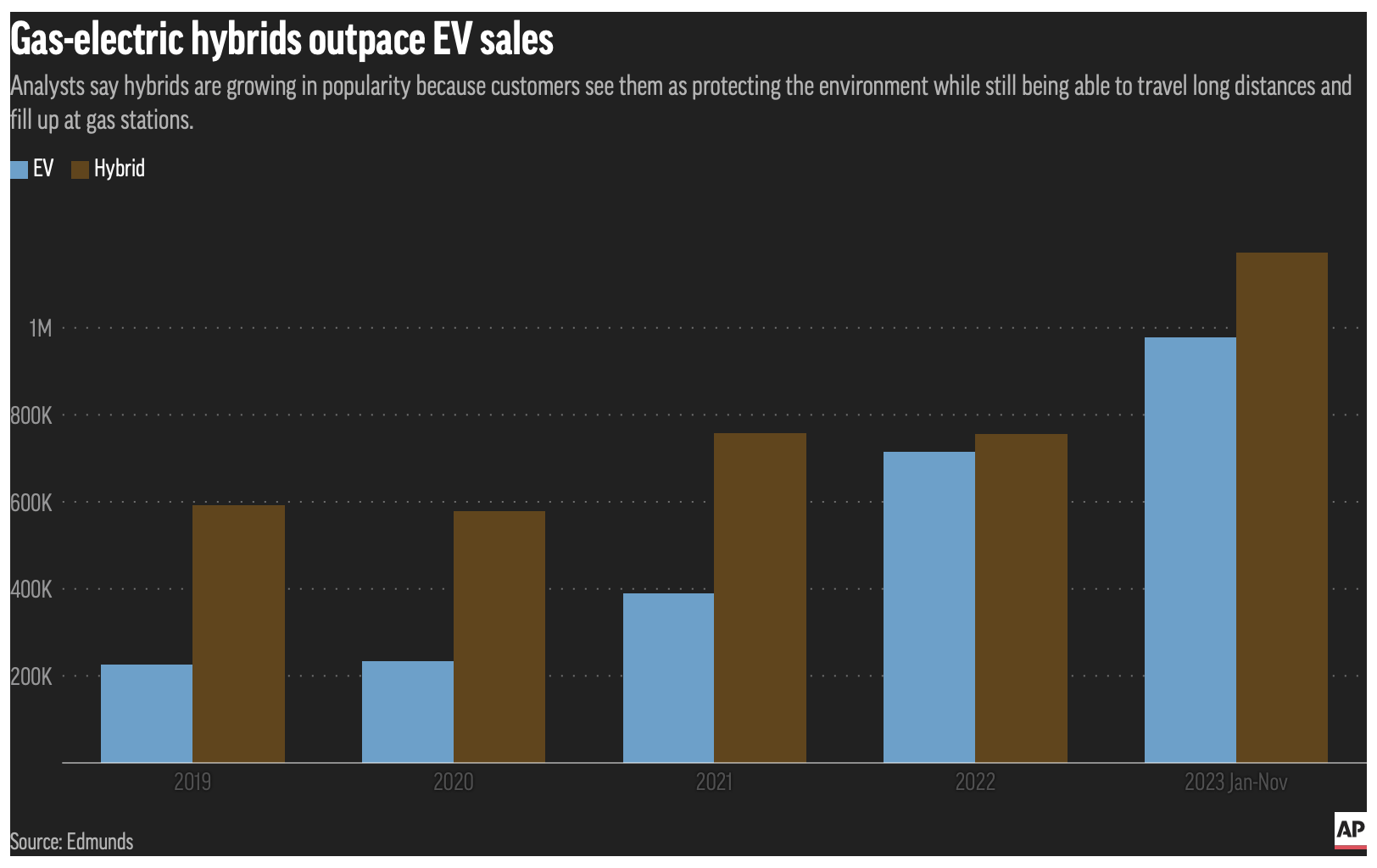
The following chart illustrates Toyota's hybrid sales jumped by 728 thousand units from 1.918 million units in the nine-month period ended December 31, 2022 to 2.646 million units the nine-month period ended December 31, 2023, driving 81 percent of Toyota's sales growth in Electrified Vehicles:
Toyota Investor Relations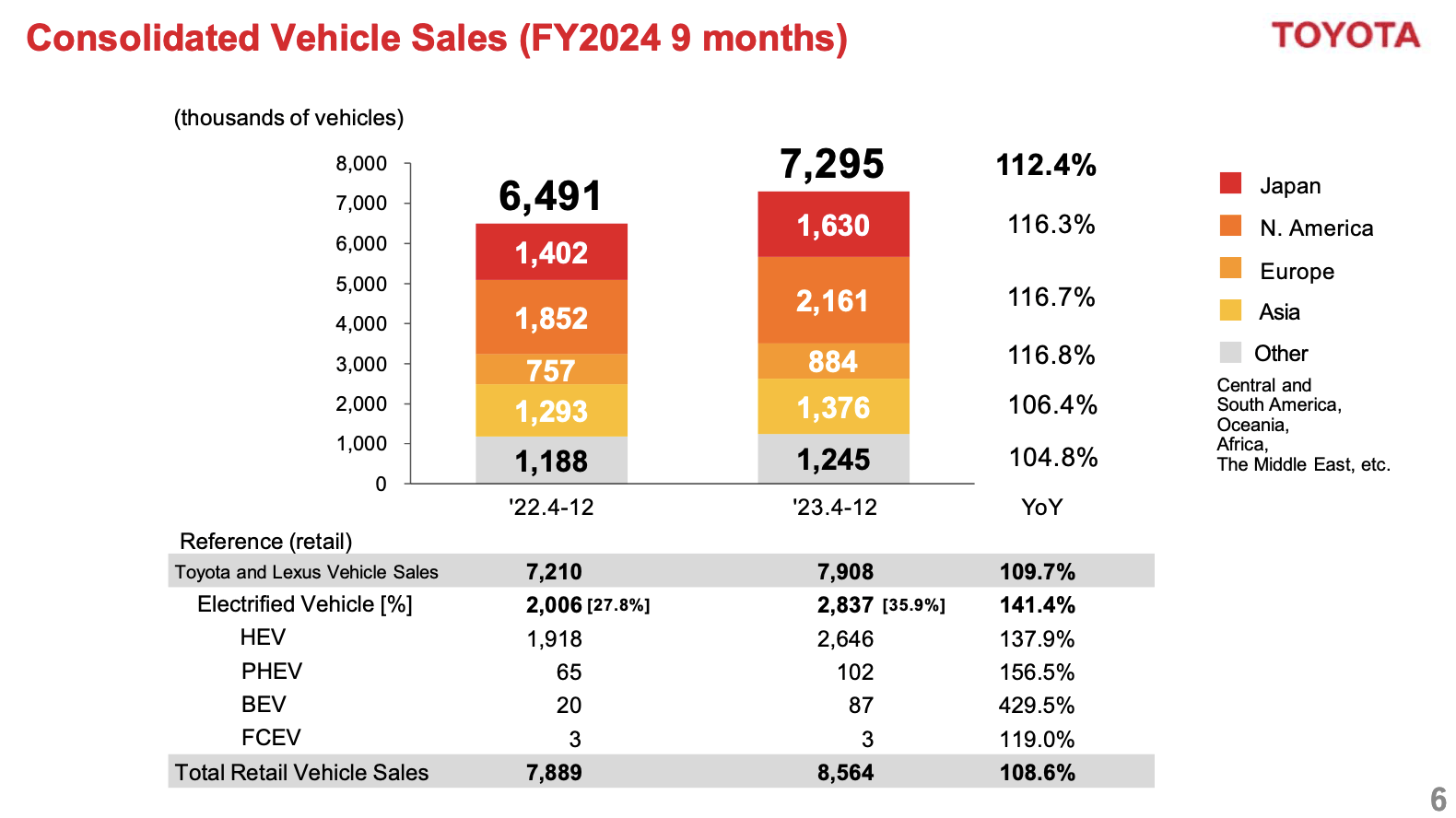
First and foremost, sticker shock associated with EVs has been a significant hurdle. Hybrids generally command a lower upfront cost compared to EVs, although Tesla's dramatic and ongoing price cuts are gradually changing that. I discussed Tesla's deep price cuts and historic incentives in my recent article titled, Tesla: Here's Why It's Down 24%, and I recommend reading it.
Secondly, range anxiety, i.e. the fear of running out of power before reaching a charging station, remains a major concern for many people. The infrastructure for charging electric vehicles is still developing in many areas. Hybrids require no change in driver behavior or reliance on a charging network, making them a more convenient option for those who are not ready to commit to a purely electric lifestyle.
Tesla has ambitious plans to rapidly expand its Supercharger network, aiming to increase convenience and accessibility for its growing customer base. The company intends to both add new Supercharging stations and increase the density of stalls within existing stations. This growth strategy will cater to the rising number of Tesla vehicles on the road, ensuring wait times for charging are minimized. The following charts show just how fast Tesla is growing its Supercharging network:
supercharge.info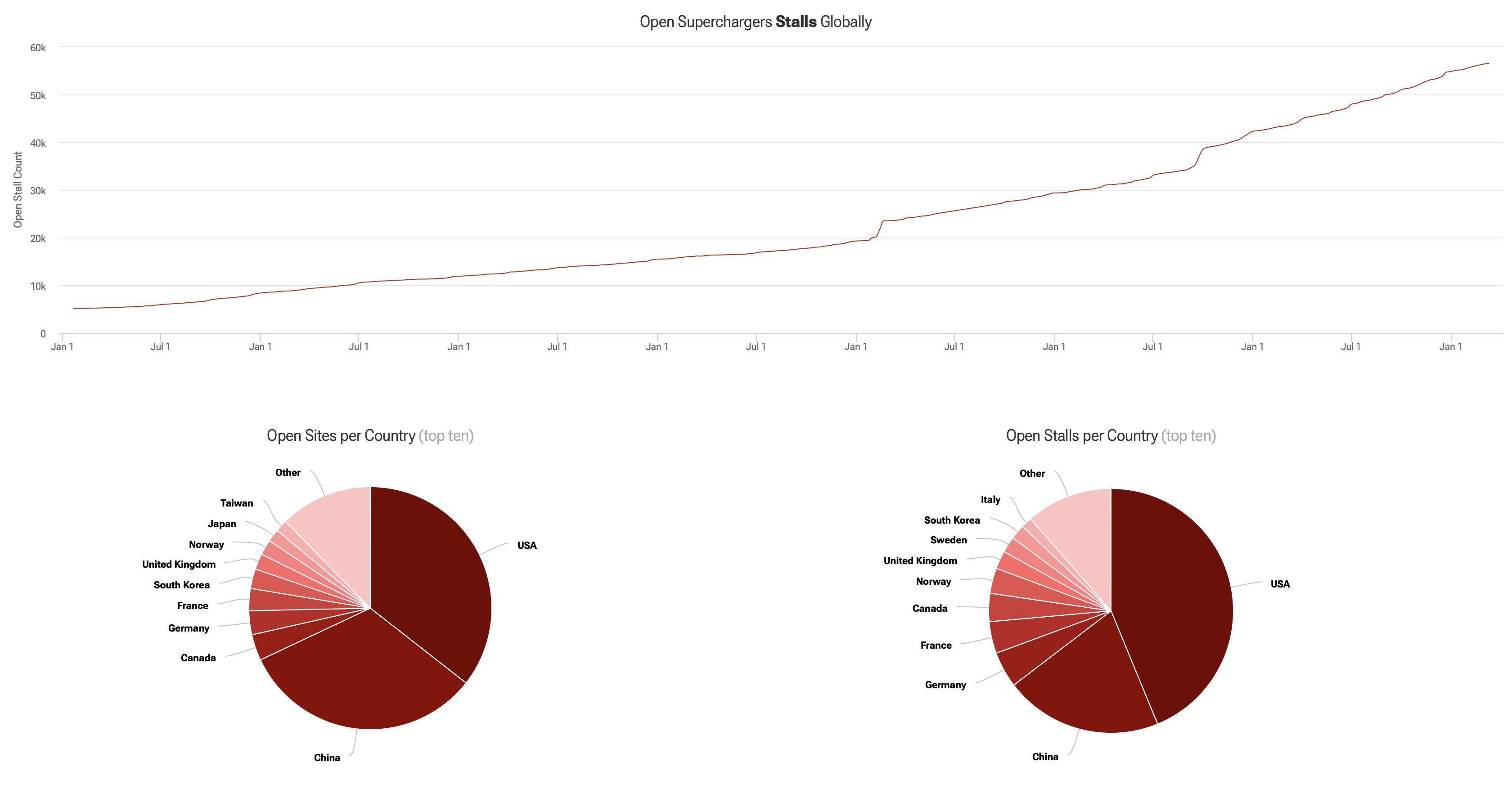
The above graphs show:
Furthermore, Tesla's recent move to open portions of the Supercharger network to non-Tesla EVs highlights a focus on creating a more inclusive charging infrastructure and potentially generating additional revenue for further network expansion.
Potentially boldened by the popularity of its hybrid vehicles, Toyota appears to have decided against investing heavily into building an EV infrastructure such as Tesla's Supercharging network. In a recent interview with Automotive News, Toyota CEO Ted Ogawa said that the Japanese automaker plans to go with customer demand, and in his view, that’s varying degrees of "electrification," usually in the form of hybrids with gas-burning engines.
It's a bold strategy. Let's see how it pays off for them.
Tesla has cut prices so deeply that when you google "the deepest point in the ocean," this graph shows up:
Bloomberg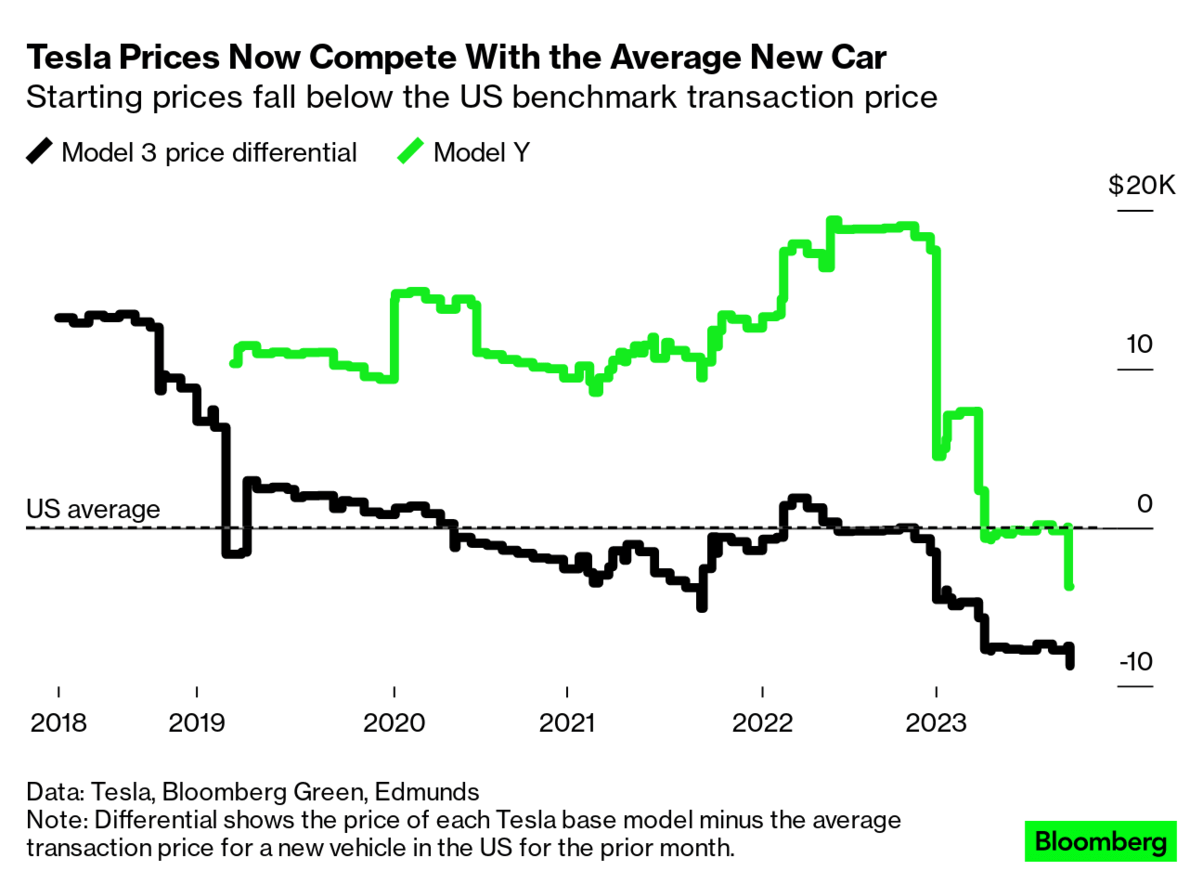
Further, the above graph only begins to tell the story that would be incomplete without a list of incentives that Tesla is offering potential buyers in March:
The combined value of Tesla's historic incentives near $10,000, depending on the model and geography, and combined with Tesla's declining sticker prices, Tesla's market share will likely grow in the coming years.
Toyota, on the other hand, has not needed to slash its prices at this time, and to the contrary, has implemented "price revisions" upward in light of rising material costs, as the company indicates in its most recent financial results:
Toyota Investor Relations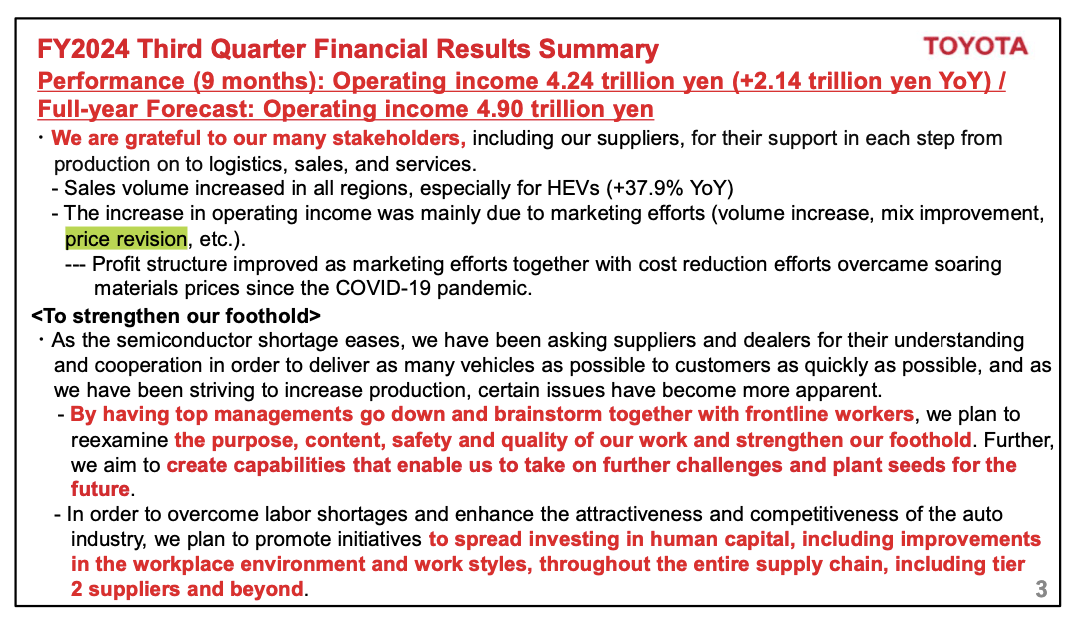
With that long-term context in mind, let's dig into Toyota's current valuation.
One of my favorite tools, the Seeking Alpha Premium Tool, assigns a valuation grade of B- to Toyota as of March 12:
Seeking Alpha Premium Tool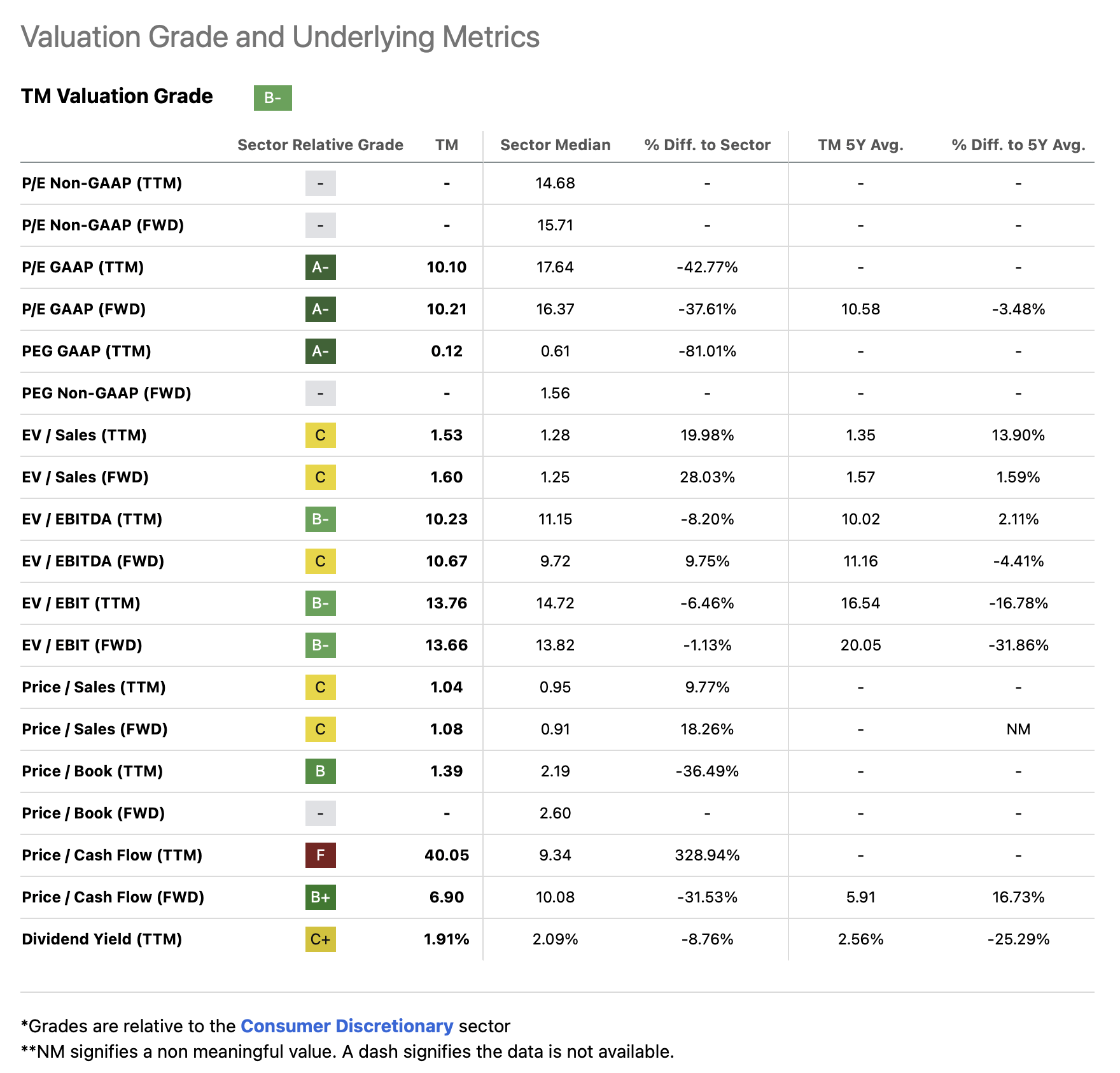
Two key takeaways from the above table are:
Toyota investors should note, however, that the company's valuation multiples, even the ones presented above on a forward-looking basis, do not incorporate the long-term risk I discussed earlier in this article.
With the longer term risk discussed in this article in mind, I do not expect a large valuation multiple expansion for the company, but I do expect Toyota's hybrid sales to continue to grow in the coming years, as the world production capacity for electric vehicles gradually increases in the coming decade.
Applying the current 10x multiple to the company's profit forecast of $30.3 billion for the current fiscal year, I assign a fair value for market capitalization of $300 billion, which is 20 percent below the current market capitalization.
Toyota's current surge in popularity and record-breaking financial projections are likely a reflection of the high demand for hybrids within a broader, long-term shift towards full electrification. While Toyota's current valuation may reflect this short-term boost, investors must be mindful of Tesla's rapidly expanding infrastructure and aggressive pricing strategy. Tesla's growing dominance presents a long-term challenge to Toyota's current leadership position. Ultimately, whether Toyota has the innovative capability and flexibility to successfully compete as the market transitions further toward EVs remains a pivotal question that investors should carefully consider. I assign a Sell rating to Toyota due to the 20 percent downside risk to the current market capitalization and will update my analysis and rating in upcoming articles.