sarawuth702/iStock via Getty Images
sarawuth702/iStock via Getty Images
Listen below or on the go on Apple Podcasts and Spotify
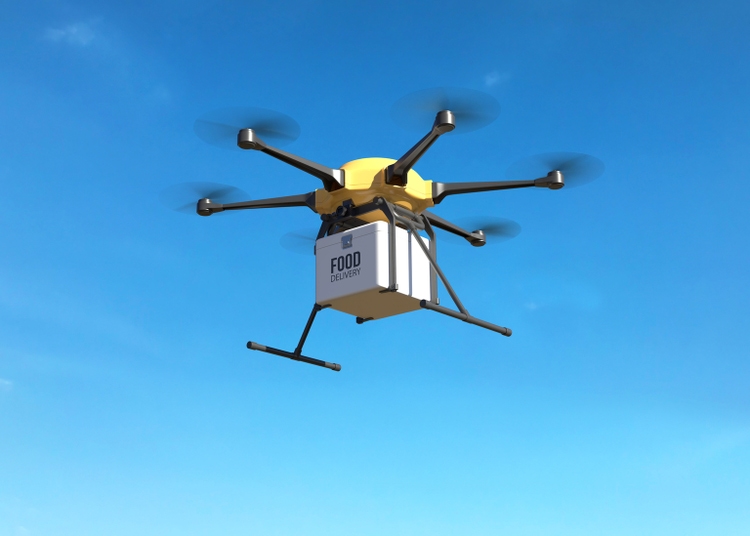
DoorDash and Wing to test delivery of Wendy's by drone in Virginia. (0:16) Air Force conducts last test on hypersonic missile. (3:45) AI startup Cohere looks for a $5 billion valuation. (4:22)
This is an abridged transcript of the podcast.
Our top story so far
DoorDash (NASDAQ:DASH) and Wing announced the launch of their drone delivery partnership in the U.S. The partnership will start in Christiansburg, Virginia, where select local consumers will be able to order eligible menu items from Wendy's (NASDAQ:WEN) through the DoorDash marketplace and have them delivered via drone.
Once customers at the participating Wendy's have selected drone delivery and place their order, it will be prepared and packaged at the Wendy’s location and delivered via a Wing drone, typically in 30 minutes or less.
The U.S. launch follows the drone delivery pilot program that DoorDash and Wing launched in Australia in 2022 and has since expanded to three locations in Queensland with over 60 participating merchants, marking the first time that Wing integrated its drone delivery service within another marketplace.
DoorDash said it is committed to advancing last-mile logistics by building a multi-modal delivery platform that serves all sides of the marketplace.
They said, "We’re optimistic about the value drone delivery will bring to our platform as we work to offer more efficient, sustainable, and convenient delivery options for consumers."
In today’s trading
The growth rally continues after the broader market posted a new record close in the previous session, thanks to an assist from the Fed.
The Nasdaq (COMP.IND) leads the major averages, up +1%, with all three in the green.
Carson Group strategist Ryan Derrick says the S&P 500 is up 9.5% in 2024, "which is 'about average' when you look at history. But history also tells us that average years aren't so average. Only four times out of the past 74 years did stocks finish the year between 8-10%. What does this tell us? Maybe more upside is normal."
Meanwhile, gold (XAUUSD:CUR) touched a record high on anticipation of lower interest rates but lost all of its gains and reversed course later in trading.
The move higher in equities comes despite an uptick in rates after some strong economic data this morning. The 2-year Treasury yield (US2Y) is back above 4.6%.
The March Philly Fed measure of manufacturing fell less than expected, remaining in positive territory at 3.2. Economists were expecting a drop to -2.6. And existing home sales for February unexpectedly rose 9.5%.
In addition, the Conference Board’s February index of leading economic indicators rose for the first time in two years, ticking up 0.1%.
Wells Fargo economists noted that “Before February, the LEI was on a 23-month losing streak, or the second longest in data going back to 1985. The longest negative streak occurred in 2007–2009, when economic activity cratered underneath the weight of the global financial crisis.”
“The economy is much different today than it was back then, and... the LEI's persistent decline over the past few years amid robust economic growth has challenged its status as a recession bellwether. Nevertheless, the out-of-consensus signal underscores the fact that while economic activity has been strong, conditions have been difficult to navigate for many businesses and households.”
Among active stocks
It's Micron Technology's (MU) turn as the chip darling.
After reporting better-than-expected fiscal second-quarter results and guidance, Wall Street has declared the memory chip maker is the next big beneficiary from artificial intelligence, thanks to its prowess with high-bandwidth memory.
J.P. Morgan analyst Harlan Sur says: "The team is well-positioned to capture memory content on the strong AI/accelerated compute server deployments, with HBM3e already sold out for (calendar 2024) and the majority of (calendar 2025) supply having already been allocated.”
The U.S. Air Force has conducted the final test of an air-launched hypersonic weapon developed by Lockheed Martin (LMT), but it did not specify the speed at which the weapon flew or the test's objectives. A B-52H Stratofortress conducted the test of the All-Up-Round AGM-183A Air-launched Rapid Response Weapon (ARRW) prototype on March 17 in the Marshall Islands.
In other news of note
AI startup Cohere is attempting to raise $500 million at a valuation of nearly $5 billion. That’s according to Reuters.
The company, founded in 2019 and headquartered in both Toronto and San Francisco, builds foundation models to compete with rival OpenAI. It focuses on the business applications of artificial intelligence.
Cohere has a partnership with Oracle (ORCL), and some of its current investors include Inovia Capital and Nvidia (NVDA).
And weight-loss drugmakers Novo Nordisk (NVO) and Eli Lilly (LLY) are under pressure after the Congressional Budget Office said in a presentation Wednesday that Medicare coverage for a new class of anti-obesity medications would expand the budget deficit.
The nonpartisan agency that assists Congress on budgetary matters also cited other implications of obesity drug coverage, noting that Novo Nordisk’s weight loss therapy semaglutide will be subject to Medicare price negotiations within the next few years.
Medicare, the federal health plan for seniors and people with disabilities, covers obesity drugs—semaglutide and other GLP-1 agonists, including Lilly’s tirzepatide—only for type 2 diabetes.
In the Wall Street Research Corner
Jefferies screened for the stocks in the Russell index universe that had the most buying support and selling pressure from passive investors. This was measured by both the dollar amount and the days to trade.
The lists use what Jefferies says is a “conservative approach” in estimating the passive assets in each benchmark as of June 30 of last year. Analysts also calculated the appreciation of each index to get a better updated number.
Among the stocks with the most buying support based on dollar amount are Microsoft (MSFT), Nvidia (NVDA), and Eli Lilly (LLY). Based on days to buy, there are more obscure names like Roadzen (RDZN), Almera Sciences (ALIM), and Union Bankshares (UNB).
On the selling pressure side, by dollar amount, there are familiar names like Super Micro Computer (SMCI), UnitedHealth (UNH), and Crowdstrike (CRWD). On days to trade, there is Finance of America (FOA), First Western Financial (MYFW), and Empire Petroleum (EP).
