
gorodenkoff
gorodenkoff
Planet Labs (NYSE:PL) has disappointed investors following its $2.8 billion SPAC IPO in December 2021, with valuations plummeting to well below the $1 billion mark. In this article, I will demonstrate why I consider Planet stock to be an especially appealing investment within an industry that remains largely underappreciated, yet is highly likely to experience a significant expansion over the coming decade.
YCharts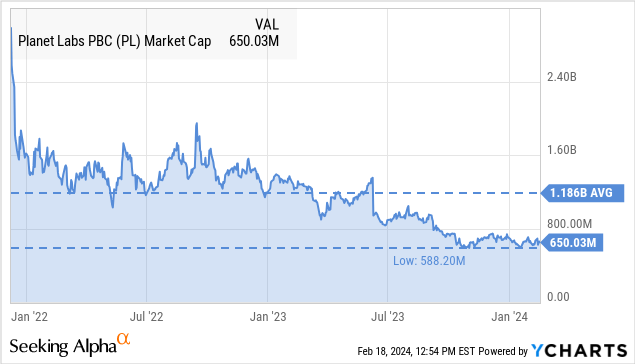
The anticipated growth of Planet Labs is tied to and catalysed by the expansion and technological advancements in adjacent sectors. Significant innovations and cost efficiencies in aerospace launch services and AI/ML are poised to propel the Earth Observation (EO) industry beyond its current growth projections over the next decade.
Planet Labs, as the EO market leader boasting the largest satellite constellation and the most extensive Earth Observation data archive, stands at the heart of this expected surge. The diverse applications of EO data, ranging from agriculture and disaster response to deforestation and mapping, highlight its potential to address a wide array of critical global challenges.
Furthermore, Planet Labs' compelling backstory not only enhances its market appeal but also positions it to be a popular, retail-favourite stock. This thesis is bolstered by a Free Cash Flow to the Firm (FCFF) valuation, which assesses the fair value of Planet Labs' stock and examines the impact of various underlying assumptions on this valuation, solidifying the investment case for Planet Labs within an industry on the cusp of significant growth.
The cost of launching a payload into orbit has long been exorbitantly high. However, SpaceX has dramatically reduced the cost of sending a payload to Low Earth Orbit by more than a factor of five in less than five years. This achievement has not only made space more accessible but has also paved the way for a wave of ambitious competitors.
FutureTimeline.net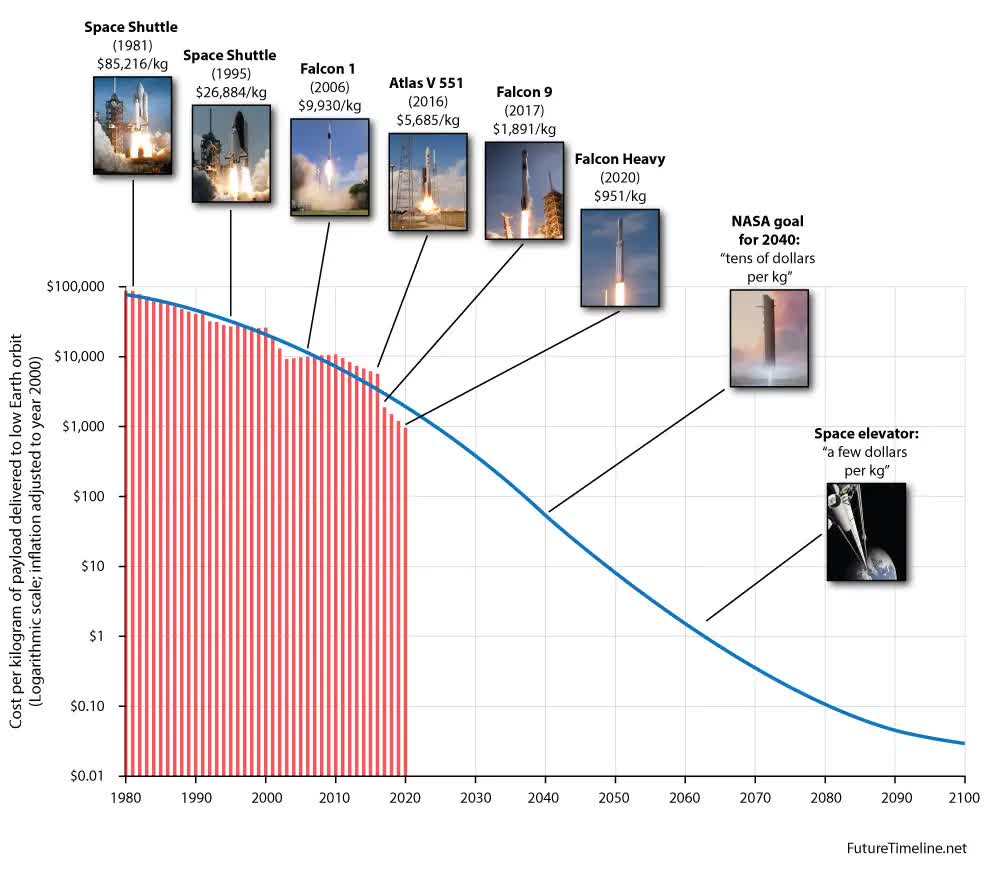
The space industry is now swarming with competitors, driving down the cost per kilogram of sending payloads into orbit. Noteworthy competitors include ULA, a joint venture between Lockheed Martin (LMT) and Boeing (BA), alongside Blue Origin, Rocket Lab (RKLB), Relativity Space, and ABL. This surge in competition is a testament to the innovation characterizing the sector.
OurWorldInData.org/artificial-intelligence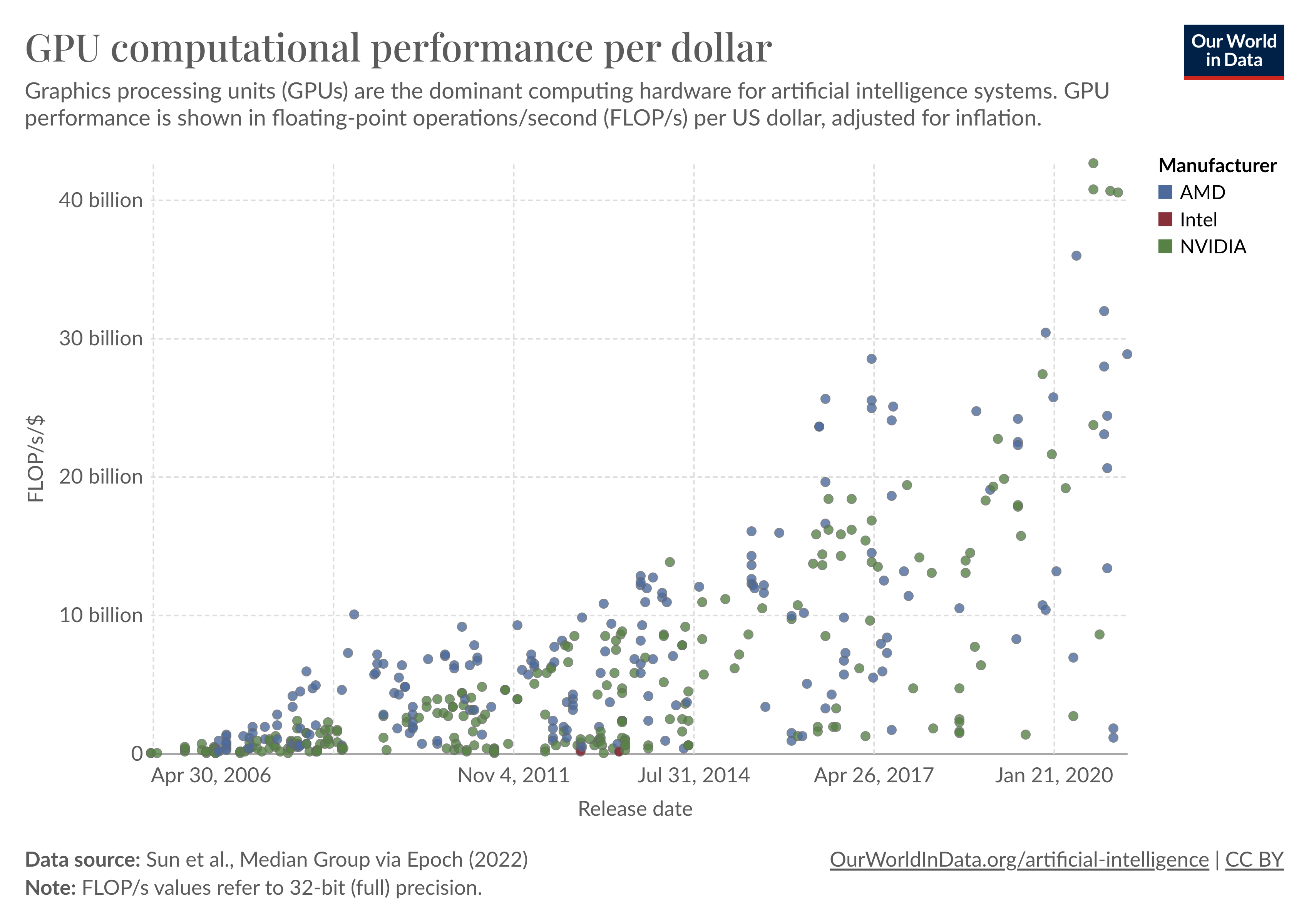
Another driver enhancing the value of EO data is the scalability of AI systems, indispensable for processing Earth Observation imagery and distilling valuable insights. With the decline in computational costs over time, coupled with improving model performance and capabilities, the intrinsic value of EO data is set to rise.
OurWorldInData.org/artificial-intelligence
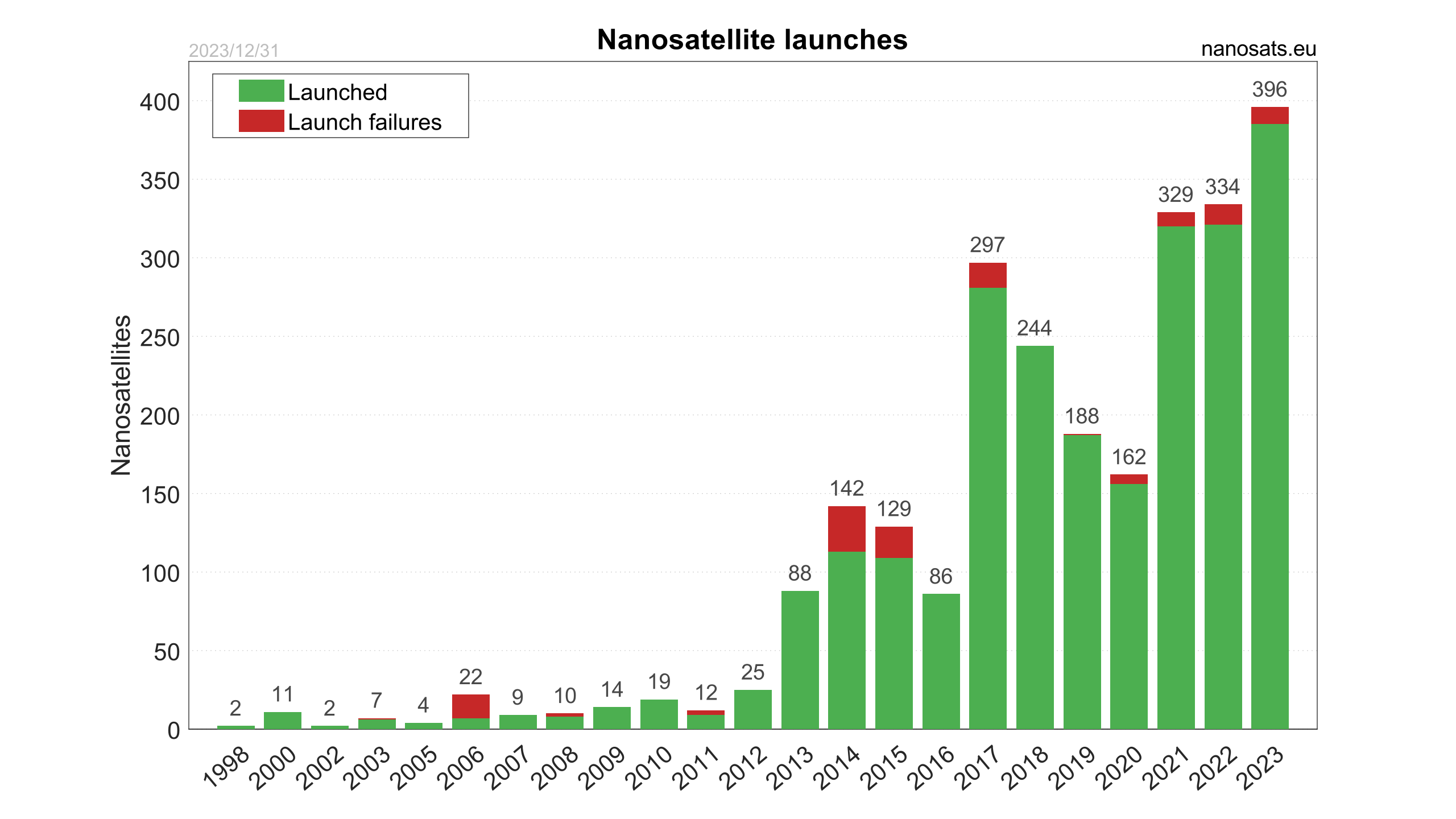
The graphs below, provided by the US Space Force and complemented by nanosats.eu, illustrate the recent uptick in LEO (Low Earth Orbit) payloads and rocket bodies. This trend signifies a growing demand coupled with declining costs, which collectively facilitate this unprecedented growth.
US Space Force nanosats.eu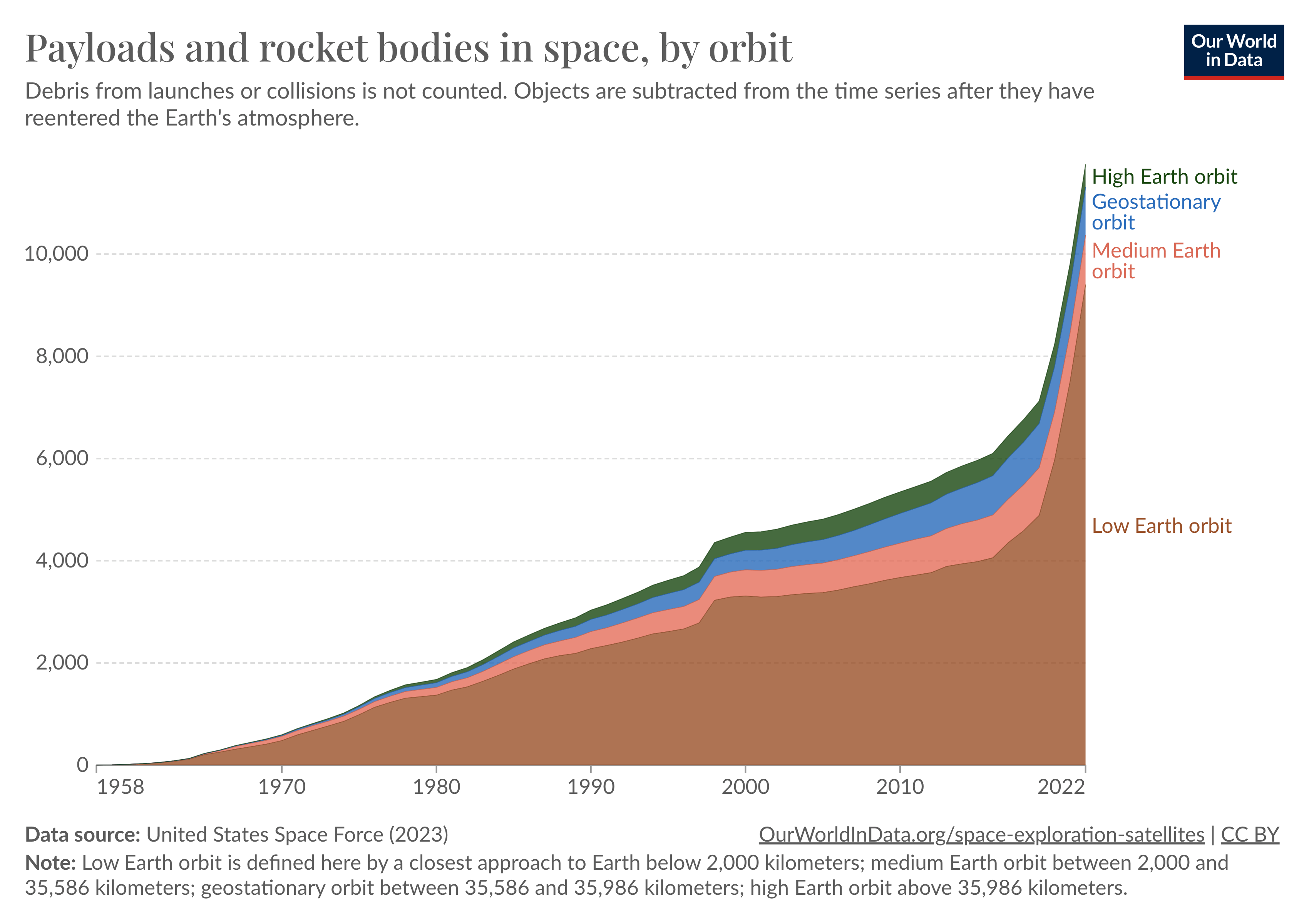
As advancements in chip, sensor, and battery technologies continue, the potential of nanosatellites is expanding, particularly in:
These improvements suggest a swift acceleration in the capabilities of earth observation technology, promising new, cost-effective applications.
Planet Labs Investor Day 2023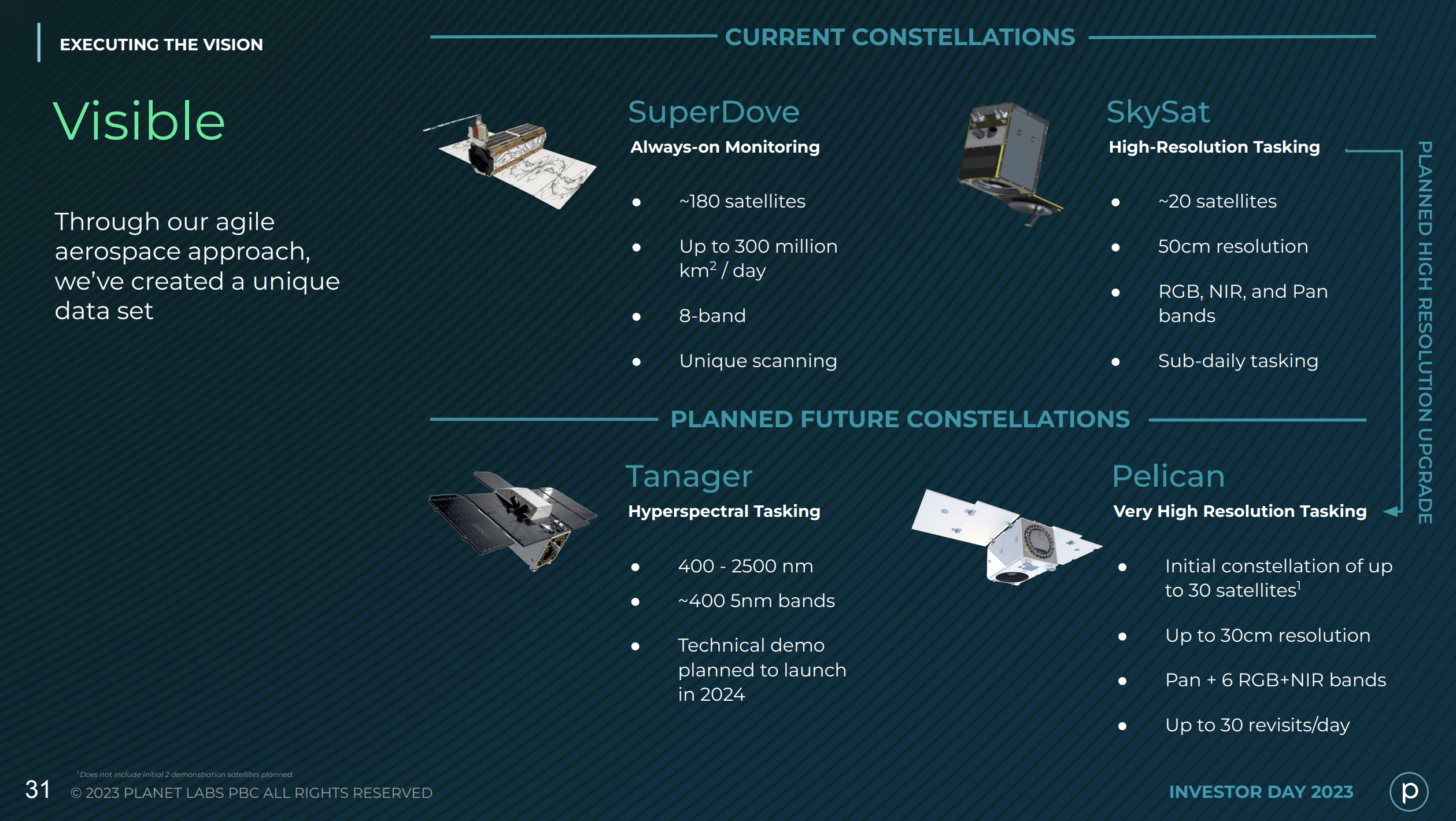
Chances are that the pace of improving capabilities will accelerate in the coming years. New, innovative use cases of Earth Observation data may be unlocked as the spatiotemporal resolution and offerings improve and become lower-cost.
Earth observation data plays a pivotal role in addressing critical global issues and enhancing the quality of life for countless individuals. The following illustration from JAXA highlights the wide-ranging applicability of satellite data across different sectors.
Applications of Earth Observation Satellites (JAXA)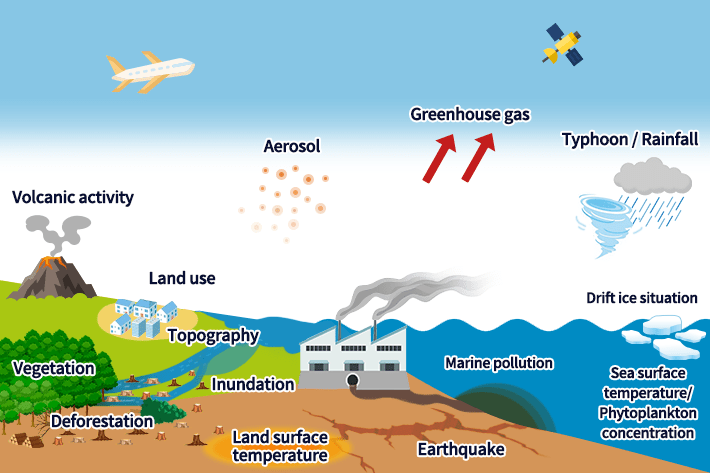
Table 1: Common applications for Earth Observation data by Sector and examples of Companies using it.
| Sector | Applications | Companies |
|---|---|---|
| Agriculture and Forestry | Precision Agriculture, Forest Management | Descartes Labs |
| Environmental Monitoring and Conservation | Climate Change Analysis, Biodiversity Conservation | NASA, European Space Agency |
| Urban Planning and Infrastructure | City Planning, Construction and Real Estate | Google Earth(GOOG), ESRI |
| Disaster Management and Response | Early Warning Systems, Damage Assessment | Direct Relief, FEMA |
| Energy and Mining | Resource Exploration, Renewable Energy | BP (BP), Chevron (CVX), Vestas (OTCPK:VWDRY) |
| Insurance and Finance | Risk Assessment, Asset Management | Swiss Re (OTCPK:SSREY), Munich Re |
| Maritime and Fisheries | Shipping Route Optimization, Fisheries Management | Maersk, NOAA Fisheries |
According to the company's latest 3Q24 presentation, and complemented by nanosats.eu, Planet Labs has successfully launched over 550 CubeSats to date, making it a leader in the nanosatellite sector. Its closest competitor, Swarm Technologies, has fewer than 200 nanosatellites in orbit, highlighting the Planet's significant lead in this space.
The demand for competing in the EO industry is evident by the number of planned versus launched spacecraft.
Nanosatellite constellations by size and company (Nanosats.eu/#figures)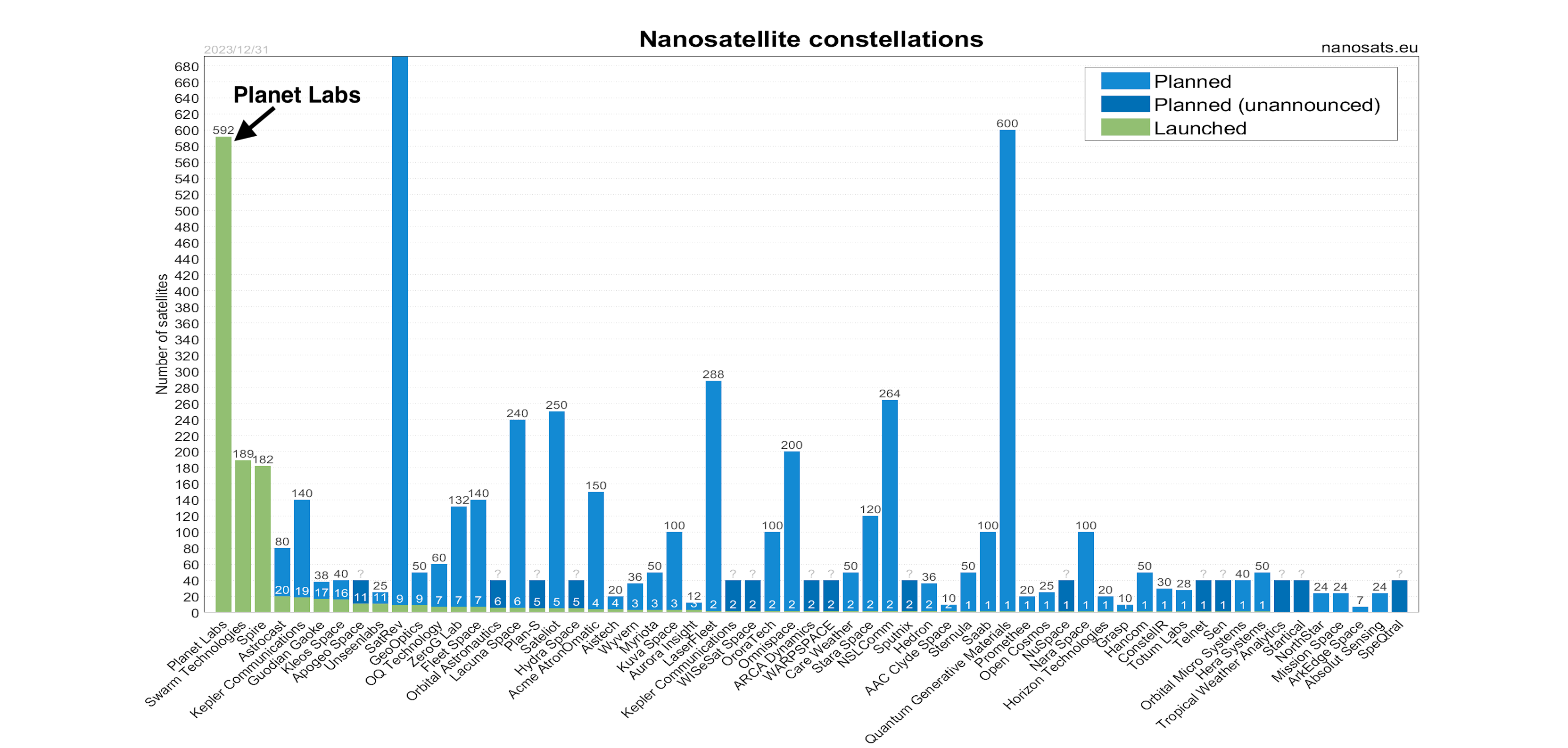
Although Starlink operates bigger constellations than Planet Labs, it's important to note that Starlink operates in the communications sector, not directly competing with Planet's Earth Observation (EO) capabilities. This distinction underscores Planet's unique position in the satellite imagery industry.
Planet's integrated business model stands out in the space industry. The company not only designs, manufactures, assembles, and operates its spacecraft but also manages to contain its capital expenditures effectively.
Planet's expenditures remain under control, firstly due to their adoption of "Agile Aerospace". This development philosophy, pioneered by Planet Labs, advocates for a continuous, cost-effective improvement cycle for spacecraft, contrasting with the traditional, cost-intensive perfectionism pre-launch.
Agile Space by Planet Labs (Planet | Homepage)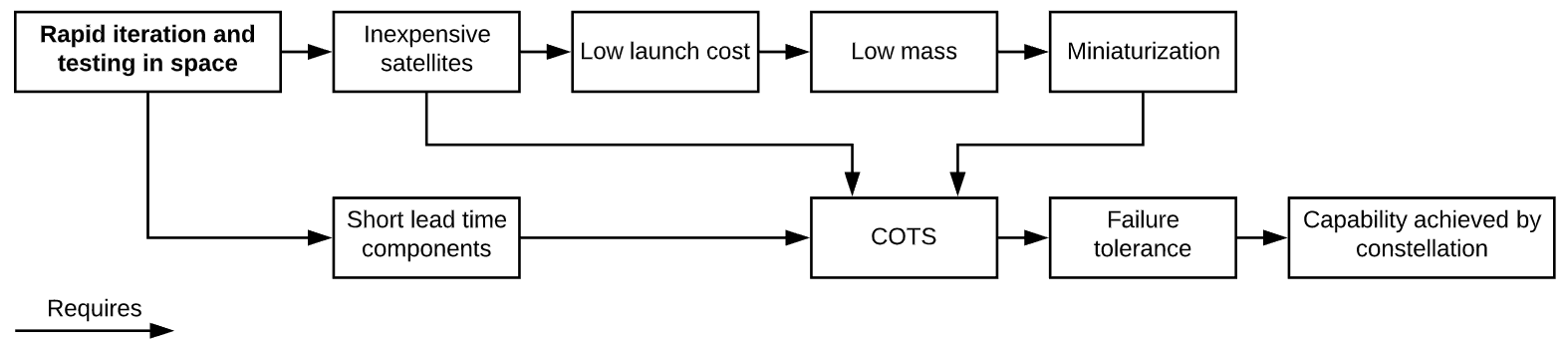
Secondly, Planet's reliance on Commercial Off-The-Shelf (COTS) components, which are affordable yet efficient and commonly found in consumer electronics, helps in curbing the traditionally high costs of space technology.
As a frontrunner in EO imagery, Planet Labs often takes equity stakes in startups (on top of cash payments) that utilize Planet data to create innovative, EO-based products or services. From an investor's perspective, it's essential to recognize that investing in Planet Labs offers indirect exposure to the EO startup ecosystem. Should EO become a significant economic sector—or even an exciting growth industry—Planet Labs could become a shareholder in several unicorn companies within the coming decade.
Financial markets are cyclical and prone to fluctuations, with potential for both under and overvaluation. The narrative surrounding a company can be a powerful, albeit not the only, factor driving stock popularity, especially among retail investors. Planet Labs boasts an engaging story and an easy-to-understand mission. The following piece from Wikipedia captures the essence of the Planet story.
Planet Labs was founded in 2010 as Cosmogia by former NASA scientists...The initial goal of the company was to make use of information gathered from space to help with life on Earth. The group of scientists considered the problem with most satellites to be their large and clunky form, prompting them to build inexpensive and compact satellites to be manufactured in bulk, called CubeSats. The small group began building Planet's first satellite in a California garage.
Planet Lab's Founding Team In Garage, 2012 (Planet Labs)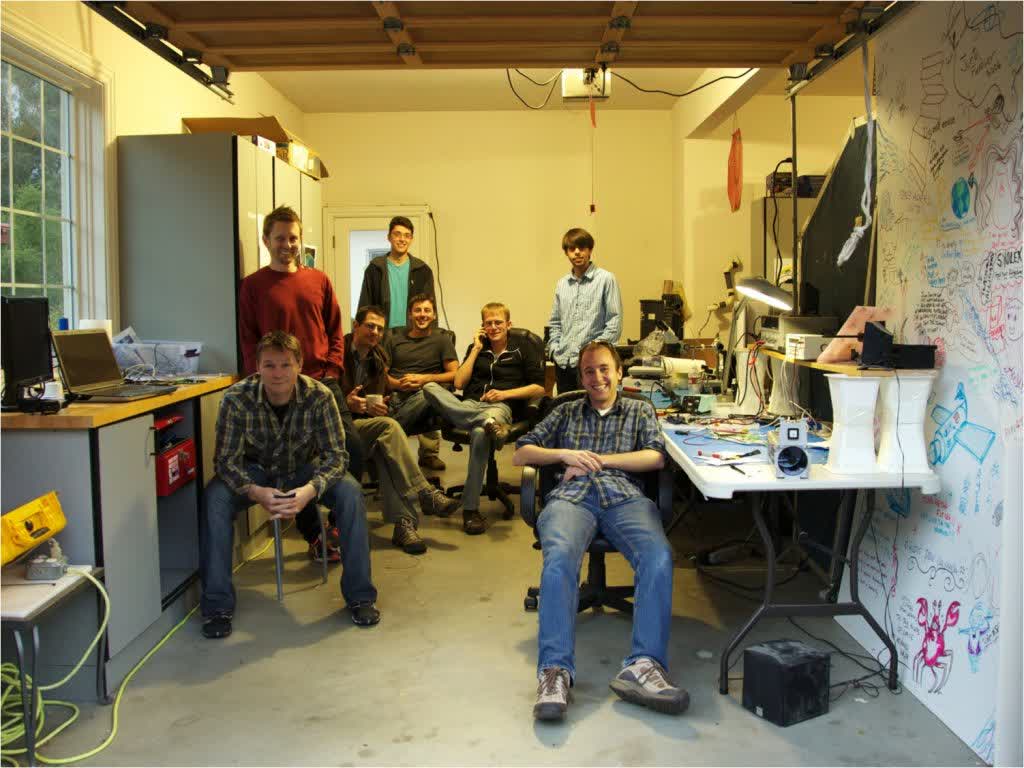
The following table aggregates the growth estimates of the Earth Observation market for the coming years. It will inform, but not limit, any estimates we make and expectations we have for the stock.
Table 2: Aggregating EO (Earth Observation) market growth projections from various sources.
| Research Company | Est. EO Market CAGR | Time Horizon | End Value | Weighting |
| Mordor Intelligence | 10.56% | 2024-2029 | $20.73 billion | 40% (most recent) |
| 360 Research Reports | 7.08% | 2021-2027 | N/A | 20% |
| Spherical Insights | 7.00% | 2021-2030 | $14.00 billion | 20% |
| Straits Research | 6.92% | 2022-2030 | $13.67 billion | 20% |
| Overall | 8.42% | 2024-2030 | $16.65 billion | 100% |
Dependence on Government Funding: Earth Observation entities, including Planet Labs, are heavily reliant on government contracts. A significant chunk of their revenue—and by extension, their market valuation—is derived from civil government and defense & intelligence spending. Any downturn in government expenditure could adversely affect Planet's stock, especially in the short term.
Geopolitical Limitations: In an increasingly polarized world, Planet Labs may face legislative barriers that restrict its ability to offer services to countries that do not align with U.S. interests, potentially limiting its market.
Market Relevance: There's a possibility that Earth Observation data may not prove as valuable as anticipated, remaining a niche and costly service offered by a handful of companies. This scenario could sustain a low-growth yet profitable status quo within the industry.
Market Readiness: Despite falling costs across the aerospace sector, the financial benefits to customers might not outweigh the expense of acquiring high-quality EO data, possibly limiting market expansion.
AI and Machine Learning Integration: The broad adoption of EO services hinges on the development of scalable AI and machine learning systems capable of deriving actionable insights from vast quantities of EO data. This technological catch-up may require time.
Narrow Industry Focus: As a pioneering small company in a developing industry, Planet Labs faces the risk of investing in numerous new, yet often unprofitable, ventures. The company's commercial clients consume a disproportionate share of resources compared to more lucrative defence & intelligence and civil government contracts, which offer higher value with less resource demand.
Business Model Constraints: The current emphasis on securing large contracts may impede wider market penetration and mainstream adoption of EO services.
Competition in Specialized Niches: While Planet Labs focuses on high-resolution imaging, competitors like Spire, which specializes in radio-based data for weather forecasting and ship tracking, may emerge as leaders in their respective niches.
Elevated SG&A Expenses: High sales, general, and administrative (SG&A) costs relative to revenue highlight Planet Labs' substantial investment in sales and marketing efforts. This spending pattern could affect the company's cash flow and overall profitability, presenting a challenge to sustainable growth.
Analysts project an average revenue growth of approximately 14.53% for Planet Labs over the next three years (2024-2026). These forecasts are aligned with broader Earth Observation market growth predictions, which anticipate a compounded annual growth rate of 8.42%.
The valuation employs a Free Cash Flow to the Firm (FCFF) approach, based on conservative figures from the company's "long-term target model". The assumptions include an Operating Margin of 15%, a timeline of five years to achieve this margin, a Cost of Capital of 12%, and a 10-year Risk-free rate of 2%. The expectation is for the Operating Margin to hit 15% by 2028 and maintain stability thereafter.
Planet Labs Long-term Target Model (Planet Labs)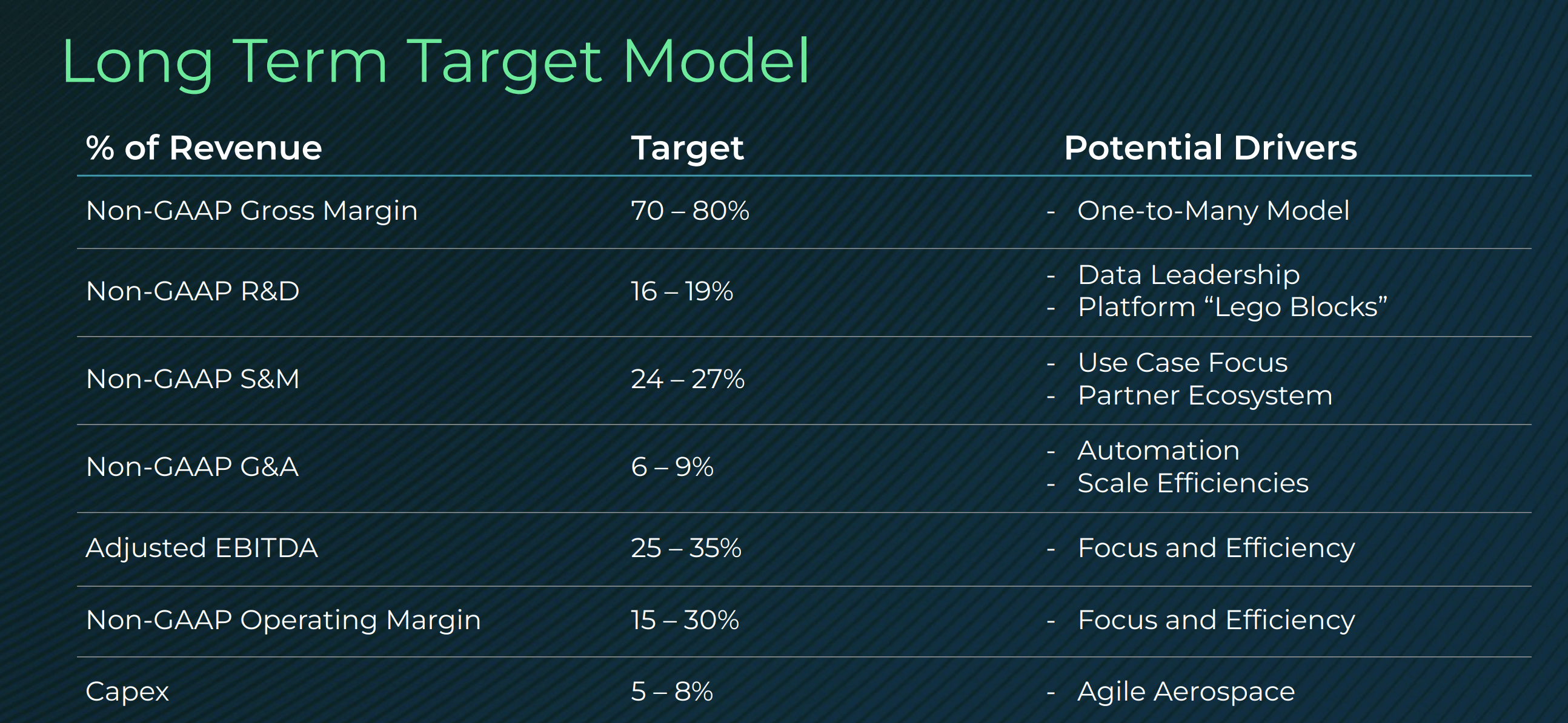
In my view, both the market and Planet Labs' analyst growth predictions are conservative, however, I use those (under)estimates to assess the stock with a margin of safety.
The visualization below presents the anticipated Revenues, EBIT, and FCFF based on a Revenue CAGR of 25% and an Operating Margin of 15%, as detailed in the subsequent table.
Author's Figure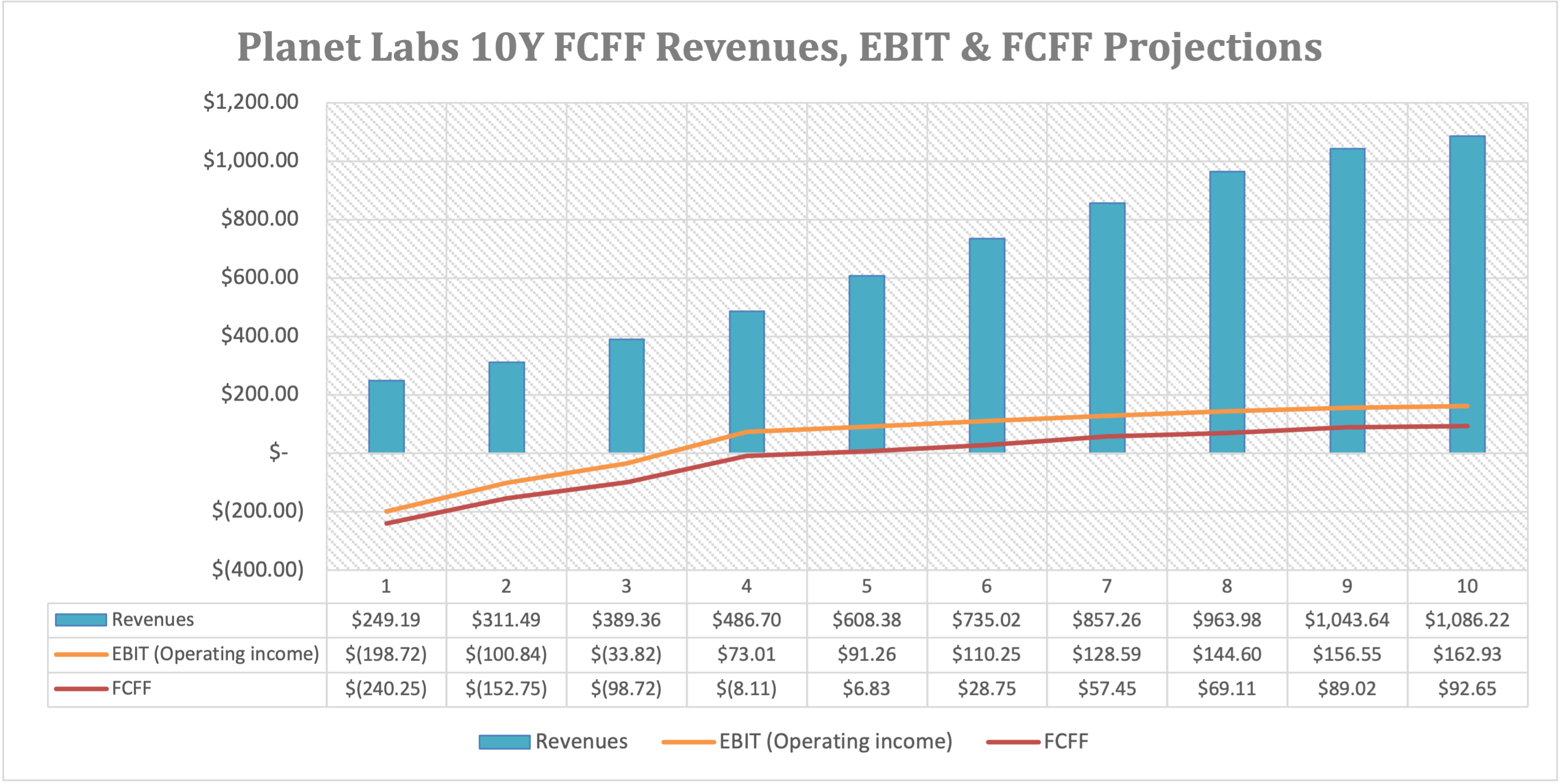
The table below outlines various scenarios with different Revenue CAGRs and Operating Margins, culminating in a range of fair value estimates for Planet Labs stock.
Table 3: Varying key assumptions (Revenue CAGR and OM) and the resulting fair value of the Planet Labs stock.
| Revenue CAGR (up to Y5) | Operating Margin | Fair Value Per Share | Premium/Discount (from $2.20) |
| 25% | 10% | $1.79 | -32.70% |
| 20% | 15% | $2.66 | +20.90% |
| 25% | 15% | $3.18 | +44.45% |
| 30% | 15% | $3.82 | +73.64% |
| 25% | 20% | $4.56 | +107.27% |
After averaging the outcomes from the above scenarios, which I view as generally conservative, the estimated fair share price is projected at $3.20, indicating a potential 45% upside from the current $2.20 level.
The following figure demonstrates the correlation between Planet Labs stock, its main competitors and major indices. With a correlation of 0.44 with the S&P 500 and NASDAQ 100, Planet Labs exhibits moderate connection with the major indices and does not seem to serve as a diversifying asset for now.
Correlation between Planet Labs, its main competitors, the S&P 500 and NASDAQ 100. (Author's figure)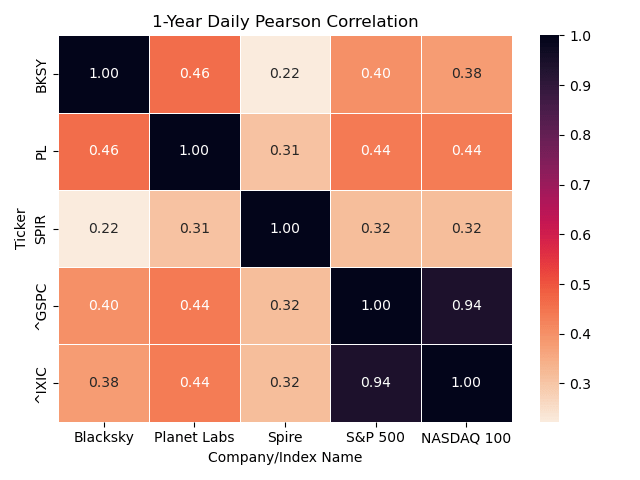
The standard deviation (a measure of how much a stock varies) for the companies shown above are:
| Planet Labs (PL) | BlackSky (BKSY) | Spire (SPIR) | S&P 500 (^GSPC) | NASDAQ 100 (^IXIC) | |
| 1Y Standard Deviation | 61.99% | 70.57% | 87.99% | 12.20% | 16.08% |
The final recommendation incorporates an analysis of short-term stock movements (Quant), the company's future cash flow generation potential (Valuation), and its market prospects and industry positioning (Future).
Table 4: Stock recommendations based on three different factors and the resulting overall recommendation.
| Factor | Grade |
| Quant | HOLD |
| Valuation | BUY |
| Future | STRONG BUY |
| Overall | BUY |
The investment narrative for Planet Labs is framed within the expansive and dynamic New Space Industry. With space launch costs plummeting and a flood of competition reducing costs further, the industry's growth trajectory is steeply ascending. Planet Labs, as the largest operator of CubeSats, is poised to capture a significant share of this burgeoning market, benefiting from the industry's overall expansion and technological advancements in aerospace and AI/ML capabilities.
Planet's business model, characterized by its "Agile Aerospace" approach and the use of cost-effective COTS components, showcases its ability to maintain controlled capital expenditures while continuing to innovate and improve its offerings. The company's strategic investments and stakes in startups using Planet data for EO-based products signal a savvy move to embed itself within the ecosystem, potentially sharing in the success of future market unicorns.
The improvements in satellite technology, particularly in spatial, temporal, spectral, and radiometric resolutions, suggest that Planet's capabilities will only grow stronger, unlocking innovative applications for EO data. The vast range of problems that EO data can address—agriculture, disaster response, environmental monitoring, and more—illustrates the critical role Planet Labs plays in offering solutions that enhance global well-being.
However, the investment landscape is not without risks. Systemic challenges like reliance on government spending, geopolitical constraints, and market readiness could pose hurdles. Idiosyncratic risks, including a narrow industry focus and high SG&A expenses, also warrant attention. Despite these challenges, the FCFF valuation indicates a fair share price that offers a considerable upside from current levels, suggesting that the stock may be undervalued.
The action recommendation reflects confidence in Planet Labs' future cash flow generation and market prospects, with an overall 'BUY' rating. This rating takes into account the potential for short-term holding patterns (Quant) but underscores the strong future outlook (Future) based on the company's valuation and industry-leading position.
If you hold a differing viewpoint or spot any gaps in my analysis, I invite you to share your feedback; it only serves to enhance and refine my investment thesis. I aim to deliver comprehensive evaluations of companies, delve into market trends and predictions, and build a well-informed investment strategy from the ground up. Your input is instrumental in achieving that. Thank you for your time and engagement!
Editor's Note: This article covers one or more microcap stocks. Please be aware of the risks associated with these stocks.