
sankai
sankai
Preferred securities tend to not get much love by investors, but they are a unique part of the marketplace worth covering. For those looking for a hybrid of income and capital appreciation, a fund focused on this part of the investable landscape like the First Trust Preferred Securities and Income ETF (NYSEARCA:FPE) is worth focusing on. FPE is a high-yield, actively managed fund that primarily invests in preferred securities and income-producing debt securities. This investment strategy aims to provide current income and total return to investors. By focusing on preferred securities, FPE offers the potential for high yields without significantly increasing risk.
Launched on 2/11/2013, FPE seeks to provide total return and current income. It is managed by Stonebridge Advisors LLC, a niche asset management firm that specializes in preferred and hybrid securities. The fund's expense ratio stands at 0.84%, and it boasts a 30-Day SEC Yield of 5.91%.
FPE is not an index fund but an actively managed ETF, which means its fund managers have the flexibility to make discretionary decisions based on real-time market conditions. This active management approach allows FPE to adapt to changing market scenarios and potentially deliver superior returns.
The FPE portfolio comprises preferred stocks, which are hybrid securities that behave like both stocks and bonds. Preferred stocks are higher in the capital structure than common stocks, providing a more stable income stream and less volatility. As such, they can be particularly attractive to income-seeking investors.
FPE holds 232 securities, with a weighted average effective duration of 4.68 years. About 74.71% of its holdings were institutional securities (e.g., $1000 par), while 25.29% were retail securities (e.g., $25 par). The weighted average % of par was 95.13%, indicating that the underlying securities were trading at a slight discount on average.
No surprises, but the top positions are in the Financials sector, which tend to be a big issuer of preferred shares. No position makes up more than 2.44% of the fund, making this well diversified overall.
ftportfolios.com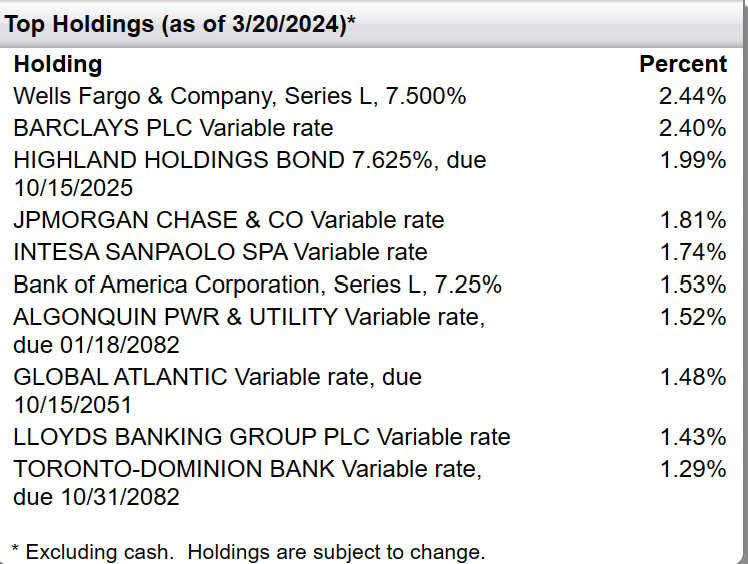
Note these include companies headquartered outside the U.S. as well, making the fund have some geographic diversification as well.
ftportfolios.com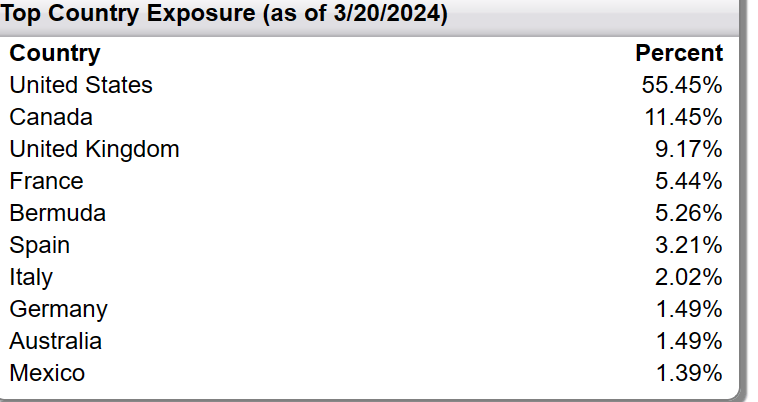
The sector composition of a fund is a critical factor for investors as it determines the fund's exposure to different industry sectors. The sector exposure of FPE is heavily concentrated in the financial sector, primarily banks and insurance companies.
ftportfolios.com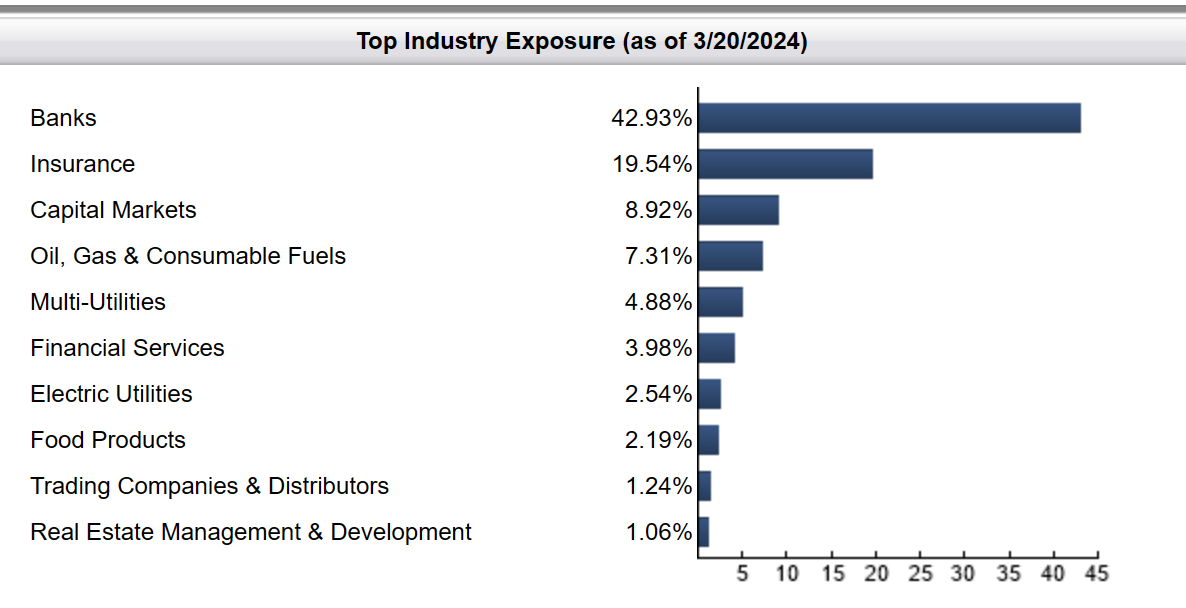
This sector composition reflects the nature of preferred securities, which are commonly issued by financial institutions. However, it also means that FPE is particularly exposed to risks associated with the financial sector, such as regulatory changes, economic downturns, and interest rate fluctuations.
When evaluating an ETF, it's essential to compare it against similar funds. This section provides a comparison of FPE against three popular preferred stock ETFs: the Global X U.S. Preferred ETF (PFFD), iShares Preferred & Income Securities ETF (PFF), and the Invesco Preferred Portfolio ETF (PGX).
FPE stands out for its active management approach and its focus on both preferred and income-producing debt securities. That's caused the fund to meaningfully outperform its competitors, as we can see below.
stockcharts.com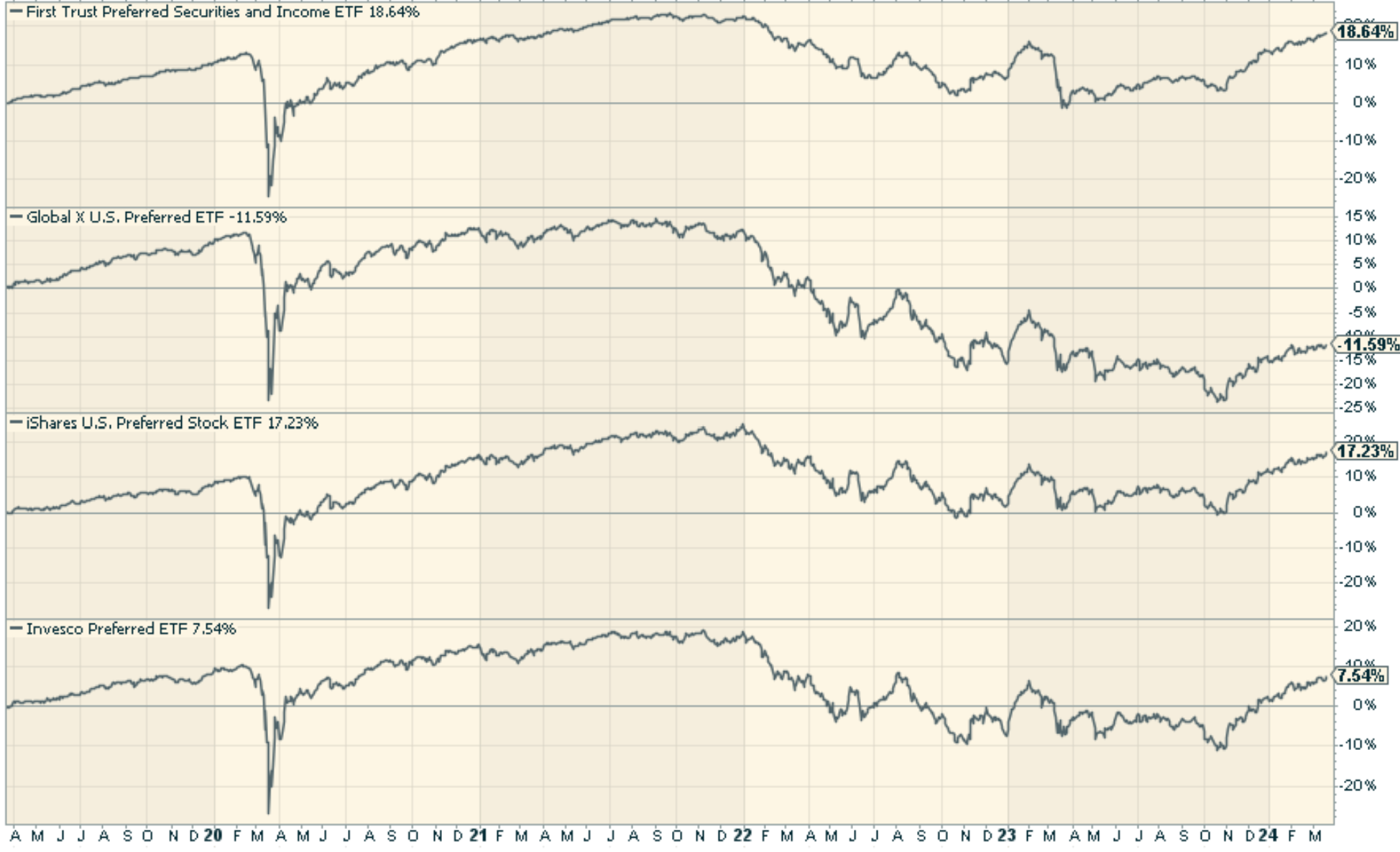
Like any investment, the decision to invest in FPE should be based on an assessment of the pros and cons.
ftportfolios.com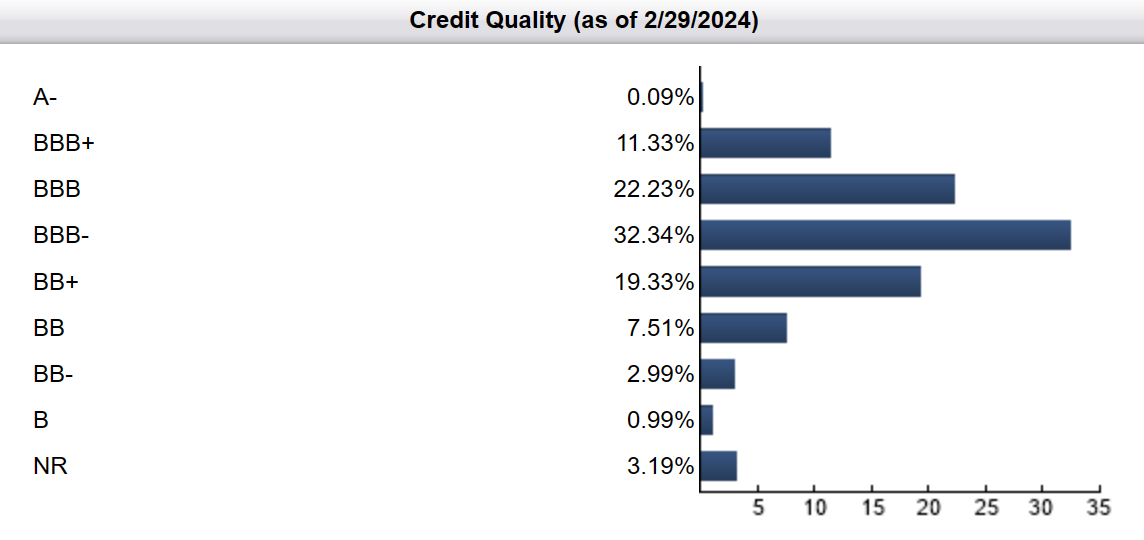
Investing in the First Trust Preferred Securities and Income ETF can be an attractive option for investors seeking high yields and diversification benefits. FPE's focus on preferred securities provides a potential for high income while its active management approach can navigate changing market conditions.
However, prospective investors should also consider the risks associated with investing in FPE. The fund's heavy concentration in the financial sector and its exposure to interest rate and credit risk are critical factors to consider. Overall, while it carries certain risks, its potential for high yield and the benefits of active management make First Trust Preferred Securities and Income ETF a worthwhile consideration for investors looking for diversified income opportunities.