
With 85% ownership of the shares, NVR, Inc. (NYSE:NVR) is heavily dominated by institutional owners
Key Insights
-
Given the large stake in the stock by institutions, NVR's stock price might be vulnerable to their trading decisions
-
The top 18 shareholders own 50% of the company
If you want to know who really controls NVR, Inc. (NYSE:NVR), then you'll have to look at the makeup of its share registry. With 85% stake, institutions possess the maximum shares in the company. That is, the group stands to benefit the most if the stock rises (or lose the most if there is a downturn).
Given the vast amount of money and research capacities at their disposal, institutional ownership tends to carry a lot of weight, especially with individual investors. Hence, having a considerable amount of institutional money invested in a company is often regarded as a desirable trait.
In the chart below, we zoom in on the different ownership groups of NVR.
Check out our latest analysis for NVR
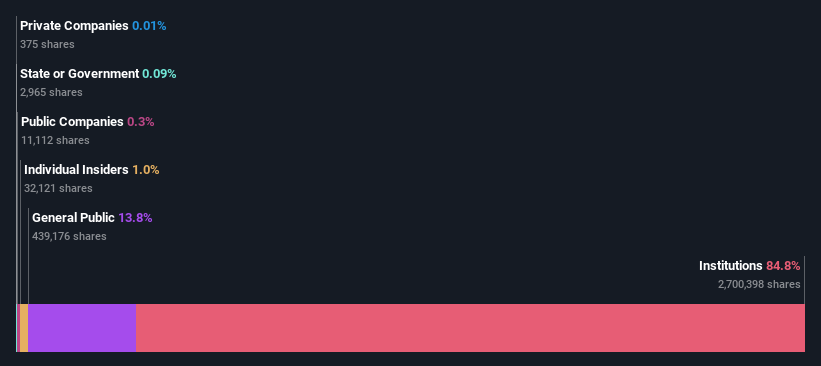
What Does The Institutional Ownership Tell Us About NVR?
Institutional investors commonly compare their own returns to the returns of a commonly followed index. So they generally do consider buying larger companies that are included in the relevant benchmark index.
We can see that NVR does have institutional investors; and they hold a good portion of the company's stock. This implies the analysts working for those institutions have looked at the stock and they like it. But just like anyone else, they could be wrong. When multiple institutions own a stock, there's always a risk that they are in a 'crowded trade'. When such a trade goes wrong, multiple parties may compete to sell stock fast. This risk is higher in a company without a history of growth. You can see NVR's historic earnings and revenue below, but keep in mind there's always more to the story.

Investors should note that institutions actually own more than half the company, so they can collectively wield significant power. Hedge funds don't have many shares in NVR. The Vanguard Group, Inc. is currently the largest shareholder, with 11% of shares outstanding. With 8.4% and 5.2% of the shares outstanding respectively, BlackRock, Inc. and Capital Research and Management Company are the second and third largest shareholders.
Looking at the shareholder registry, we can see that 50% of the ownership is controlled by the top 18 shareholders, meaning that no single shareholder has a majority interest in the ownership.
While it makes sense to study institutional ownership data for a company, it also makes sense to study analyst sentiments to know which way the wind is blowing. There are a reasonable number of analysts covering the stock, so it might be useful to find out their aggregate view on the future.