
Natali_Mis
Natali_Mis
We cannot change the cards we are dealt, just how we play the hand.”― Randy Pausch.
Shares of genome editing therapy concern Intellia Therapeutics, Inc. (NASDAQ:NTLA) have move up by a third in the past month but are still down some 10% since we last paid it a visit in April 2023. The company appears to have a functional cure for HAE and an effective (and possibly curative) therapy for ATTR-CM and ATTRv-PN, but commercialization for all three remains many years away. With its stock likely to drift, the options market provides a way to generate significant returns with meaningful downside protection. An analysis follows below.
When we last looked at Intellia in April 2023, it’s volatile stock was trading in the mid-30s, down ~81% from an all-time high set in June 2021. It was advancing two promising clinical programs and attempting to move another four into human studies. Since that time, CRISPR Therapeutics (CRSP) and partner Vertex (VRTX) received first-ever approval for a therapy – Casgevy – for sickle cell disease and subsequently transfusion-dependent beta thalassemia, utilizing the same CRISPR-Cas9 genome editing technology as Intellia. Unlike CRISPR’s approved ex-vivo therapy, Intellia’s two leading assets leverage in vivo approaches. The company is now on track to initiate registrational trials for its two candidates in 2024.
November Company Presentation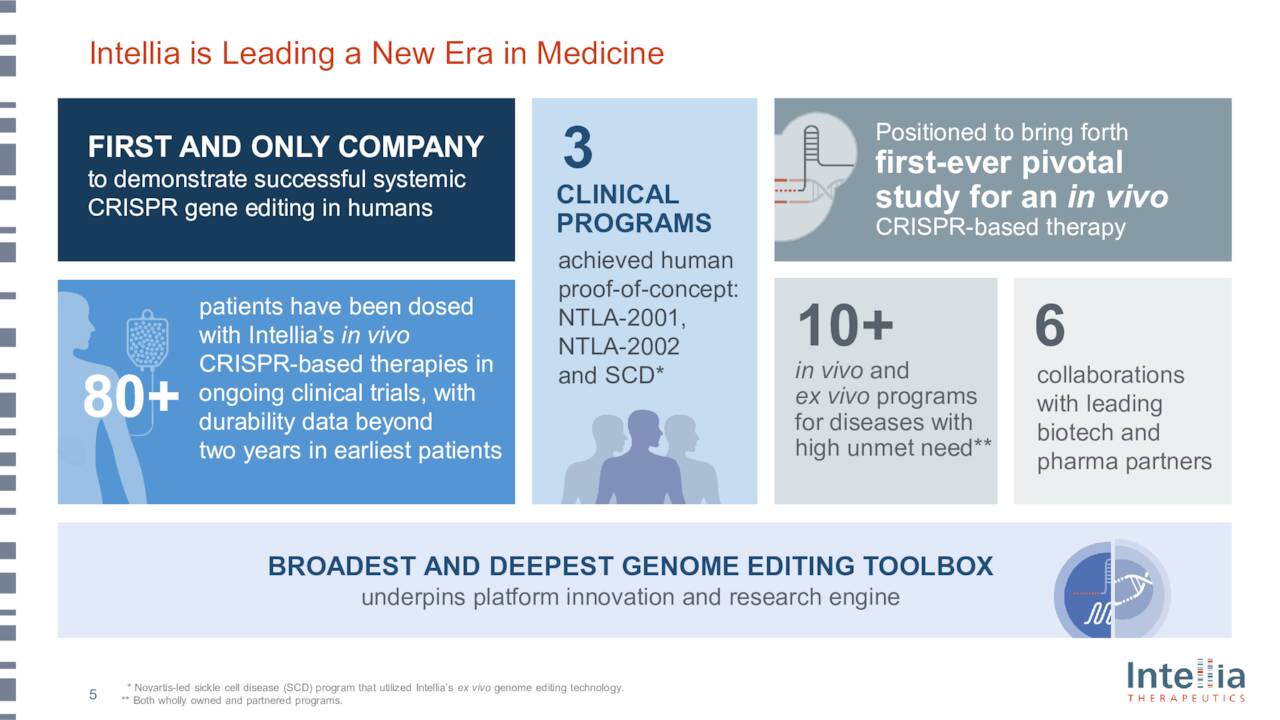
As a reminder, Intellia Therapeutics, Inc. is a Cambridge, Massachusetts-based clinical-stage biopharmaceutical concern focused on the development of potentially curative therapies leveraging its CRISPR-Cas9 genome editing platform. The company still has the same two programs in the clinic, with another slated to enter sometime in 2024. It has also signed multiple collaborations and licensing deals for its technology.
Intellia was formed in 2014 and went public in 2016, raising net proceeds of $112.1 million at $18 per share. The stock trades at just under $33.00 a share, translating to a market cap of just over $3.15 billion.
The CRISPR-Cas9 technology buttressing Intellia was pioneered by one of its scientific co-founders, Jennifer Doudna, who along with Emmanuelle Charpentier received the 2020 Nobel Prize in Chemistry for their contribution to the field of genomic editing. CRISPR-Cas9 is an acronym for Clustered, Regularly Interspaced Short Palindromic Repeats-CRISPR associated 9. It is a system comprised of two molecules that introduce an edit into DNA.
One (Cas9) is an enzyme (endonuclease) that acts as a pair of molecular scissors, cutting two strands of DNA at a specific location in the genome so that bits of DNA can then be added or removed. The other is a guide RNA (gRNA), consisting of a small piece of pre-designed RNA sequence (~20 bases in length and unique relative to the rest of the genome) that is complementary to those of the target DNA sequence in the genome and part of a longer RNA scaffold. The scaffold binds to DNA and the pre-designed sequence guides the Cas9 enzyme to the targeted part of the genome, where it executes the cut. Once spliced, the cell recognizes that its DNA is damaged and attempts a repair. Intellia leverages this DNA repair machinery to introduce changes to one or more genes in the genome of the target cell.
These ‘edits’ can take on many forms, including knockout/deletion, repair, insertion, or consecutive editing.
The first type occurs when the resulting changes in the DNA from the splice impair the function of any encoded protein, effectually knocking it out. Intellia has identified gRNAs that perform this task at high frequency with no substantial off-target effects. Repair and insertion require – in addition to the Cas9 protein and gRNA – a template DNA containing the desired genomic sequence that is inserted to correct a patient’s original incorrect sequence. This sequence is delivered (in many cases) by lipo-nanoparticles (LNPs) in combination with a CRISPR-Cas9 complex. Consecutive editing is any combination of knockout and insertion.
LNPs are a preferred delivery system as they have already been validated as a delivery mechanism for therapeutic nucleic acids to the liver via intravenous administration, are well-tolerated, and can be manufactured at scale.
From this CRISPR-Cas9 platform, Intellia has developed two delivery methodologies: its more advanced in-vivo approach; and an ex-vivo strategy in which the cells are removed from the body, modified by CRISPR, and returned. The former approach has produced its two knockout clinical programs.
November Company Presentation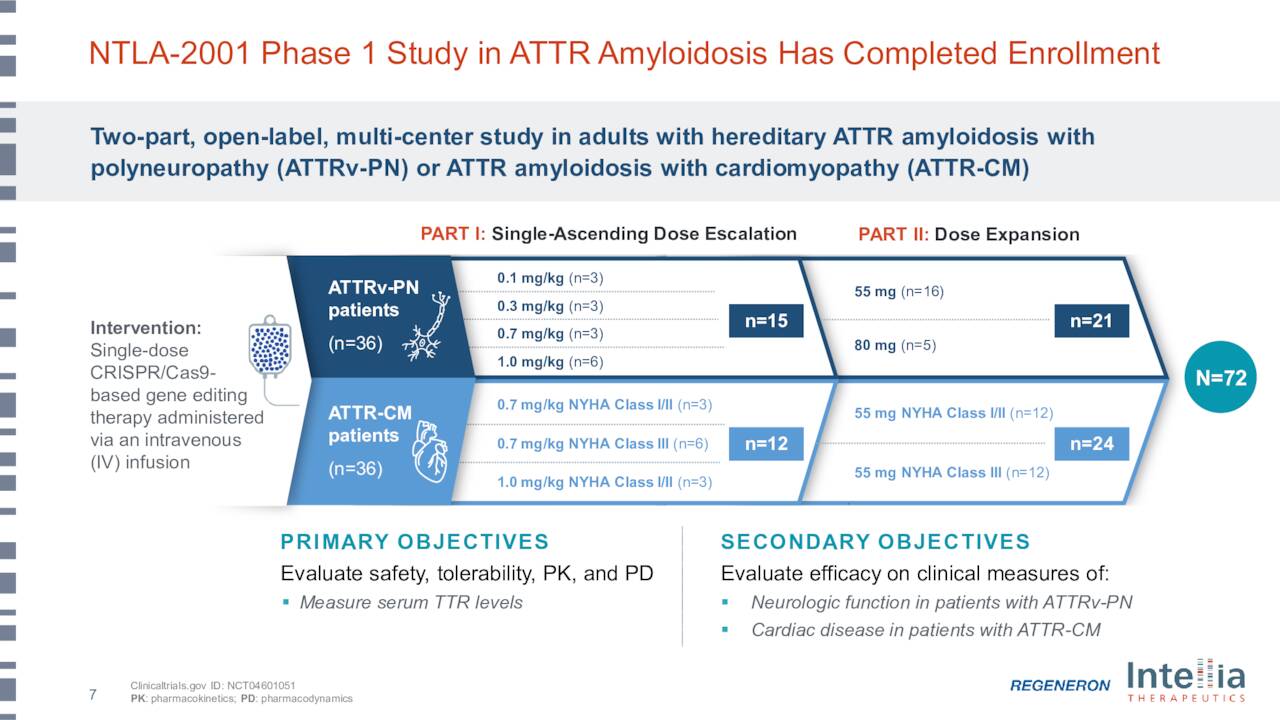
NTLA-2001. The company’s first systemically delivered CRISPR-based therapy is NTLA-2001, which is undergoing investigation in a Phase 1 study in the treatment of transthyretin (ATTR) amyloidosis, a disease where the liver produces faulty transthyretin (TTR) proteins. These abnormal proteins break apart, misfold on themselves and form clumps of amyloid fibrils. They are carried by the circulatory system and deposited in nerves or (typically) in the left ventricle of the heart, causing polyneuropathy or cardiomyopathy, respectively. As such, patients afflicted with ATTR amyloidosis suffer heart failure, shortness of breath, muscle weakness, and sensory deficits. Intellia believes that this malady vexes between ~250,000 and ~550,000 worldwide, of which ~50,000 cases are hereditary. Life expectancy after diagnosis is two to seven years for cardiomyopathy (ATTR-CM) patients and approximately ten years for polyneuropathy (ATTRv-PN) patients.
There are four FDA-approved therapies for ATTRv-PN, including RNA-silencers such as Alnylam’s (ALNY) IV-infused Onpattro (patisiran), as well as AstraZeneca’s (AZN) and Ionis’ (IONS) recently green-lighted self-injected, ligand-conjugated antisense oligonucleotide therapy Wainua (eplontersen). There is only one approved therapy (Pfizer’s (PFE) Vyndamax (tafamidis)) for ATTR-CM. These treatments have varying degrees of effectiveness, but all require lifetime dosing. By contrast, NTLA-2001 aspires to be a one-time dose with curative potential. The company places the FY29 global market opportunity for ATTR amyloidosis treatments at ~$11+ billion.
In an ongoing open-label, two-part, two-arm – one for ATTR-CM and the other for ATTRv-PN – Phase 1 trial, NTLA-2001 achieved a 91% mean reduction in serum TTR versus baseline at day 28 in the 62 evaluable patients who received a dose of 0.3mg/kg or higher. Furthermore, this response was sustained at 12 months in the 29 patients who had reached that threshold as of the May 11, 2023 cutoff date. The therapy was well tolerated across all dose levels.
November Company Presentation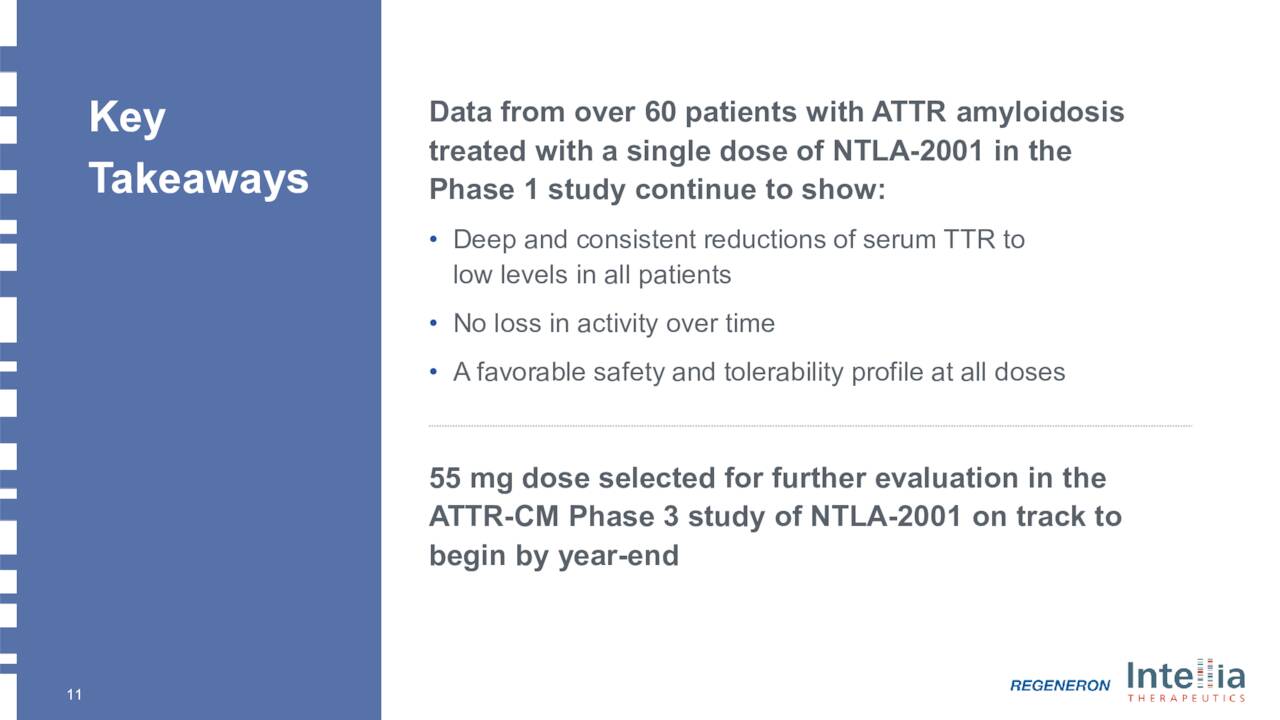
Leveraging this data, Intellia was cleared to commence a pivotal 765-patient Phase 3 study (MAGNITUDE) for ATTR-CM with the first individual expected to be dosed in 1Q24. The trial will randomize patients 2:1 to receive a single 55mg IV infusion of NTLA-2001 or placebo with a composite primary endpoint of cardiovascular [CV]-related deaths and events. Secondary endpoints include serum TTR levels and scoring on the Kansas City Cardiomyopathy Questionnaire-Overall Summary. Sub-groups will be monitored based on levels of prior or concomitant tafamidis therapy. In addition to patient enrollment speed, the length of the study will be determined by the occurrence of a pre-specified number of CV events and a minimum of 18 months follow up.
November Company Presentation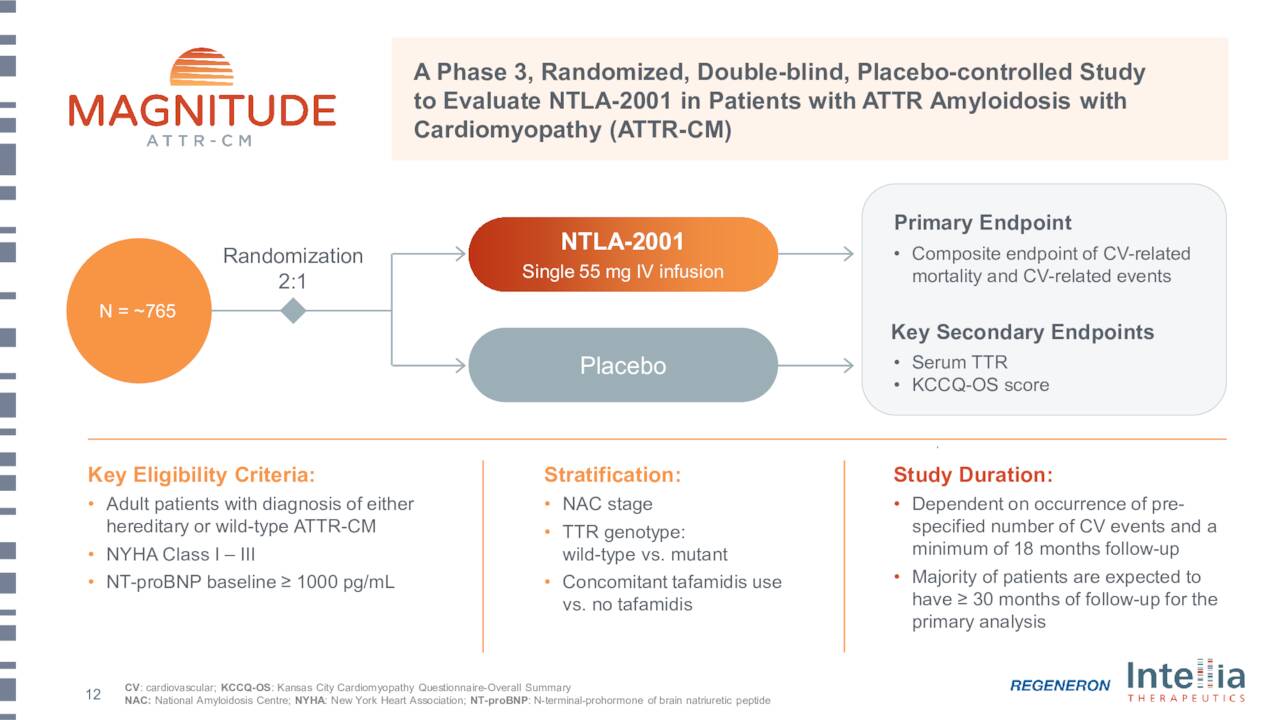
As for the ATTRv-PN indication, management has only committed to preparing for a Phase 3 trial in 2024.
Intellia will also present additional data from the ongoing and fully enrolled Phase 1 study in 2024.
The development of NTLA-2001 is being conducted in conjunction with Regeneron (REGN), the details of which are discussed below.
NTLA-2002. More likely to receive approval first is NTLA-2002, which is undergoing evaluation in the treatment of Type I or Type II Hereditary Angioedema [HAE]. The disease is characterized by recurrent, painful, and unpredictable episodes of severe swelling, typically of the limbs, face, intestinal tract, and airway with an average age of onset near 20 years. These manifestations are a function of increased levels of the protein bradykinin. Most HAE patients are lacking C1 esterase inhibitor (C1-INH) protein, which thwarts bradykinin overproduction. This rare genetic disorder afflicts ~20,000 individuals worldwide, for which approved treatment options exist with varying degrees of efficacy, but none hold the possibility of a functional cure from a one-and-done administration. Management places the FY29 global market opportunity for HAE therapies at north of $6 billion.
In the open-label Phase 1 portion of a Phase 1/2 study featuring ten patients, NTLA-2002 yielded exceptional results, producing a 95% monthly HAE attack rate reduction through the latest follow up and at least a 67% mean reduction of kallikrein levels across all three doses. Median duration of follow up was nine months. Perhaps more impressive is that not one attack occurred in any of the ten patients after week 16. All six patients who were on concomitant prophylactic therapy discontinued use owing to NTLA-2002’s effectiveness. Furthermore, no Grade 3 or Grade 4 adverse events were observed.
Data from the fully enrolled Phase 2 portion of this trial are expected in 2024. However, given that Intellia appears to possess a functional cure for HAE, it is pressing ahead with a pivotal Phase 3 trial that it hopes to initiate in 2H24, subject to regulatory feedback, with an eye on filing a BLA in 2026. Speeding this process along are a slew of designations for NTLA-2002, the most important of which is Regenerative Advanced Medicine Therapy, making it eligible for priority review or accelerated approval with less than complete data sets.
Unlike, NTLA-2001, NTLA-2002 is wholly owned by Intellia.
NTLA-3001. Also untethered by collaborations is NTLA-3001, which Intellia expects to enter the clinic in early 2024 as a SERPINA1 gene insertion candidate to treat alpha-1 antitrypsin deficiency (AATD)-associated lung disease, a genetic disorder leading to lung and/or liver disease that afflicts ~250,000 globally. If ultimately successful, the in vivo therapy would eliminate the need for weekly IV infusions of A1AT protein or lung transplants in severe cases.
These three programs will be the company’s prerogative going forward, as it de-prioritizes other non-collaboration discovery work, which resulted in the elimination of ~90 positions in January 2024.
Regeneron. Unaffected by these layoffs is an in vivo insertion program for the treatment of Hemophilia B currently in IND-enabling studies, as its development is being managed by partner Regeneron. It is part of a collaboration that includes up to 15 in vivo targets with a mix of co-developed and licensed programs. For NTLA-2001, Regeneron will share 25% of the costs and profits; for the Hemophilia B program, Regeneron will share 65% of the costs and profits; and for targets exclusively developed by Regeneron, Intellia is eligible to receive milestones of $320 million per target in addition to high single to low double-digit royalties.
To fund these endeavors, the company held ~$1 billion in cash at YE23, providing it a runway into mid-2026.
Since fourth quarter results hit on February 22nd, a dozen analyst firms including Barclays, BMO Capital and JP Morgan have reissued/assigned Buy/Outperform ratings on the stock. Price targets proffered range from $26 to $76 a share, with the majority of ratings in low $60s to mid $70s range. Five analyst firms including Goldman Sachs and Citigroup have maintained/initiated Hold/Neutral ratings on the stock.
With commercialization of the likely game-changing NTLA-2001 still three years away and approval-worthy data from NTLA-2002’s Phase 3 trial also years away, shares of NTLA have lost approximately 10% of their value since we last looked at them in April 2023. However, through a covered call strategy, there is an opportunity to bank solid upside in Intellia Therapeutics, Inc. stock with meaningful downside protection.
Note: NTLA was recommended to Biotech Forum members on February 3rd when the stock traded in the mid-$20s as a detailed covered call trade.
Life is worth living as long as there's a laugh in it.”― Lucy Maud Montgomery.