selvanegra
selvanegra
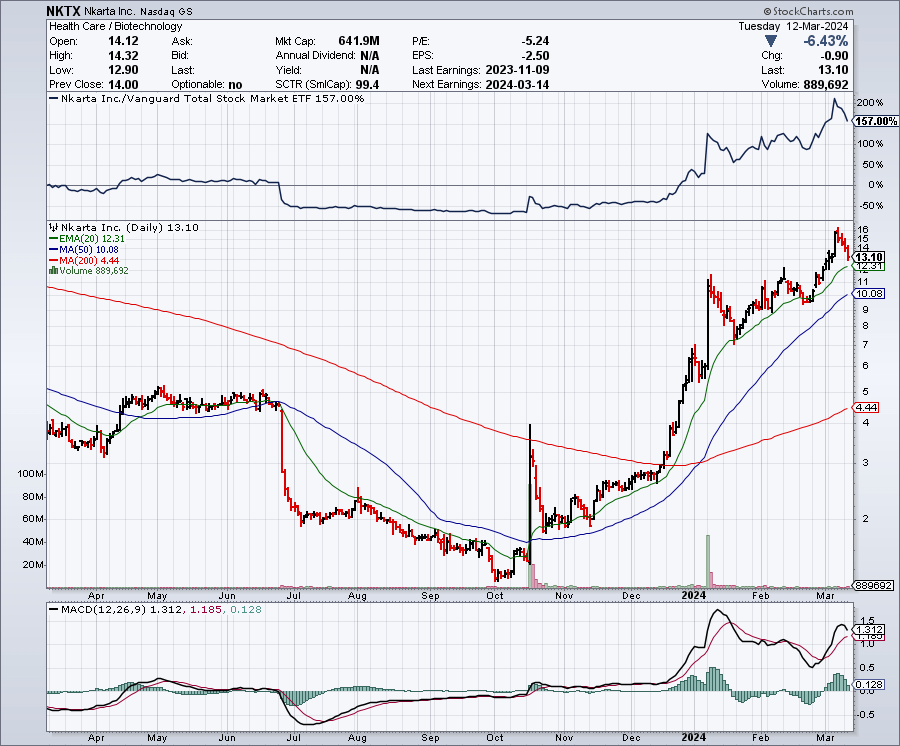
Nkarta's (NASDAQ:NKTX) stock is up an astounding 690% within the past six months. Subsequently, the stock is ranked 15 out of 4539 stocks in Seeking Alpha's Quant Ranking. Let's check it out.
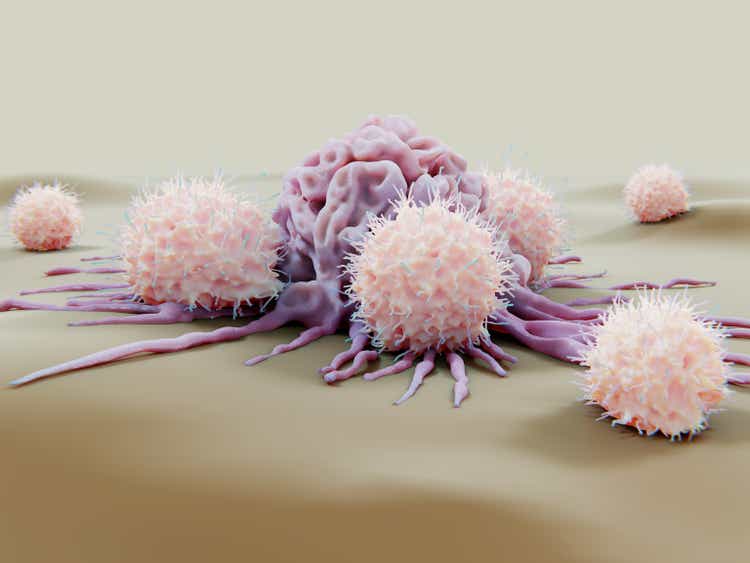
Nkarta uses cell therapies, specifically natural killer cells (NK cells), to treat cancer and autoimmune conditions. The theorized benefit of NK cells over CAR-T (T cell therapy) therapies is multifold. For one, NK cells are able to target multiple tumor antigens, which may allow improved activity against solid tumors. Two, NK cells pose a lower risk of cytokine release syndrome, which can be a deadly side effect of CAR-T therapies. Third, Nkarta's "off-the-shelf availability" allows for the manufacturing of NK cells from healthy donors so that treatments are readily available for diseased individuals.
Nkarta
On the flip side, there are challenges to NK cell treatments like long-term efficacy, manufacturing scale-up, and integration with existing treatments.
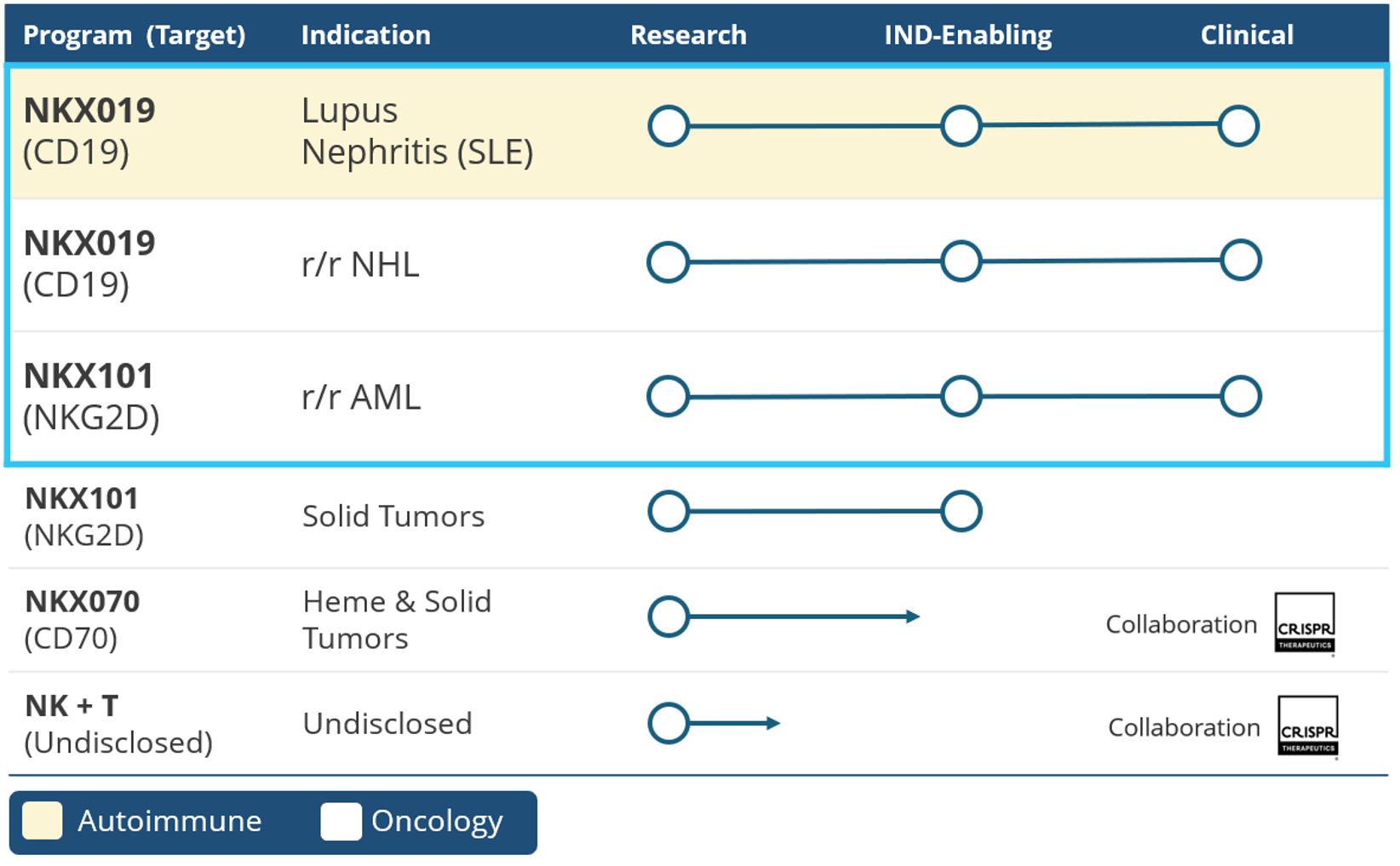
Interestingly, Nkarta's lead candidates focus on liquid tumors (NHL and AML) and autoimmune conditions (lupus nephritis). For the former, a few CAR-T therapies are approved for NHL, including Yescarta and Kymriah. Both therapies have boxed warnings for the risk of cytokine release syndrome and neurotoxicity. Lupus nephritis, a complication of systemic lupus erythematosus, is typically treated with immunosuppressants, so cell therapy would be a totally new weapon.
Nkarta's first stock-moving event occurred in October after the company reported that the FDA gave the green light to test NKX019 in lupus nephritis. Moreover, after some cost-cutting measures, Nkarta stated their cash runway extended into 2026 and they hinted at several catalysts in 2024 (e.g., NKX019 and NKX101 updates). Following this update, an analyst from Raymond James upgraded Nkarta to "strong buy," noting the market opportunity for NKX019 in lupus nephritis and the company's efforts towards completing a manufacturing facility.
Those updates came during a renewed interest in cell therapies for autoimmune diseases. In December, per an ASH report, noted:
Based on the findings, researchers say CAR-T therapy appears to be a promising alternative to autologous stem cell transplant, which is currently seen as the most curative option for life-threatening autoimmune disease when other treatments do not work, but which carries a significant risk of serious side effects.
So, an alternative to autologous stem cell transplants could serve as a multi-billion-dollar opportunity for cell therapies. But, clearly, Nkarta will face rigid competition. Their off-the-shelf NK cells may offer key differentiation in convenience, safety, and efficacy over CAR-T therapies and existing treatments. Moreover, the role of NK cells in lupus nephritis development is well documented, so this isn't some shot in the dark.
Nkarta anticipates dosing the first patient and providing a program update in the first half of this year. They also anticipate revealing clinical data in "12 to 20 new patients" in their AML trial.
All in all, the renewed interest in cell therapies for autoimmune disorders has perked Nkarta's valuation considerably. In my view, autoimmune disorders like lupus nephritis are a lower-hanging fruit than many cancers for drug developers because of the (1) lack of existing treatment modalities and (2) the chronic nature of such disorders (e.g., requiring long-term treatment).
Turning to Nkarta's balance sheet: Current assets, primarily composed of short-term investments, total $360 million. Current liabilities equal $22 million. Subsequently, Nkarta's current ratio is quite high, which indicates they can easily cover short-term liabilities.
Net cash used in operating activities was $57 million in the year ending December 31. This suggests a cash burn rate of $4.75 million each month. Dividing their current assets by their monthly cash burn suggests at least three years of cash runway. It's important to note that this is a historical cash runway estimate. Moreover, Nkarta's net loss was much higher ($113 million), partially because they invested $47 million in property and equipment. So, it's best to just go with the forward-looking estimate Nkarta's management provided (2026).
The odds of Nkarta having to raise capital within the next twelve months are low. However, it's always wise to strategically raise cash if the stock price supports such action.
According to Seeking Alpha, Nkarta has a $717 million market capitalization. Stock momentum in all timeframes up to one year overwhelmingly outperforms the broader markets (SP500).
StockCharts.com
Per Fintel, the short interest percentage of the float is 24%, which is an exceptionally high figure that indicates marked skepticism. In the past six and twelve months, insider trading has favored buying (177,615 and 172,254 shares, respectively). Institutional holders are bullish, with new positions totaling around 9 million shares versus 2 million shares being sold out. There are some biotech-focused funds like Ra Capital (the largest holder), Adage Capital, and Boxer Capital involved.
Overall, despite the high short interest, I'd qualify Nkarta's market sentiment as "robust."
To summarize, there's a lot to like here. The potential of cell therapy for autoimmune disorders, although not brand new, is gaining steam, and we should soon see concrete proof of concept data. Nkarta, specifically, is of interest due to their unique profiling of NK cells, which may offer advantages over conventional cell therapies (CAR-T).
Still, there is a long way to go here and the data will have to live up to high expectations. Moreover, Nkarta does not have a monopoly on NK cells. Peers like Fate Therapeutics (FATE), Artiva Biotherapeutics, and Sanofi (SNY), among others, are all developing NK cell therapies. Beyond NK cell therapy, Nkarta figures to face competition from other cell therapies and existing, entrenched treatments.
However, for those interested in cell therapies for autoimmune disorders, Nkarta may be worth speculation heading into key catalysts. Nkarta is a Buy, but this is not for the risk averse. As always, investors should be aware of the risks involved with investing in small-cap biotechnology stocks, which include high volatility, relatively lower liquidity, and dilution.