
PM Images
PM Images
In real bull markets, you want illiquid, highly speculative investments because a rising tide lifts all boats, and disproportionately for smaller stocks. Except this time (at least so far). This bull market has entirely been driven by large-cap momentum. If you believe breadth will improve and small-caps lead markets higher in the next phase, then you may want to consider the iShares Micro-Cap ETF (NYSEARCA:IWC), a fund that offers exposure to the smallest of publicly traded companies in the US.
IWC is designed to track the performance of the Russell Microcap Index. Launched in 2005, the fund invests in micro-capitalization U.S. equities, providing investors with a gateway to a specific segment of the domestic stock market. Micro-cap stocks typically refer to companies with market capitalization between $50 and $300 million. These stocks are generally considered high-risk due to their smaller size, limited resources, and unproven track records. However, they also offer potential for significant returns, given their capacity for exponential growth.
The IWC ETF holds a diversified portfolio of about 1,500 micro-cap stocks. This diversification helps to mitigate some of the inherent risks associated with investing in individual micro-cap stocks. No position makes up more than 1.07% of the portfolio.
ishares.com
One of the interesting aspects of this fund is that the biggest allocation is to Healthcare.
ishares.com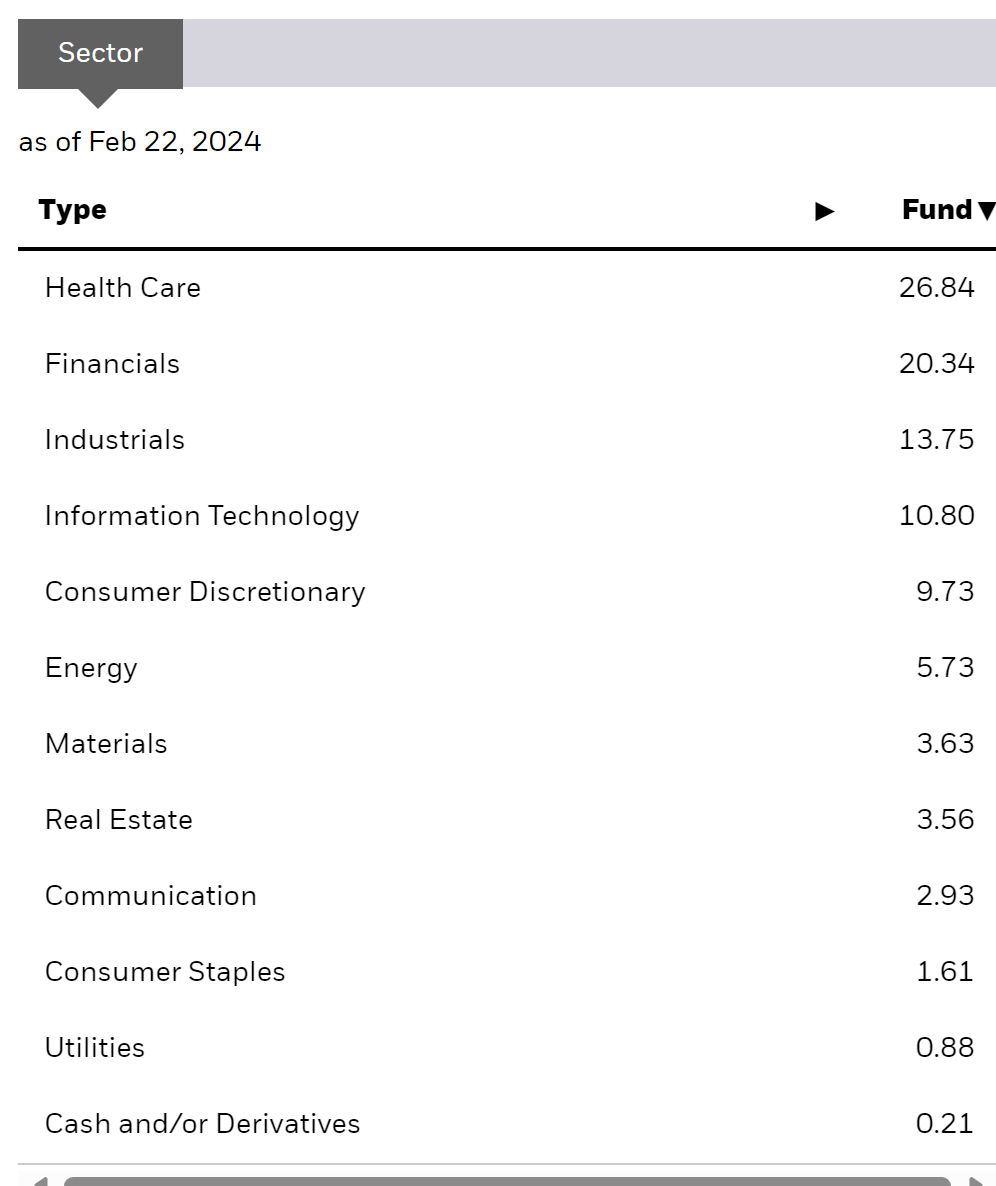
This is primarily due to the large number of publicly traded Biotech micro-caps. After Health Care comes Financials, which is largely a bunch of small regional banks. One could argue it makes sense why micro-caps have performed poorly in the last year, given that Biotech overall never really had any momentum in 2023 broadly, alongside regional banks going through their own crisis since March of last year. These could be the opportunities of 2024, however, as sector rotation takes hold eventually.
One fund that comps decently against IWC is the Royce Micro-Cap Trust (RMT). RMT is actively managed, has a higher average market cap ($750 million), and fewer holdings allowing for more concentrated exposure than IWC. When we look at a price ratio of IWC to RMT, RMT has outperformed, perhaps making the case that when it comes to micro-cap investing, active performs better than passive.
stockcharts.com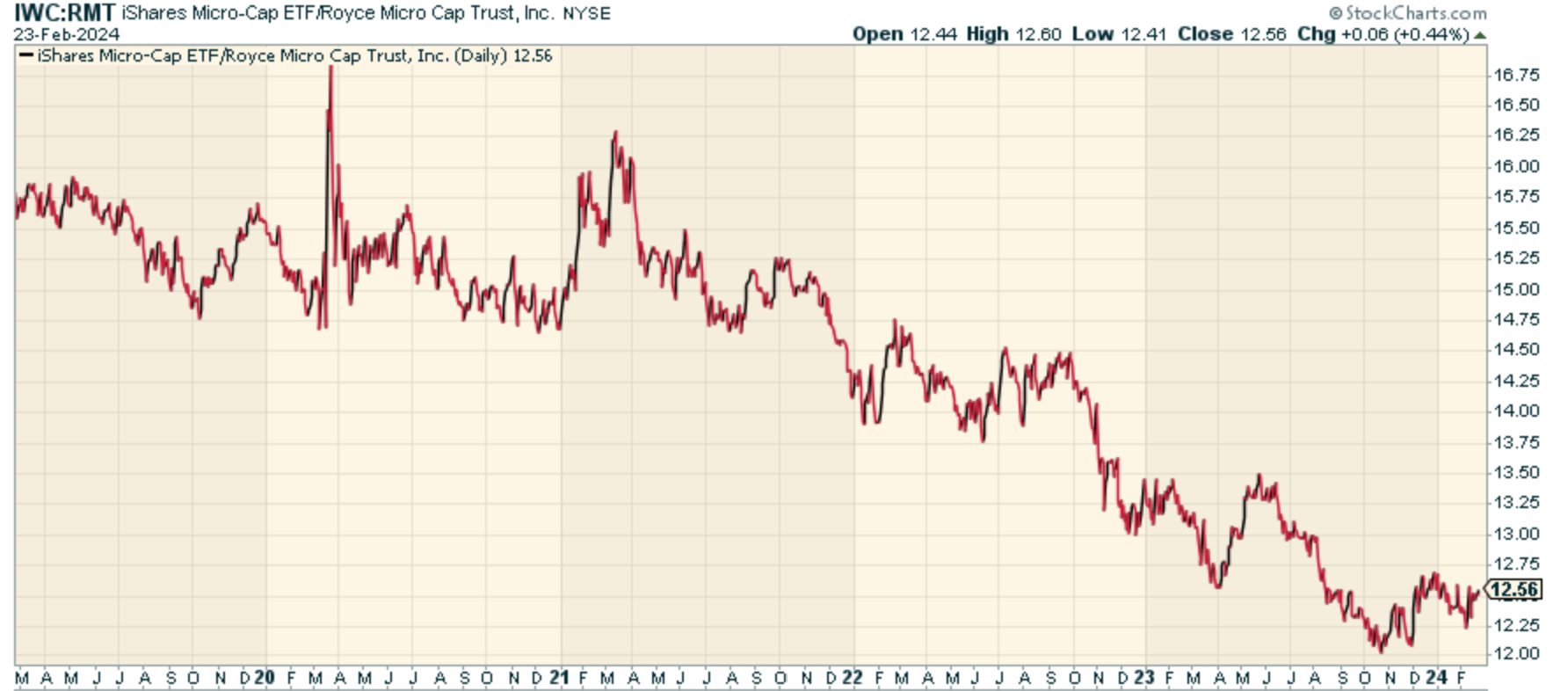
Investing in IWC provides exposure to a broad range of micro-cap stocks, offering potential for significant returns if these small companies succeed and grow. Additionally, the fund provides a level of diversification, as it holds around 1,500 individual stocks across various sectors.
On the flip side, the risks associated with investing in IWC are higher due to the inherent volatility and instability of micro-cap stocks. These companies often have limited access to capital and are more vulnerable to adverse market conditions. Should higher for longer rates continue, this becomes a major headwind for these companies, which could be forced into bankruptcy due to low free cash flow against rising interest expense.
Moreover, the fund's performance track record has been modest, lagging behind larger-cap indexes and other similar ETFs. This could be attributed to the challenges of passive investing in the micro-cap space, and concerns over credit availability keeping these companies afloat.
Investing in the iShares Micro-Cap ETF can offer investors a unique opportunity to gain exposure to the smallest publicly traded companies in the U.S. While the potential for high returns is attractive, the elevated level of risk associated with micro-cap stocks cannot be overlooked.
Considering the fund's mixed performance history and the inherent volatility of its holdings, IWC may be best suited for risk-tolerant investors seeking diversification and potential growth in their portfolio. Remember, while the allure of high returns can be tempting, it's crucial to thoroughly understand the risks involved and to invest in a manner that aligns with your financial goals and risk tolerance. Is there a catch-up trade to large-caps? If it's a bull market, I'd argue yes. If the AI momentum is a facade, then not so much.