
PM Images
PM Images
Small-caps have been relative underperformers against the S&P 500 for some time, but at showing some signs of life here. Should momentum continue, a small-cap fund focused on growth could be interesting to allocate to. The iShares S&P Small-Cap 600 Growth ETF (NASDAQ:IJT) aims to mirror the performance of the S&P SmallCap 600® Growth Index. With assets under management totaling roughly $5.7 billion and boasting an expense ratio of 0.18%, this fund stands out as a cost-effective option for growth-focused investors.
The investment case for choosing small-cap growth stocks over small-cap value stocks hinges on the potential for outsized returns due to these companies' rapid growth trajectories, innovation, and the ability to adapt quickly to market changes. Small-cap growth stocks are typically found in emerging industries or sectors with high-growth prospects, and they reinvest earnings back into the business to fuel further expansion, which can lead to significant price appreciation. These stocks are often more volatile and risky, but the trade-off is the opportunity for greater capital gains, especially for investors with a long-term horizon and a higher risk tolerance seeking to capitalize on market trends and the exponential growth phase of burgeoning companies.
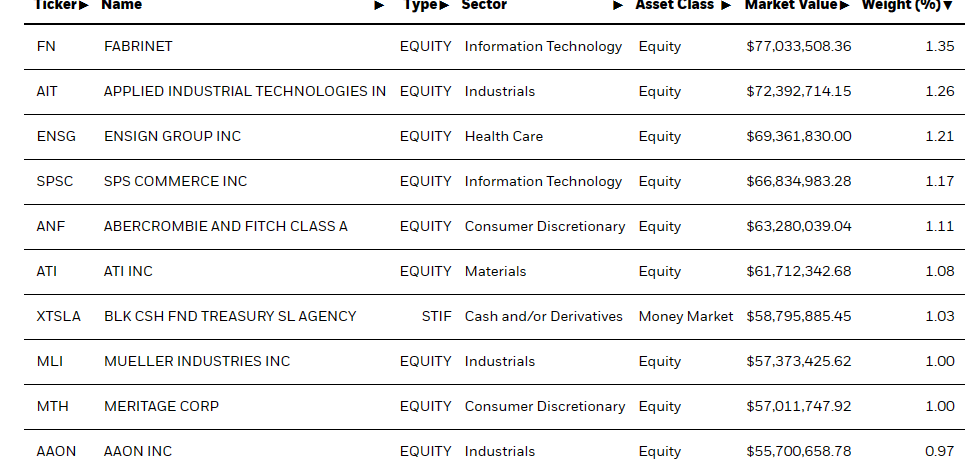
IJT is highly diversified, with no stock making up more than 1.35% of the portfolio's weight.
iShares
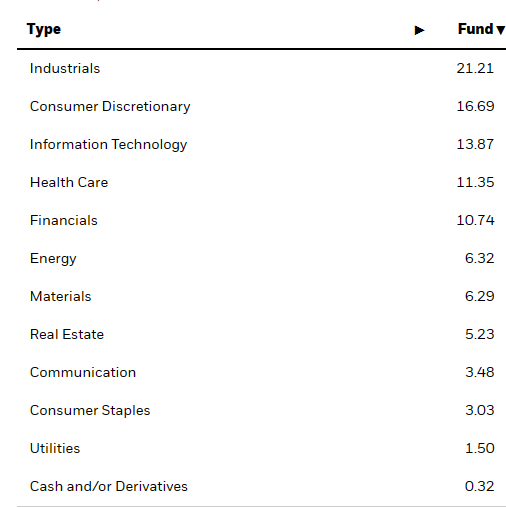
The fund's sector allocation is mostly weighted towards Industrials and Consumer Discretionary stocks, with Technology in 3rd place on overall weighting. It's worth noting that small-cap industrials have done exceptionally well in the last several months, while other sectors have been a drag on the fund's overall performance.
iShares
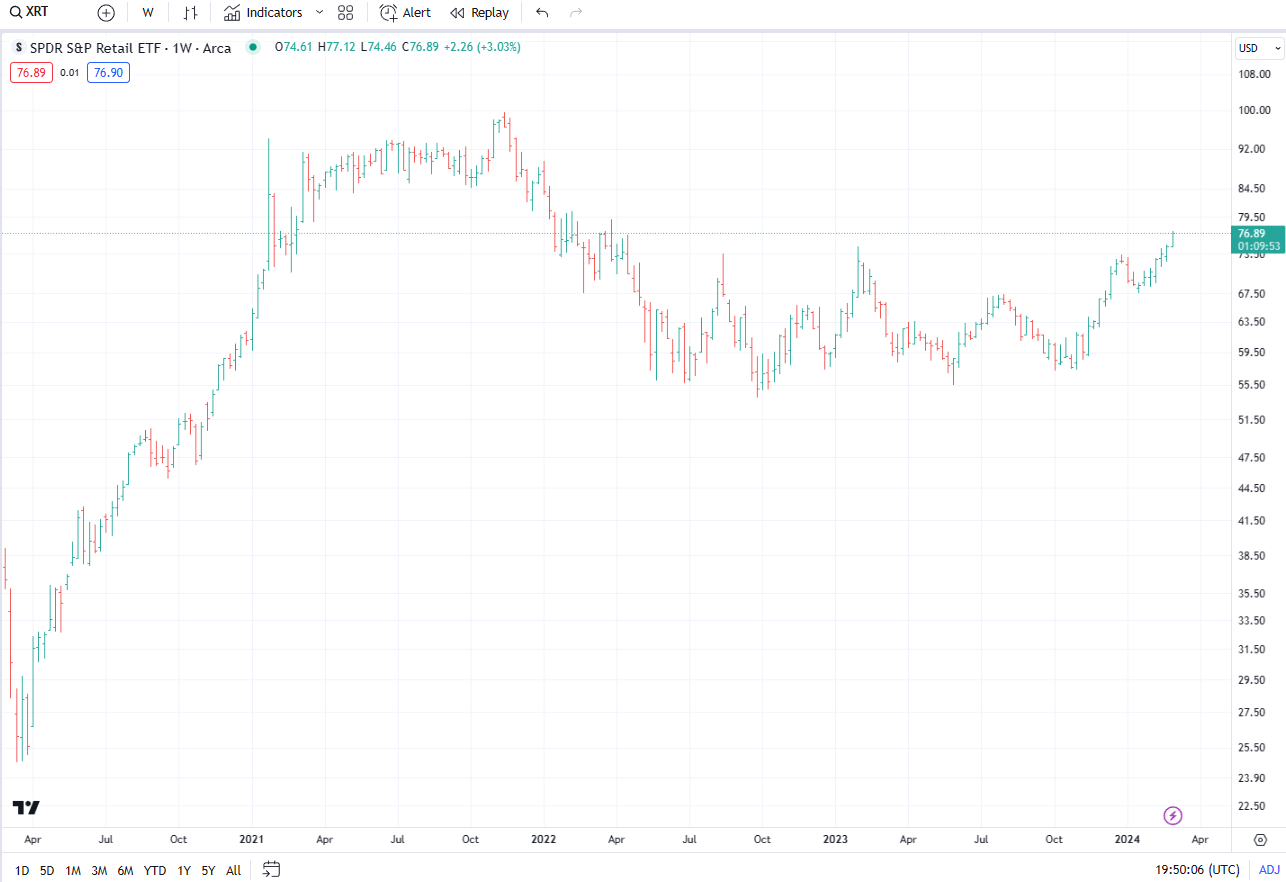
The Consumer Discretionary allocation gets to be interesting here. A lot of retailer stock haven't participated in the upside despite narratives around strong economy and robust consumer. Over the last week, though, there has been some momentum building in retailers. Looking at the XRT ETF as an example, an uptrend may finally be underway. This becomes a net positive for IJT as the Discretionary sector has a number of retailer stocks that can play catch up.
TradingView
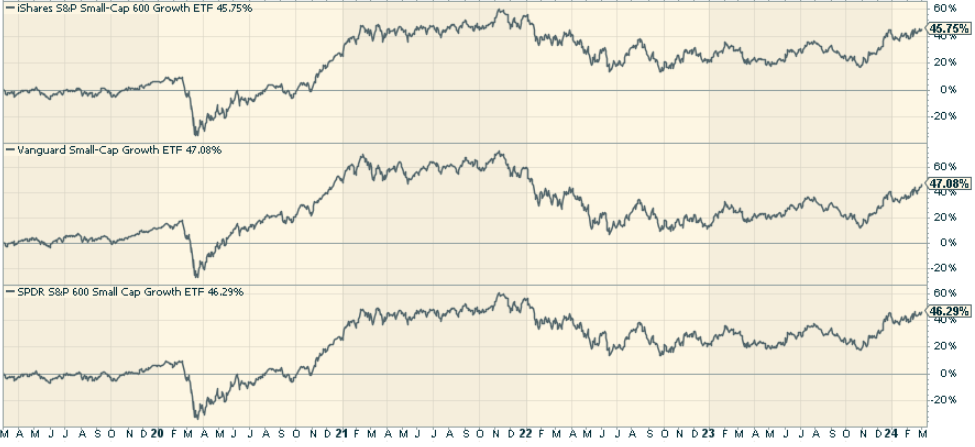
When juxtaposed with its peer ETFs, IJT maintains a competitive stance. With a net expense ratio of 0.18%, it is slightly more expensive than the SPDR S&P 600 Small Cap Growth ETF (SLYG) at 0.16%, and is more expensive than the Vanguard Small-Cap Growth Index Fund ETF (VBK) at 0.07%. The three funds have largely performed in line with each other, but clearly the fee differential over time makes a difference.
StockCharts.com
Investing in IJT comes with a distinct set of advantages and potential drawbacks that investors must consider:
The iShares S&P Small-Cap 600 Growth ETF presents investors with a pathway to the high-growth potential inherent in the small-cap sector. Its well-rounded sector composition, competitive expense ratio, and potential for momentum here make it worth considering. The real question is: Are we on the verge of the bull market really broadening out? Will money position out of large-caps into laggards, and favor the growth style tilt within it? It seems certainly possible. The question, of course, is the form in how that happens. Regardless, I believe small-caps are due for relative strength (up more or down less) against the large-cap side of the market, and if you are of the same mindset, this is a fund that can help capture that potential.