Technology continues to outperform, but defensive sectors like Utilities, Consumer Staples, and Healthcare may see increased interest.
The Fidelity MSCI Health Care Index ETF offers broad exposure to the healthcare sector and has attracted significant assets.
FHLC provides low-cost, diversified exposure to over 400 healthcare companies but has underperformed similar ETFs in terms of performance.
Monty Rakusen
I'm doubtful Technology continues to outperform last year after a stellar 2023, and suspect that defensive sectors like Utilities, Consumer Staples, and Healthcare get some love. The Fidelity MSCI Health Care Index ETF (NYSEARCA:FHLC) is a good fund to get exposure to the healthcare sector as a way of playing that idea.
FHLC is a passively managed exchange-traded fund offering broad exposure to the healthcare sector. Launched in 2013, FHLC aims to replicate the performance of the MSCI USA IMI Health Care Index, before fees and expenses. The fund has attracted both institutional and retail investors, amassing assets worth around $3 billion.
FHLC provides a low-risk, diversified exposure to a wide array of healthcare companies. The fund is comprised of over 400 holdings. Top holdings include:
UnitedHealth Group Inc. (UNH): UnitedHealth Group is an expansive health and wellness organization, offering a wide range of products and services through two specific platforms: UnitedHealthcare, dedicated to providing healthcare coverage and benefits services; and Optum, specializing in offering information and technology-based health services.
Eli Lilly and Company (LLY): Eli Lilly is a global frontrunner in the healthcare sector, connecting care with innovation to enhance lives worldwide. The company was established over a hundred years ago with a mission to produce high-quality medicines addressing real needs.
Johnson & Johnson (JNJ): Johnson & Johnson is a global corporation engaged in the development of medical devices, pharmaceuticals, and consumer goods, with a multinational presence.
AbbVie Inc. (ABBV): AbbVie is a company grounded in research, focusing on biopharmaceuticals with a commitment to the discovery, development, and delivery of groundbreaking new medicines and healthcare technologies.
Merck & Co., Inc. (MRK): Merck & Co is a worldwide healthcare company, concentrating on prescription medicines, vaccines, biologic therapies, animal health, and consumer care products.
Sector Composition and Weightings
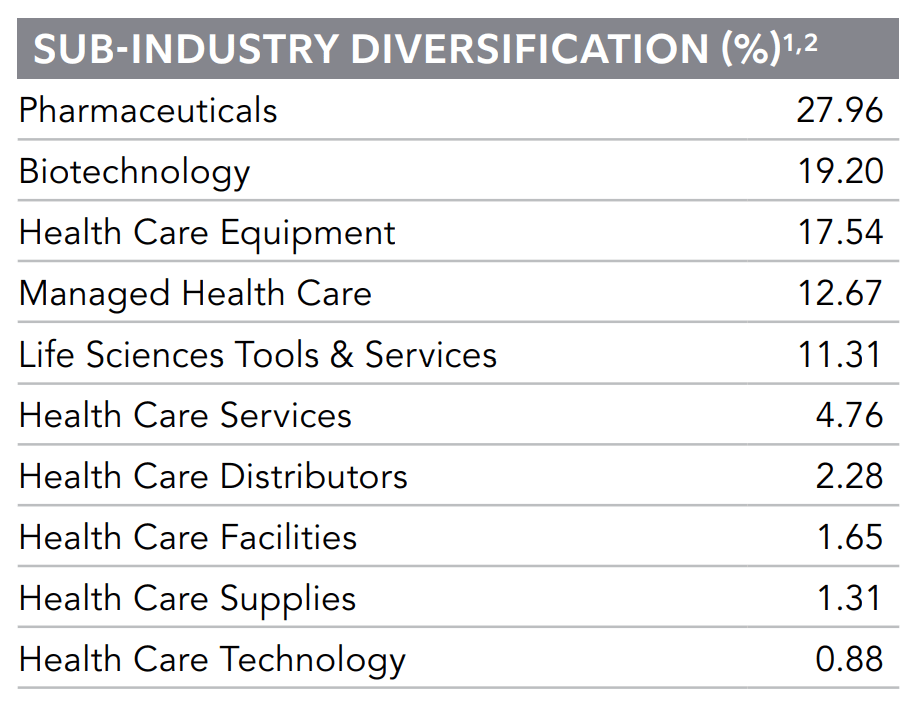
In terms of sector composition, FHLC is heavily invested in biotechnology and healthcare equipment companies, along with a significant allocation in pharmaceutical and managed healthcare firms. The fund's portfolio is well-diversified across small, mid, and large-cap stocks, thus effectively reducing company-specific risk. Note that the top 10 holdings account for nearly 50% of the portfolio though. Diversified yes but still some degree of concentration.
fidelity.com
Comparison with Similar ETFs
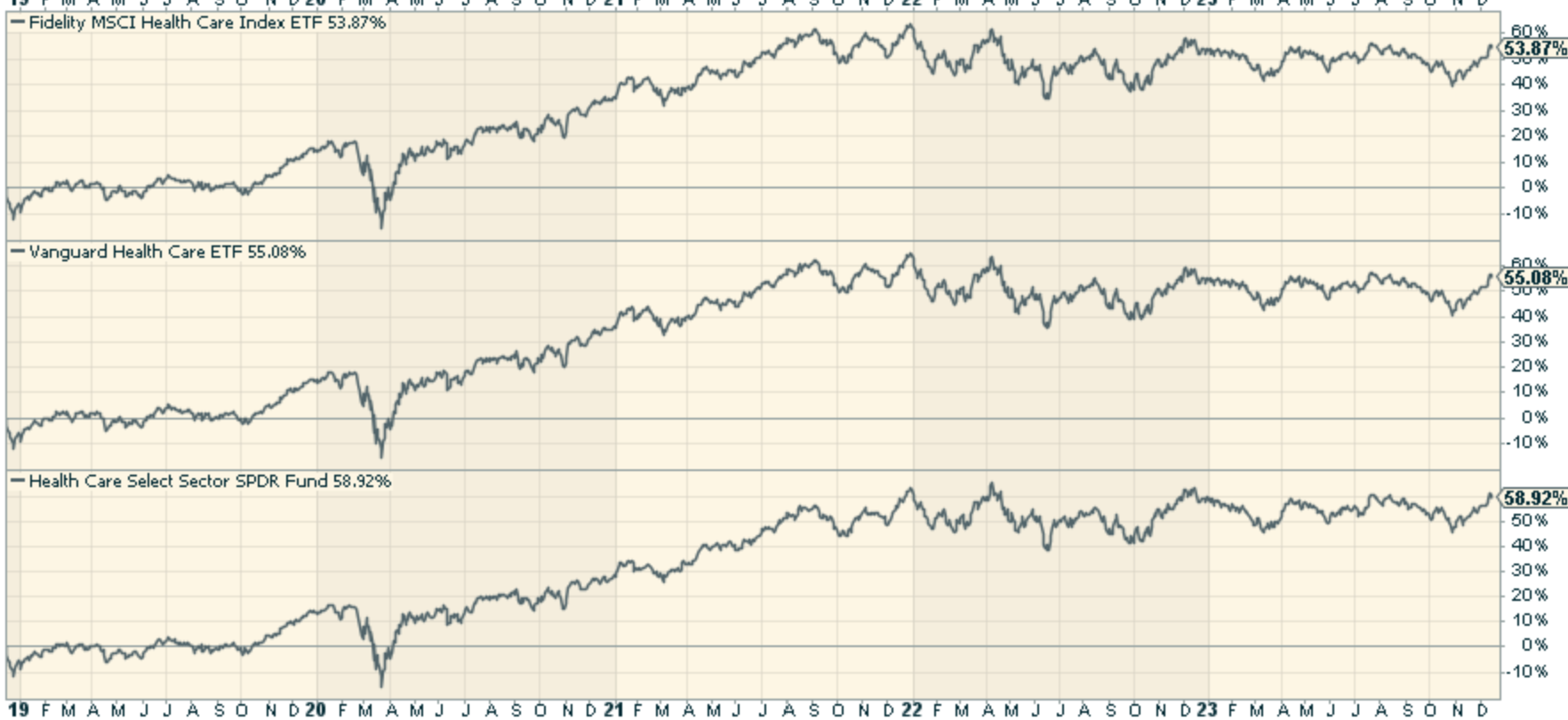
When compared to similar ETFs in the healthcare sector, such as the Vanguard Health Care ETF (VHT) and the Health Care Select Sector SPDR Fund ETF (XLV), FHLC stands out for its low expense ratio of 0.08% versus 0.10% for both. In terms of performance, FHLC has underperformed the two, which is a reminder of why fee alone isn't the only thing that accounts for performance differentials in passive strategies.
StockCharts.com
Advantages and Disadvantages of Investing in FHLC
Pros
Low Cost: With an annual expense ratio of 0.08%, FHLC is one of the least expensive options within the healthcare sector ETFs.
Diversification: FHLC provides diversified exposure to the healthcare sector, reducing the risk associated with investing in individual stocks.
Stable Returns: Despite market volatility, FHLC has demonstrated consistent performance over the long term.
Cons
Sector-Specific Risk: Being exclusively invested in the healthcare sector, FHLC is subject to sector-specific risks, including regulatory changes and patent expirations.
Limited International Exposure: FHLC's portfolio is primarily composed of US-based companies, offering limited international exposure.
Concluding Thoughts
Investing in the Fidelity MSCI Health Care Index ETF can be a strategic move for those seeking long-term growth and exposure to the healthcare sector. I suspect a rising tide will leave all boats when it comes to Healthcare investing broadly next year, and while FHLC has underperformed other healthcare sector funds, I still think it's a good fund to consider.