
Matthias Kulka/The Image Bank via Getty Images
Matthias Kulka/The Image Bank via Getty Images
Latin America's stock markets haven't done all that much really since 2008. It's been more than a lost decade for investing in emerging markets broadly, so that shouldn't be a surprise. But maybe things will change, and the cycle finally favors that part of the investable landscape. If that's the case, the iShares Latin America 40 ETF (NYSEARCA:ILF) is worth considering. This ETF is designed to track the investment results of an index composed of the largest equities from Latin America.
Latin America, with its rich natural resources, growing middle class, and increasing integration into global markets, offers investors a unique blend of potential high-growth ventures and established industries. Countries like Brazil, Mexico, and Chile have been implementing economic reforms aimed at fostering a more business-friendly environment, enhancing fiscal stability, and attracting foreign direct investment. Additionally, the region's focus on technological innovation and digital transformation is creating new investment avenues in sectors such as fintech, e-commerce, and renewable energy. While it comes with its set of challenges, including political instability and currency fluctuations, the potential for significant returns, especially for those willing to navigate its complexities, makes Latin America an attractive option for portfolio diversification and long-term investment.
ILF offers a unique opportunity to gain exposure to a rapidly growing and dynamic region of the world. With a focus on large, established companies in Latin America, this exchange-traded fund, or ETF, provides a means of accessing a variety of sectors in a single fund. The ETF provides investors with exposure to a region that is often underrepresented in global portfolios, allowing them to express a regional view and customize their emerging markets allocation.
ILF holds a diversified portfolio of 42 stocks, each from various sectors. Top holdings include:
Vale S.A. (VALE): A Brazilian multinational corporation engaged in metals and mining, and one of the largest logistics operators in Brazil.
Petróleo Brasileiro S.A. - Petrobras (PBR): A semi-public Brazilian multinational corporation in the petroleum industry, considered one of the largest companies in Latin America.
Itaú Unibanco Holding S.A. (ITUB): The largest private sector bank in Brazil.
The ILF is heavily weighted towards the financials sector, followed by the materials and consumer staples sectors. Here is a breakdown of the sector weightings:
ishares.com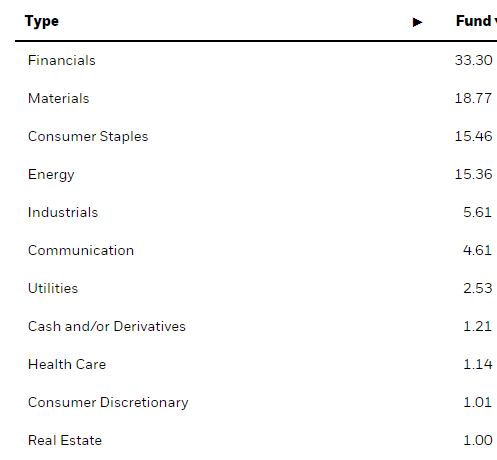
ETFs comparable to ILF include a mix of offerings that provide exposure to Latin American equities or the broader emerging markets. These funds include the Franklin FTSE Brazil ETF (FLBR) and the iShares MSCI Brazil Small-Cap ETF (EWZS), which focus on Brazilian equities, a significant component of the Latin American market. The iShares MSCI Brazil ETF (EWZ) also offers a similar investment profile by targeting Brazilian stocks. Additionally, the VanEck Brazil Small-Cap ETF (BRF) provides exposure to smaller companies within Brazil, offering a somewhat different but related investment angle to ILF.
These ETFs, by focusing on Brazil, one of the largest economies in Latin America, offer investors opportunities to gain exposure to the region's growth potential, similar to ILF's objective of tracking the investment results of an index composed of 40 of the largest Latin American equities.
Investing in the ILF comes with its set of advantages and disadvantages.
Diversification: iShares Latin America 40 ETF provides access to a diverse range of sectors and companies within Latin America, which can help spread risk.
Potential for High Returns: Latin America has experienced significant economic growth, which could translate into high returns for investors.
Accessibility: The ETF structure allows for easy access to markets that may otherwise be difficult for individual investors to enter.
Market Volatility: Latin American markets can be subject to significant volatility due to economic, political, and social instability.
Currency Risk: The fund's investments are denominated in local currencies, making it subject to currency risk.
Regulatory Risk: Changes in regulations or political instability can impact the performance of companies within the fund.
Investing in the iShares Latin America 40 ETF can present a unique opportunity to diversify one's portfolio and gain exposure to the rapidly growing economies of Latin America. With its focus on large, established companies across various sectors, it provides a convenient vehicle for diversifying one's portfolio.