master2/iStock via Getty Images
master2/iStock via Getty Images
The iShares MSCI Indonesia ETF (NYSEARCA:EIDO) aim is to offer investors exposure to a broad range of companies in Indonesia. It is worth noting however, according to its latest factsheet, that concentration is heavy in financials. More than half the fund is allocated to this sector, with nearly all of this spread across only three large bank holdings.
There does not appear to be too may obvious alternative ways to get exposure to Indonesian equities. Other ETFs lack scale, closed end funds are not available, and not all that practical for most investors to allocate time to trying to pick Indonesian ADRs. Many brokers offering access to global stock exchanges do not cover Indonesia. I will also assume readers here don't want to try to travel there to open an account directly.
Despite this lack of convenient ways to get exposure, Indonesia is worth some thought based on size and growth. It is the 4th most populous country in the world, the 3rd largest democracy, and expected to rank only behind India this year in terms of forecasted G20 economies 2024 GDP growth.
Aside from that, there are some positive structural factors in place. Indonesia plays a crucial role in the global supply chain, has favorable demographics, and is prudent with its relatively more neutral stance on the geopolitical stage.
It also should continue to benefit from companies continuing to adopt a China Plus One Strategy.
The fund has existed since 2010, has over $400 million in assets, and an expense ratio of 0.59%. The large weighting to banks does assist it in currently offering a distribution yield of nearly 3%. This distribution yield is derived from underlying income of the portfolio, including large dividend payers such as the banks.
iShares MSCI Indonesia ETF factsheet December 31, 2023.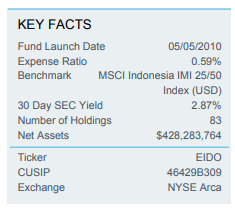
There is no escaping the fact this has historically been a very disappointing ETF.
iShares website, iShares MSCI Indonesia ETF performance to February 29, 2024.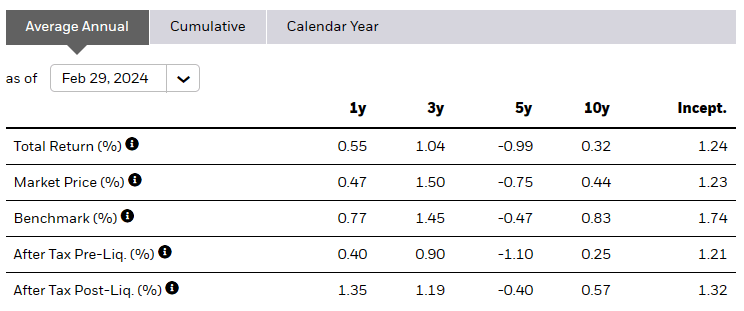
This may surprise some given Indonesia's GDP growth has been quite good much of this time. Further down I shall explore a few reasons why this may better lead to improved performance of this ETF in the future.
A decade ago, the Indonesian market commonly traded at a P/E ratio of circa 15 times. Paying a healthy premium above of the multiple in EM, and even the world's average at the time, was a contributing factor to disappointing subsequent returns.
worldperatio.com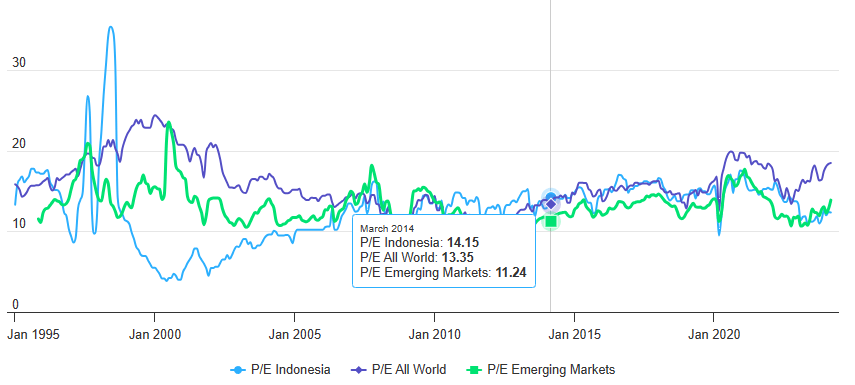
Now Indonesia trades at a clear discount to both EM and the All-World Index.
Large bank stocks in Indonesia have been good performers historically, but the economic backdrop could have been better. The last decade has not been ideal for bank stocks in general when it comes to margins. Up until late 2022, interest rates in Indonesia more than halved from above 7% to 3.5%.
Banks normally prefer a steadily growing economy where rates are edged up. They can then hike rates on their loan book, whilst delaying rate rises on what they pay out to their depositing customers.
In the back half of 2022, Indonesia finally gradually started increasing the policy rate from 3.5% to 6% now. From this point net interest margins (NIMs) have recovered in Indonesia, and a similar trend was witnessed across ASEAN banks.
Fitch Ratings, central banks, bank reports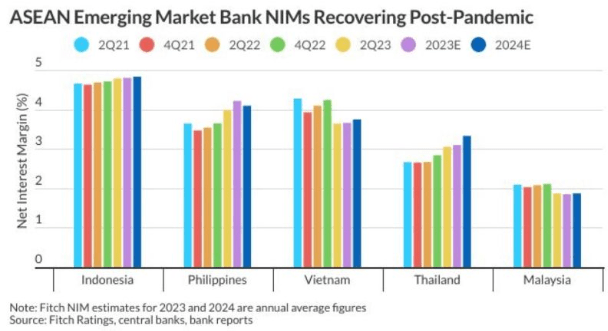
Whilst towards mid 2024 the consensus is for rate cuts in Indonesia, it is also that we are in a more normal interest rate policy environment. The risk is also that rate cuts for Indonesia gets pushed further out in time and will occur after any Fed moves. That augurs well for banks to achieve good balance in maintaining both healthy NIMs, and low levels of bad debts.
With continued strong GDP growth and being relatively one of the largest underbanked countries in the world, Indonesia has good prospects for loan growth. Reaching Indonesia's unbanked / underbanked population will be challenging, but offers upside potential for the sector.
It is also worth mentioning Indonesia is not alone in the EM space of underperforming in the last decade. It is a widespread issue and now unsurprisingly we are seeing signs of investors totally giving up on EM equities.
Guardian Capital based on data from Bloomberg to December 31, 2023.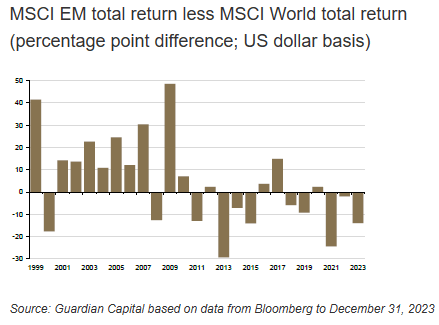
Sentiment is worse than existed a decade ago. There is an argument therefore that any weak hands looking to exit Indonesian stocks might have done so already.
Despite poor returns with this ETF in the last decade, the country has made solid progress on a number of fronts.
The political landscape has been stable, although in February we saw a change because the president had served two terms. Indonesia's previous very popular leader, "Jokowi" has had a major influence to the appointment of his successor, as a result of the "Jokowi effect".
Jokowi's policies included significant infrastructure programs and strong drive to be a pivotal player in the growth in the electrical vehicle industry.
As this article discusses, Indonesia's election results bode well for policy continuity on policies just mentioned. To quote,
"Prabowo will likely also continue Jokowi's policy drive to grow the electric vehicle industry through incentives and subsidies, providing demand opportunities for firms in the automotive sector. He will also retain Jokowi's focus on commodity downstreaming, maintaining the bans on exports of nickel and bauxite to compel companies to process natural commodities onshore rather than exporting them."
New leader Prabowo also plans on taxation reform in the coming years to assist the lower-income population and smaller new enterprises, as well as having a strong focus on attracting foreign investment.
Pimco noted in a report last year that India and Indonesia share similar positive structural themes. With stocks in India having surged in recent years and P/E ratios climbing to the mid-20s, Indonesia warrants some close inspection. Future EPS forecasts favor the India argument, but the word "forecasts" might be doing some heavy lifting there.
One chart from Pimco's report that left an impression on me in particular was below. It shows how far Indonesia has come in the last decade with its turnaround in their trade balance.
Bank Indonesia via Pimco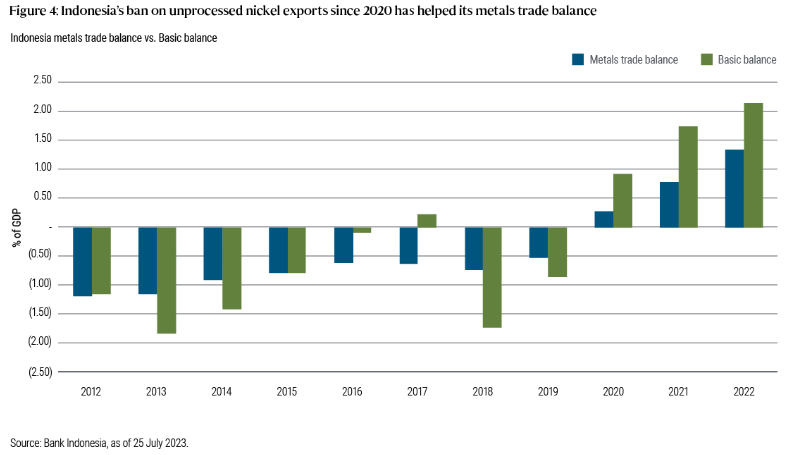
iShares website, iShares MSCI Indonesia ETF portfolio characteristics.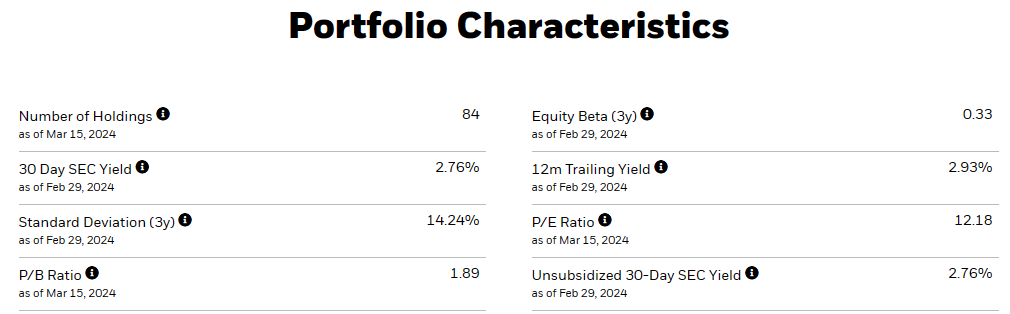
Taking into account the above improvements to Indonesia's fundamentals over the last decade, current PE ratios look attractive. Ten years ago, they sat at a premium to EM and Global averages, whereas now they are at a discount. The average trailing P/E of this ETF is around 12 times.
On a forward PE ratio basis, Indonesia sits around the middle of the pack, despite high growth expected for its economy.
@bastion_manager twitter.com/X, Vlad Bastion forward PE ratios posted Feb, 24,2024.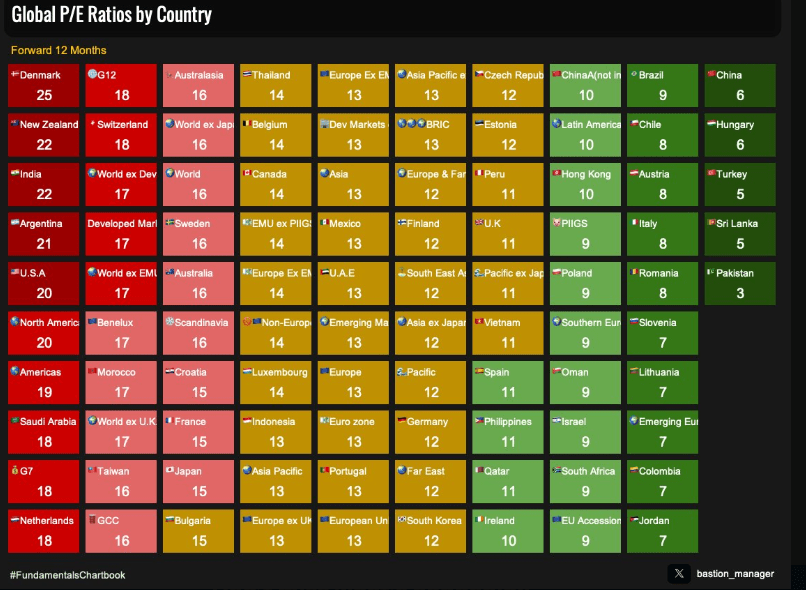
iShares MSCI Indonesia ETF factsheet December 31, 2023.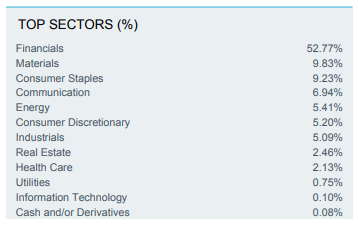
iShares MSCI Indonesia ETF factsheet December 31, 2023.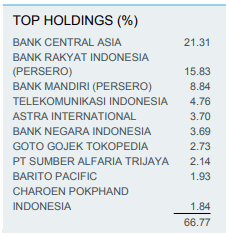
I have mostly focused on the upside potential for Indonesian stocks thus far. There are some factors at play though that prevent me from concluding this ETF is in the buy zone.
Whilst Indonesian and EM stocks in general have had a tough decade, this ETF has performed particularly poorly. I have some doubts whether this sort of passive approach with an expense ratio of 0.59% stacks up well in less developed and efficient markets like Indonesia.
February's election in Indonesia seems to be panning out comfortably for the stock market with the likelihood of government policy continuation. For those wanting to explore this further though, I found this explanation of the Prabowo landslide result an interesting read. With questions raised by some over Indonesia's democratic system, this plays some role in me preferring cheaper levels before buying this ETF.
Overall though, the iShares MSCI Indonesia ETF is a good structural growth story to consider at reasonable valuations. It offers exposure to some investment themes that many global economies lack, so is one to keep on the watchlist. These include favorable demographics, good GDP growth, being a pivotal global player for new industries, and improving trade balances.