
alexsl/E+ via Getty Images
alexsl/E+ via Getty Images
The United Arab Emirates is the second largest economy in the Middle East (second only to Saudi Arabia) and like its neighbors, it is heavily reliant on both petroleum and natural gas exports for its revenue. However, there is more than meets the eye in this emerging economy that has made a concerted effort in recent years to develop non-oil sectors such as tourism and real estate. Given the current turmoil in the region and the ancillary question marks that follow, I like the iShares MSCI UAE ETF (NASDAQ:UAE) as Middle East Play. It has decent valuation characteristics and compelling enough growth opportunities to rate UAE as a buy.
UAE tracks the MSCI All UAE Capped index. YTD the fund has printed a modest return of +0.34%. It is small - $40M in assets in its nearly 10-year history. The fund saw record outflows in the immediate aftermath of COVID. Although, flow data YTD is encouraging. The fund has seen $+2.9M in net flows in the first 2.5 months of 2024.
The fund holds 47 stocks, and very heavily allocated Financials (38.17%). This is unsurprising given Dubai's status as an international financial hub, on par with New York or London for finance-related activity. Other large allocations include by Real Estate (22.87%) and Communications (16.38%).
Seeking Alpha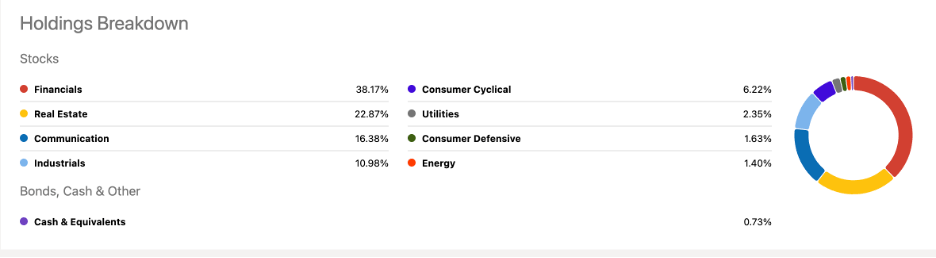
The top 10 holdings of the fund account for 71.25%, with over 40% of those in the top 3 holdings, which makes this fund concentrated from a single stock perspective.
Seeking Alpha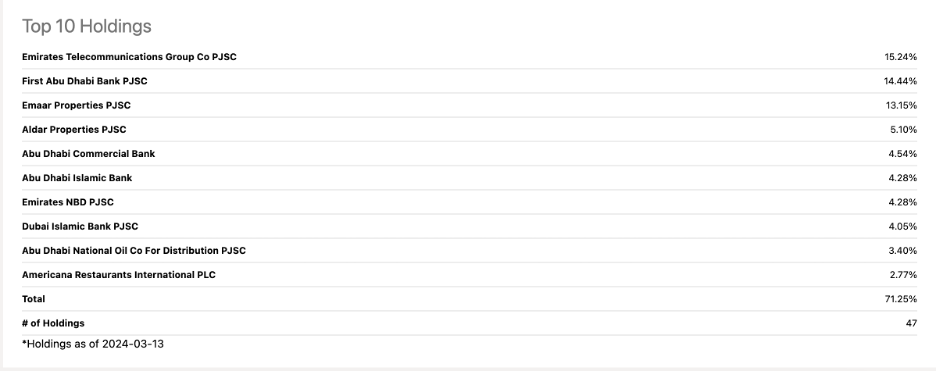
Based on current metrics, UAE has decent value characteristics. The fund is currently trading at a P/E of 9.6x, with a P/B of 1.36x. The trailing 12-month dividend yield is also decent at 3.34%. While the current yield is a decent offering, UAE does not have a consistent history of dividend growth and I don't see it as a quality play for this reason.
Seeking Alpha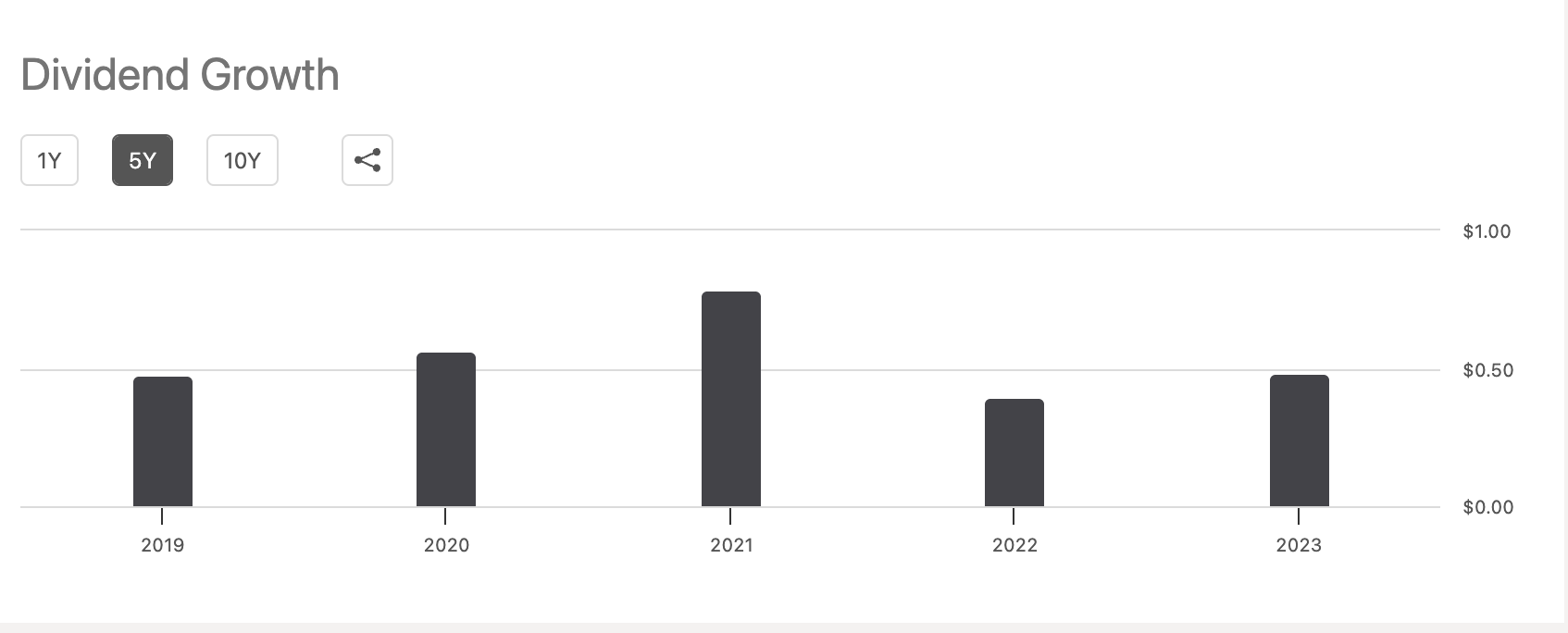
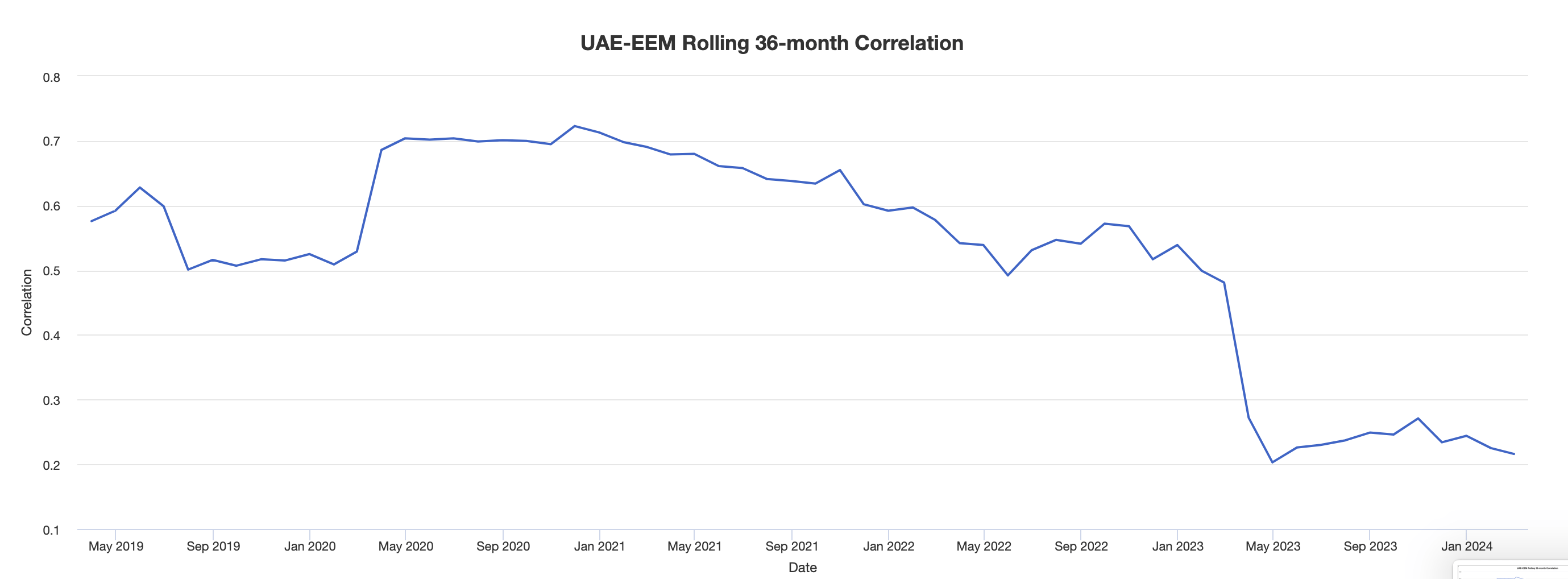
UAE has strong diversification benefits. Its rolling 36-month correlation with the US market, using the SPDR S&P 500 ETF (SPY) as a proxy, is at a 5-year low. Interestingly, its correlation with its Emerging Markets cohort (EEM), remains still lower. This is a nice spot to be in (and one of the benefits of single-country investment), providing a genuine alternative opportunity to both US and EM allocations.
Portfolio Visualizer Portfolio Visualizer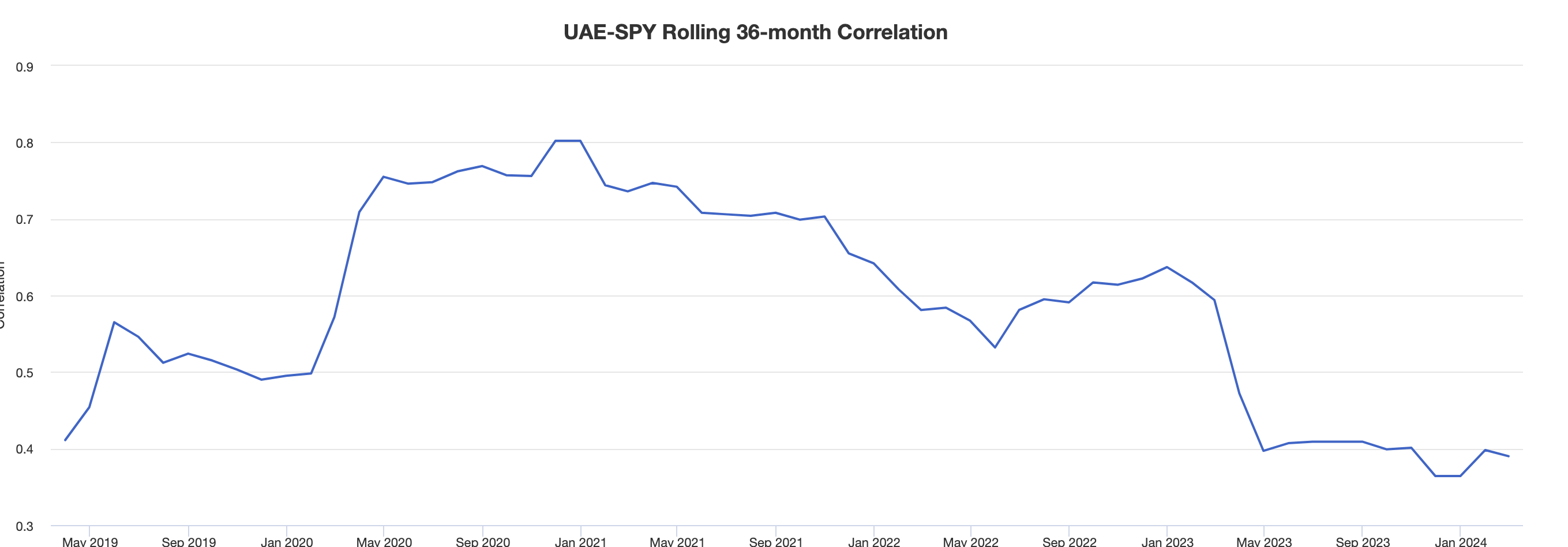
The UAE has been dealing with the same global macro themes heard around the world - inflation and rising interest rates. Interest rates reached an all-time high in July of 2023, after reaching new lows in response to COVID-19. Given that the country's currency - the UAE Dirham- is pegged to USD, a downward revision will follow US Federal Reserve moves in 2024. As of writing, the Fed has indicated that it expects that rates will end the year somewhere between 4.5% - 4.75%. The UAE has a bright outlook in terms of GDP growth. According to the UAE Central Bank (see table below), the country is projected to grow 5.7% in 2024. This ranks highest among regional counterparts.
Central Bank of the UAE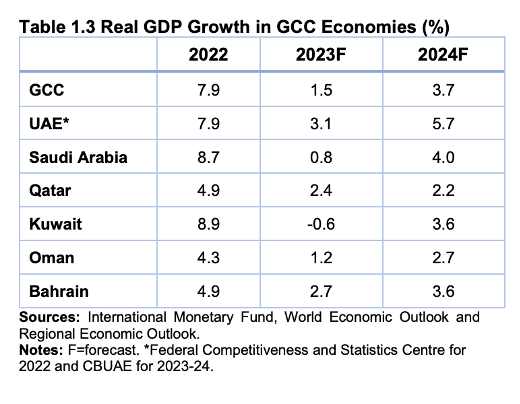
When breaking down GDP further we see the largest area of forecasted GDP growth rests in the oil sector. This is in line with the coordinated OPEC effort to limit production through the end of 2024 in order to support a price floor of $80/barrel, after a contraction in 2023. It's important to note a key risk to these projections; the current war in the region adds a layer of complexity to OPEC's efforts at the moment. The UAE and its neighbors could become more implicated in global efforts to bring an end to the war in Gaza. Oil production and prices tend to function as a cudgel, and there are several scenarios where enough pressure is exerted such that targeted oil prices do not hold.
UAE Central Bank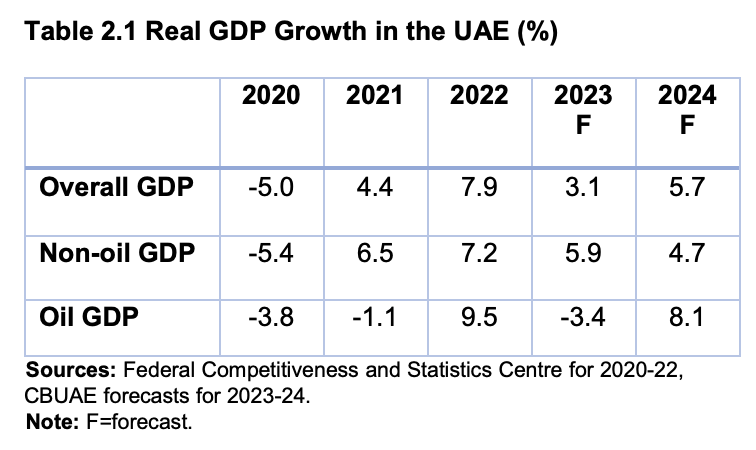
The forecast for non-oil GDP sectors remains robust. Among the opportunities set is an effort to increase tourism and hospitality. The UAE Central Bank cites the National Tourism Strategy 2031:
The plan targets to raise the tourism sector contribution to GDP by AED 450 billion in addition to attracting investments worth AED 100 billion and hosting 40 million hotel guests annually by 2031."
According to the same report, the country is making progress on its vision. Hotel occupancy rates increased by 75% in the first 9 months of 2023. Again, the war in the region does present a risk to the UAE's vision for increased tourism. If the war were to metastasize it could serve as a deterrent for future tourism.
The real estate sector also succeeded in weathering increased interest rates. The same report shows that despite record-high rates, residential real estate transactions grew 56% compared with the end of Q3 in 2022.
UAE is a concentrated ETF that offers exposure to the second-largest economy in the Middle East. It is a well-priced offering, that provides a diversification opportunity to both the US and other emerging markets. A decline in interest rates presents an opportunity to further buoy a growing real estate sector. Despite key geopolitical risks in the region, the UAE offers long-term growth opportunities.