
Igor Kutyaev
Igor Kutyaev
A multi-decade performance track record of Chinese stocks clearly shows that it's much easier to lose money investing in China rather than to earn. Nonetheless, that doesn't mean investors should never look at Chinese stocks. Since my January article about another China-related ETF, the Invesco Golden Dragon China ETF (NASDAQ:PGJ), Chinese stocks in the face of the PGJ ETF have outperformed the S&P500 considerably.
As the US market gets increasingly overheated, and the Chinese government puts even more effort into boosting Chinese stocks, this spring may be a blooming period for the Chinese stock market, in my opinion.
Invesco China Technology ETF (NYSEARCA:CQQQ) caught my attention as the most beaten-down China ETF compared to peer ETFs. For cautious investors, the CQQQ ETF's poor performance may be a red flag, but for risk-tolerant contrarians, it may turn out to be one of the best opportunities to benefit from an expected rebound in Chinese equities. I give the CQQQ a "Buy" rating, though it's important to keep in mind that investing in Chinese equities is very risky at this point.
The CQQQ ETF offers a bit of a different exposure to the Chinese stock market compared to other China-related ETFs. For example, unlike the KraneShares CSI China Internet ETF (NYSEARCA:KWEB), the CQQQ ETF doesn't have Alibaba (NYSE:BABA) among its fund holdings at all. At the same time, CQQQ has plenty of less-known Chinese companies in its portfolio, like the software firm Kuaishou Technology (OTCPK:KUASF).
Seeking Alpha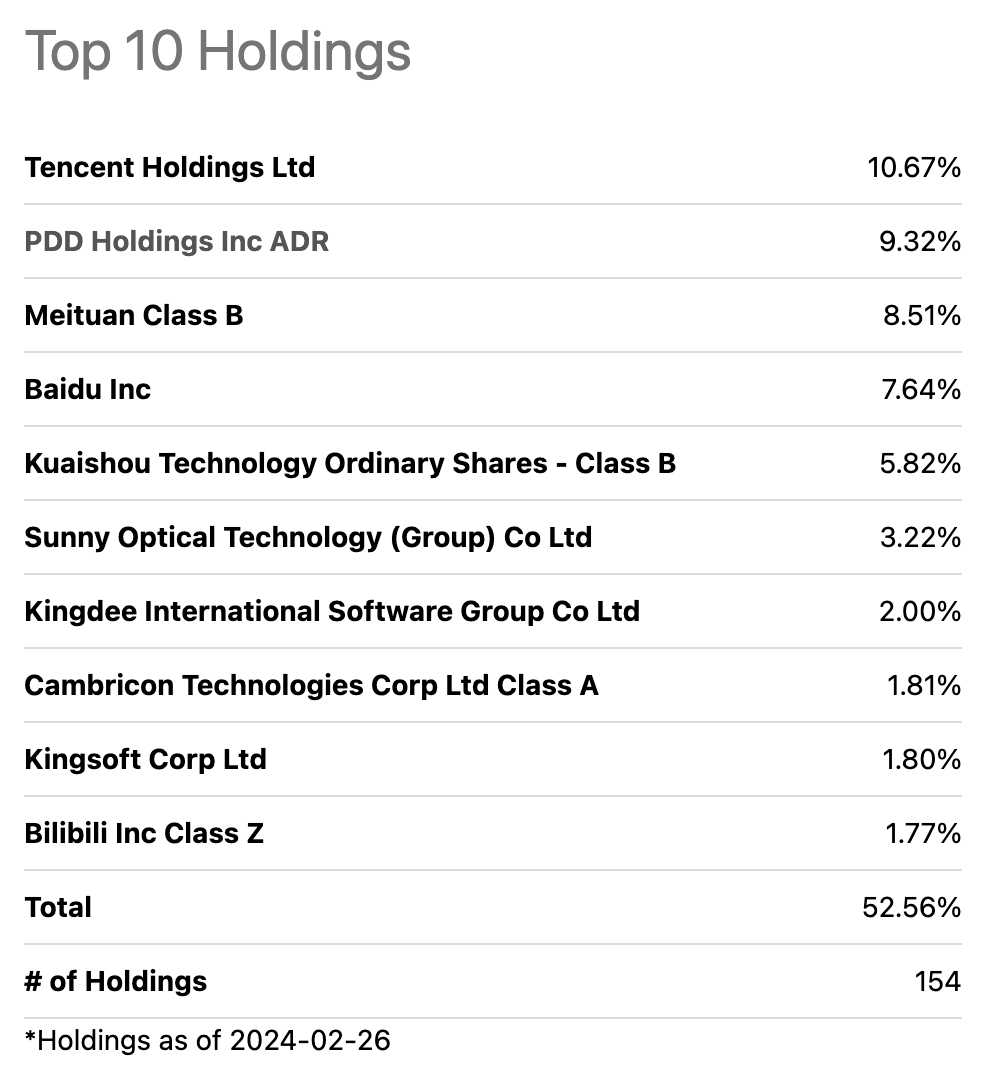
In terms of expenses, the CQQQ ETF has an average expense ratio of 0.65% and a decent AUM of $622 million. The numbers are comparable, though the MCHI ETF looks a bit better in this regard.
Seeking Alpha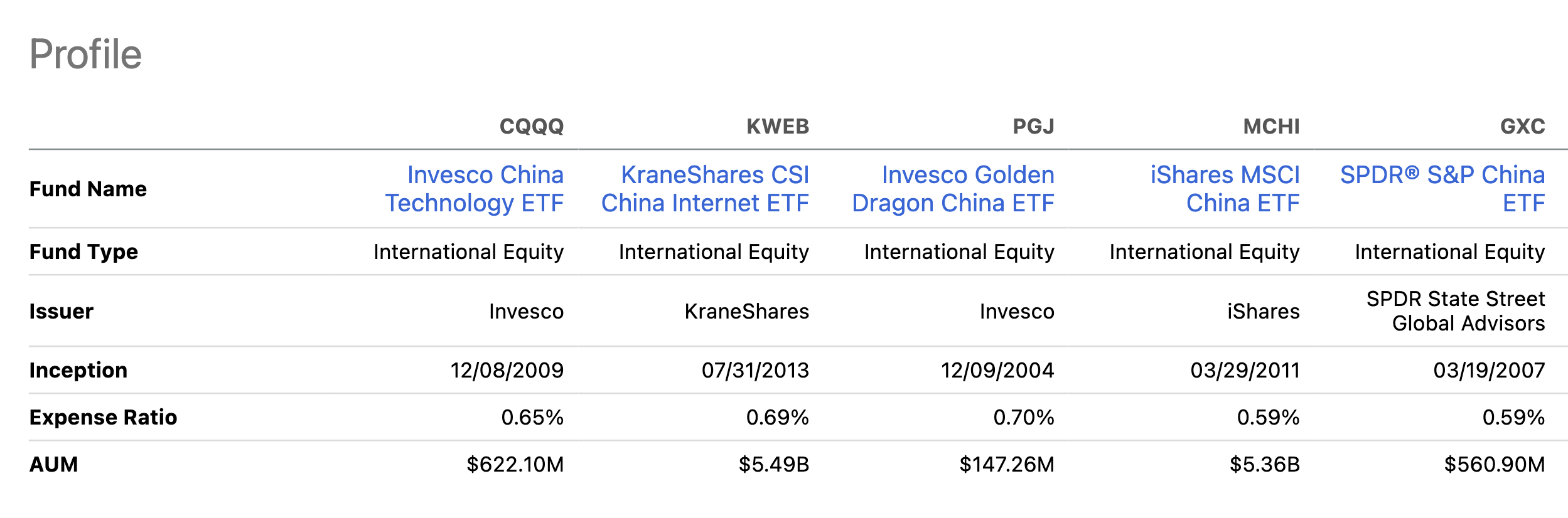
So far, the CQQQ ETF has demonstrated the worst YTD performance compared to other popular China ETFs. With -13.85% YTD returns, the CQQQ ETF performs twice as worse as the KWEB ETF.
Seeking Alpha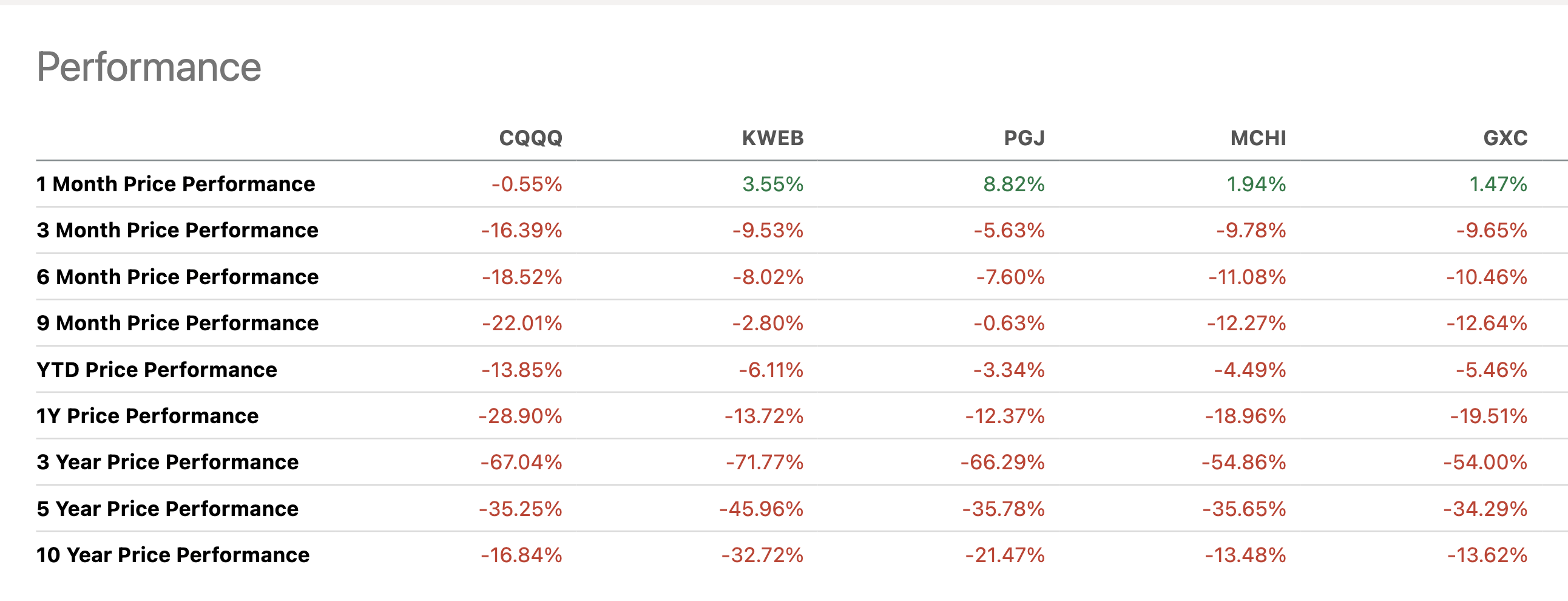
Overall, in my view, the portfolio composition of the CQQQ ETF makes it more dependent on equity flows within China rather than from foreign investors, which is an important consideration I'd like to discuss in more detail.
A significant driver of optimism for Chinese stocks, including those within the Invesco China Technology ETF, is the proactive stance of the Chinese government. In an effort to sustain economic growth and stabilize the stock market, the government has unveiled a series of stimulus measures. Foremost among these is a crackdown on short-selling, which aims to curb speculative trading and reduce market volatility.
Additionally, active purchases of Chinese stocks via state-backed funds signal strong governmental support for the stock market. According to Bloomberg and UBS, government-supported investment funds in China have invested over 410 billion yuan (equivalent to $57 billion) in domestic stocks this year with the goal of bolstering the market.
To be fair, sometimes the government's actions to support the stock market look a bit too radical. To reduce volatility in the Chinese stock market, the Chinese government restricted the usage of a trading strategy popular among Chinese quant funds that presumably contributed to a massive decline in the Chinese stock market this February. In fact, the authorities currently are taking steps to deleverage the Chinese market, which may backfire in the extensive selling of stocks during this process.
However, when the dust settles, I expect a gradual recovery of the Chinese stock market throughout this year. Just like during the market crash of 2015-2016, extensive regulatory actions combined with aggressive state support helped to stabilize the Chinese stock market.
TradingView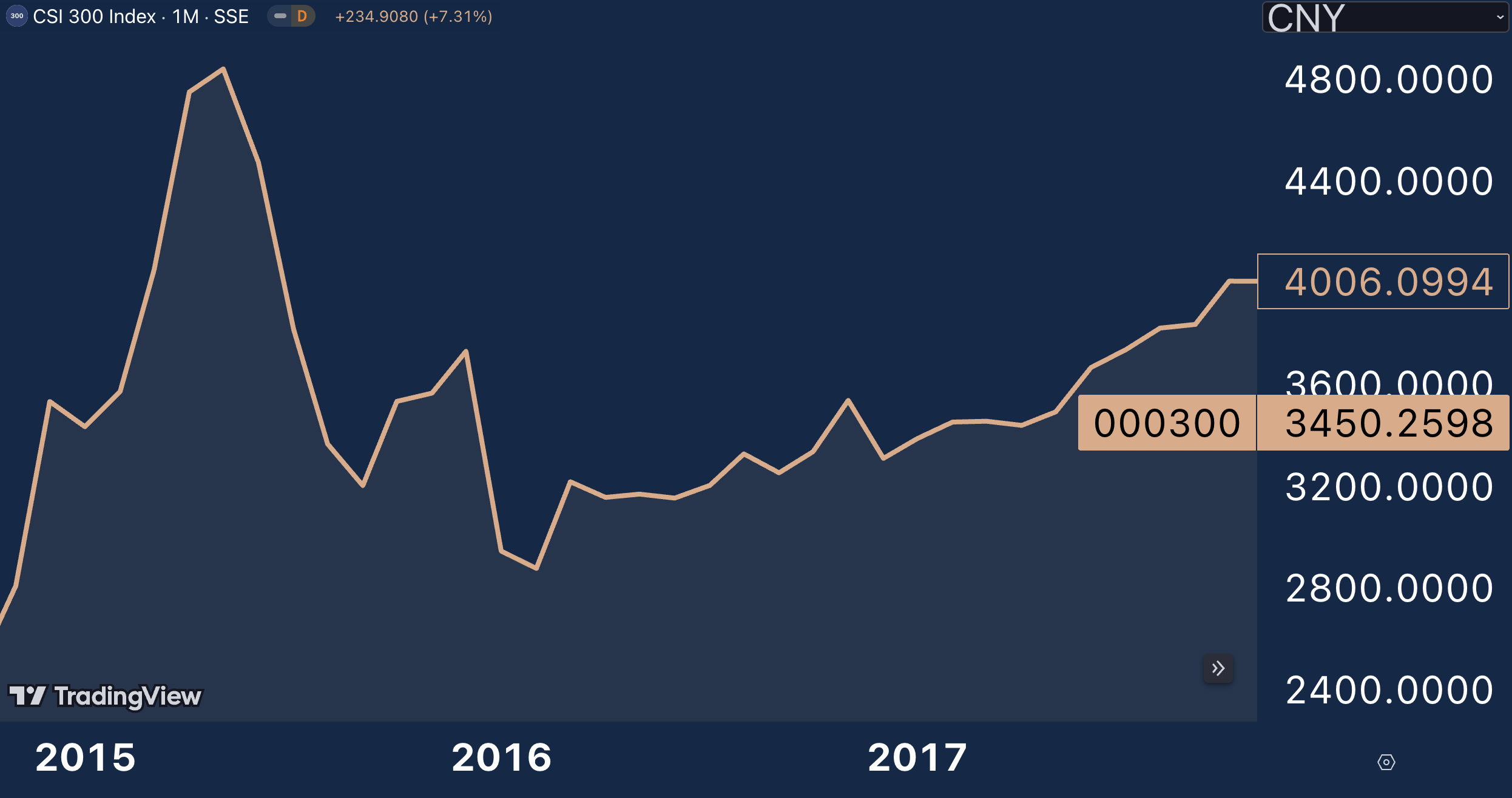
For sure, both the domestic economic situation in China and the geopolitical landscape around the world were completely different from now. Given that the Chinese economy still suffers from the real estate crisis and the geopolitical competition between China and the US keeps heating up, I wouldn't recommend considering Chinese stocks for the long term.
Investing in Chinese equities, especially technology stocks through ETFs like the Invesco China Technology ETF, requires a nuanced understanding of the market's dynamics. While I find today's price levels attractive for a speculative buy, long-term economic challenges in China may undermine the performance of Chinese stocks for years to come. Nevertheless, in the short term, the government seems very much interested in supporting the domestic stock market, and I doubt the authorities will stop until they see some substantial growth in Chinese stocks.