
Scott Olson/Getty Images News
Scott Olson/Getty Images News
It's time to talk about one of the best compounders in finance. That company is Cboe Global Markets (BATS:CBOE), the Chicago-based peer of CME Group (CME), which I have been a buyer of in recent years.
Since it went public in 2010, CBOE has returned close to 630%, leaving the S&P 500 and the Financial Select Sector ETF (XLF) in the dust.
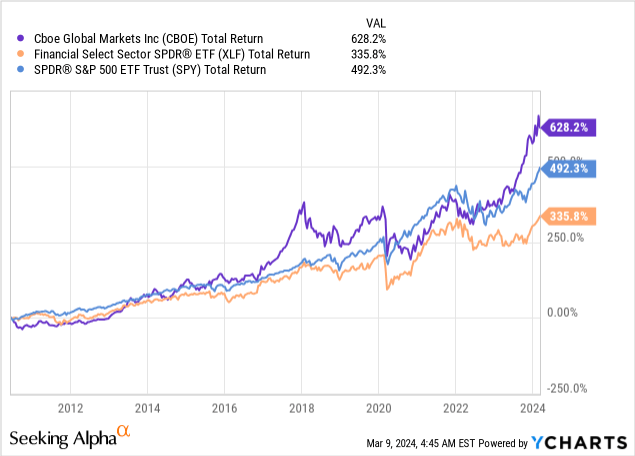
My most recent article on this stock was written on July 18, 2023. Back then, I went with the title "Cboe Global Markets Is A Financial Dividend Growth Gem."
Since then, the stock has returned 35%.
In this article, I'll revisit the stock and explain why I believe that it's truly one of the best financial stocks money can buy, despite its somewhat low dividend yield.
So, let's get to it!
As most of my readers may know, I love to buy businesses that play important roles in key supply chains and industries. In other words, businesses that make the world go round.
Essentially, I want to own businesses that, if they were to evaporate suddenly, would cause major problems.
This includes aerospace companies, railroads, healthcare suppliers, drug producers, machinery giants, and financial companies.
However, instead of focusing on "typical" financial investments like banks, I prefer to buy companies with a bigger competitive advantage. That's why I own CME Group, the owner of multiple exchanges, including CBOT, NYMEX, and others.
This company makes money every time someone trades S&P 500 futures, agriculture futures, energy futures, or gold, copper, and silver derivatives.
While I wouldn't necessarily compare the stock market to a casino, owning stock exchange operators is like owning "The House." Instead of gambling with my hard-earned money, I make money whenever someone else places a bet.
On a side note, the data below shows win probabilities for people playing roulette. For casinos, it's all about volumes. While a single player may get lucky on a certain night, if it handles multiple people a day, there is no way the casino loses money.
Cornell University - Course Blog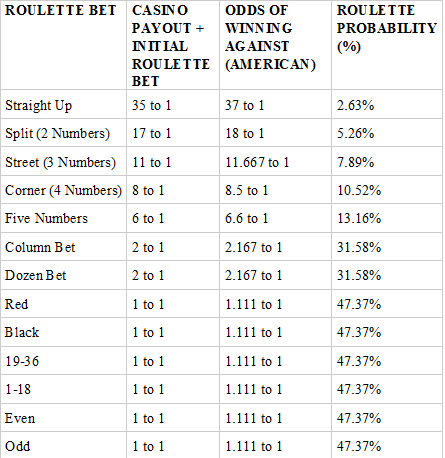
Right now, this reminds me a lot of Cboe. Not because Cboe customers cannot win (it's very different from a casino) but because people are treating the stock market like a casino again.
In a recent article, I showed the chart below. This chart tells us that retail traders are increasingly using bullish options to express their views on the market.
Bloomberg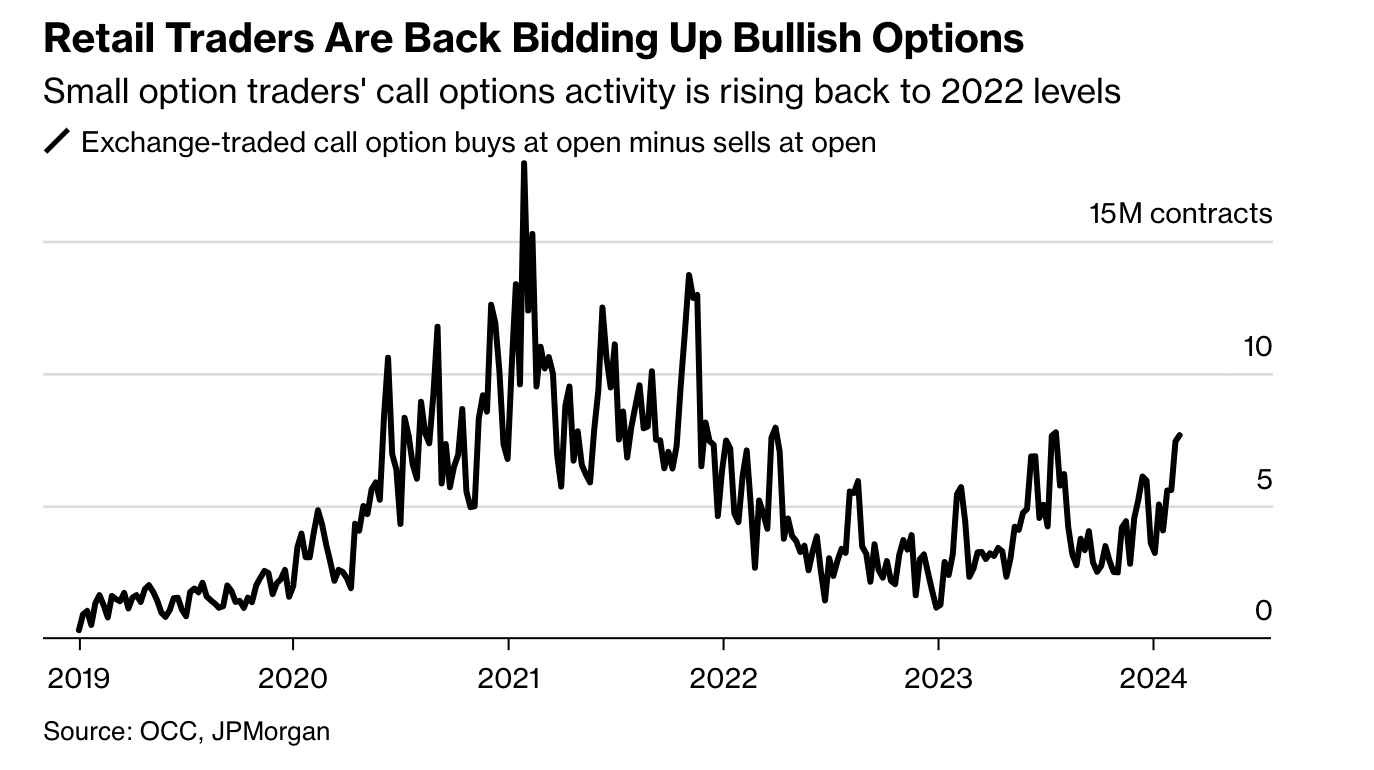
While we are far from 2021 levels, this is certainly a trend that displays a lot of confidence in the direction of the market.
Even worse, half of all S&P 500 options were 0DTE options going into this year!
Bloomberg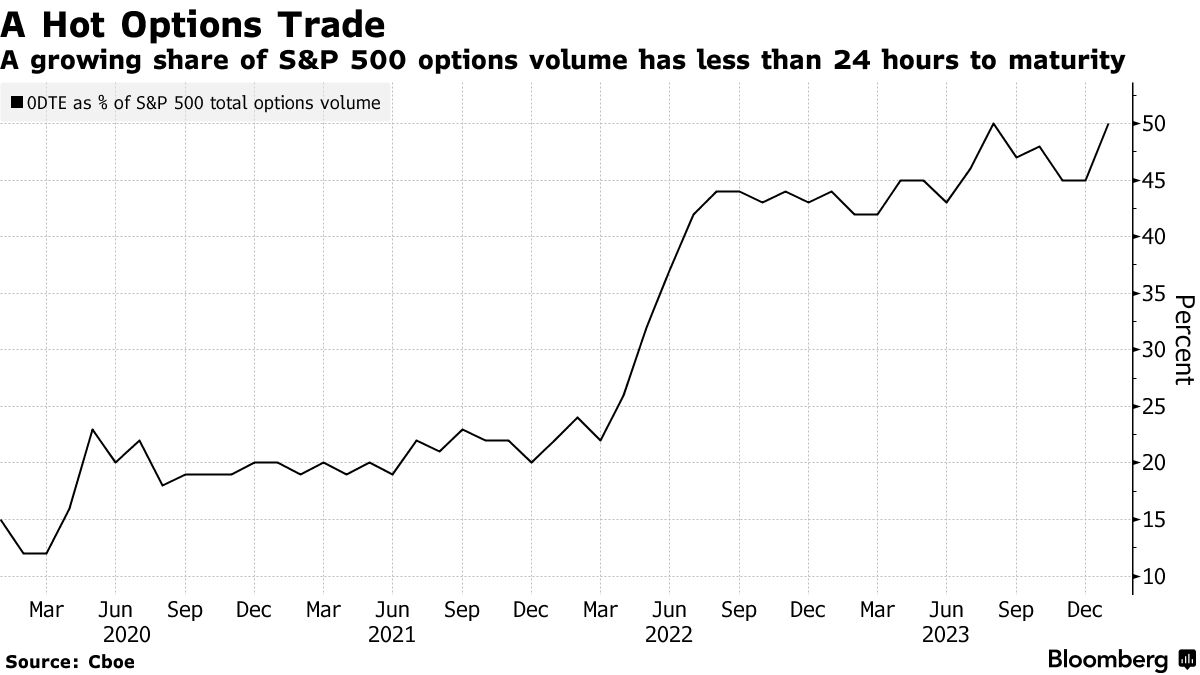
This is extreme casino behavior.
Why?
That's because 0DTE options are highly speculative derivatives that should only be handled by pros.
Options are derivative contracts generally used to make bets on the direction of an index, stock or exchange-traded fund. Buying an option gives a trader the ability to buy (via a “call” option) or sell (via a “put”) a security at a certain price within a certain time frame. The money required to buy an option is generally less than the underlying asset’s cost. 0DTE options take that time frame to an extreme; since they expire within 24 hours, the trader has to decide quickly whether to exercise the option or walk away and lose the initial outlay. - Bloomberg
In other words, these are zero-day-to-expiry options. They have become very popular, as they allow traders to quickly make or lose money.
I'm bringing all of this up because Cboe Global Markets benefits from this.
Cboe Global Markets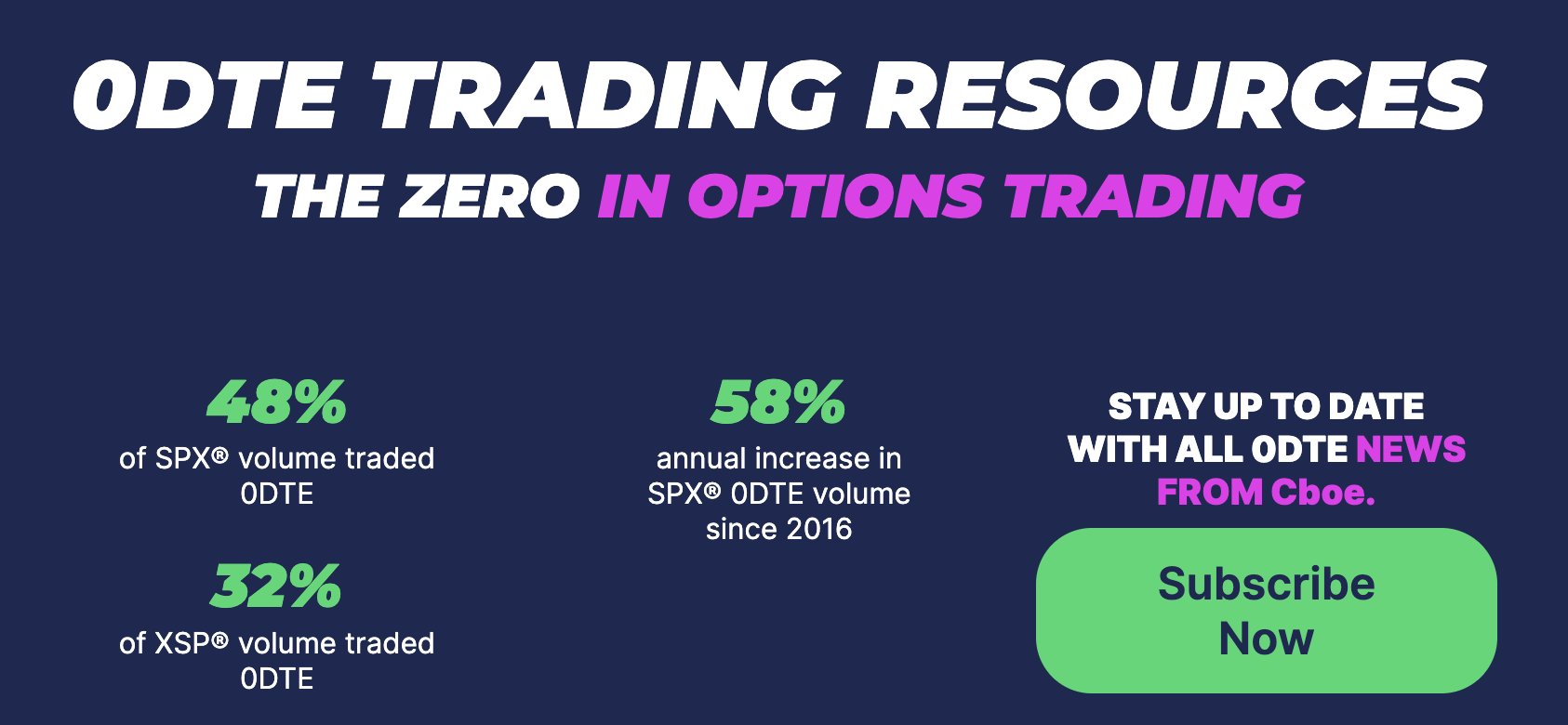
Don't get me wrong, I have absolutely nothing against 0DTE options. They are just tools. To me, it would become a problem if people were to build schemes to lure inexperienced traders into these high-risk derivatives.
Cboe isn't doing that. Cboe is doing what it does best: offering derivatives and services for market participants who use it for different purposes, including hedging.
In general, Cboe's operations go way beyond 0DTE trading.
With a $20 billion market cap, the company is a giant in the world of derivatives and securities exchanges, offering advanced trading, clearing, and investment solutions on a global scale.
Cboe Global Markets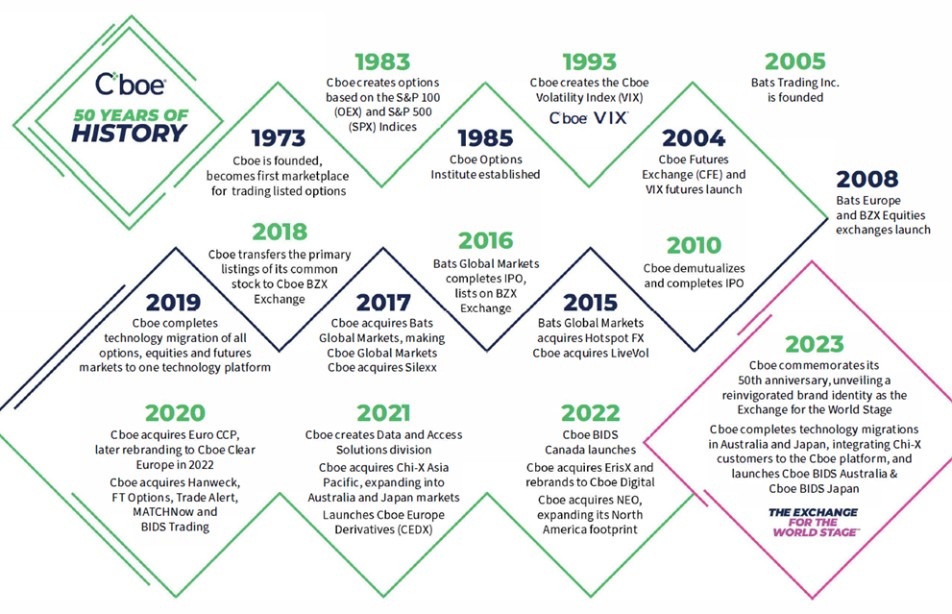
The company is the largest options exchange in the United States and the third-largest stock exchange operator. It also does business in Europe and APAC nations.
It has six operating segments:
The chart below shows that most of its money is made through options and North American equities. The other segments may be small, but their growth rates are higher.
Cboe Global Markets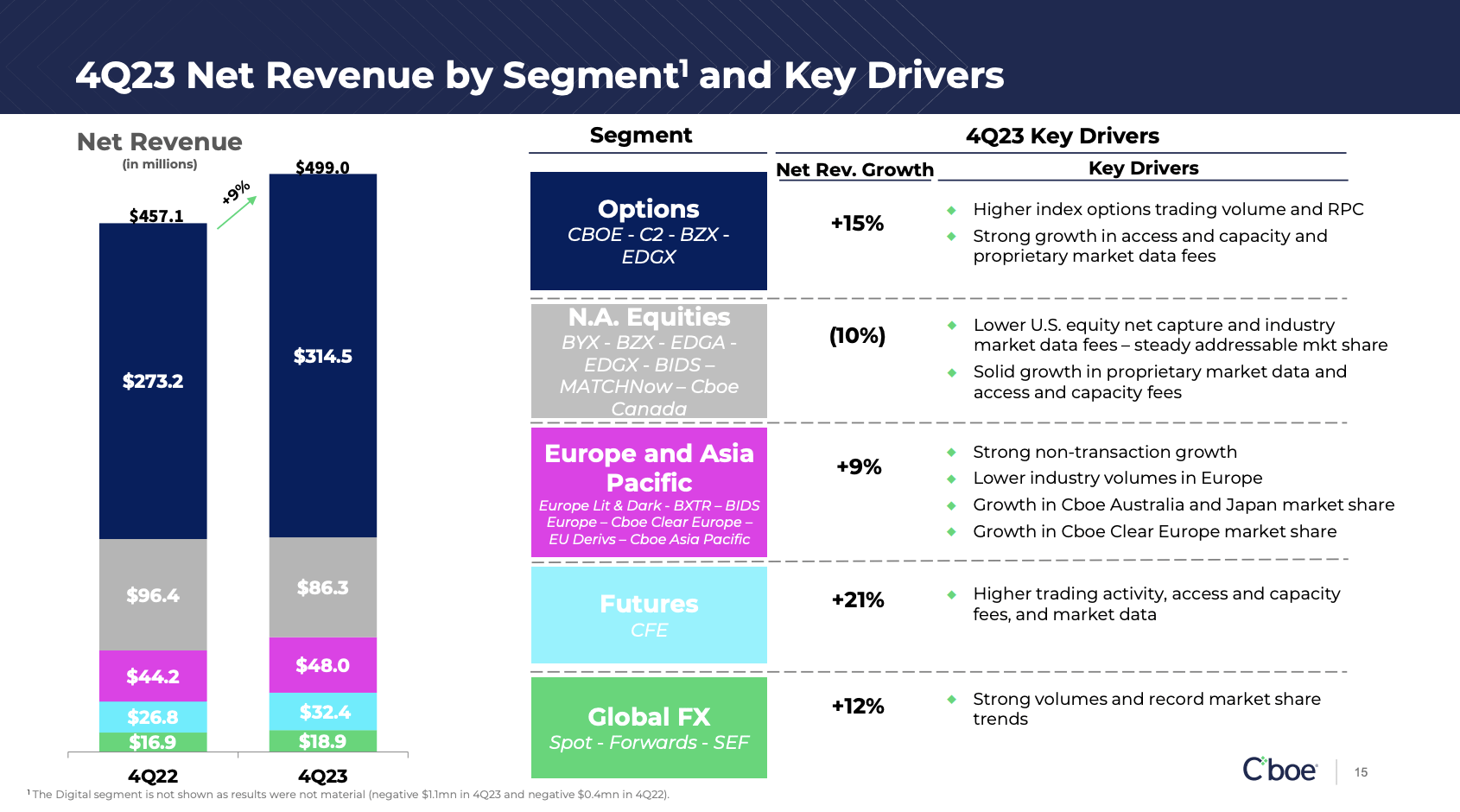
In general, Cboe believes its competitive edge comes from its comprehensive market infrastructure and tradable products that allow it to grow on a very consistent basis.
Meanwhile, the company's ecosystem enables efficient trading, clearing, and investment solutions.
Cboe Global Markets
In other words, the company has the perfect business model that consists of a wide range of derivatives on its own exchanges that allow it to gather data, build new products and services, and grow secularly through increased global listings, digital offerings, and demand for derivatives.
I love this business model, as it's a great way to make money with a highly favorable risk profile.
After all, even during steep market sell-offs and recessions, volatility tends to increase, which is a tailwind for the company's revenues.
Although the chart below is highly skewed due to the company's M&A activity, we see that events like the pandemic were very bullish for the company.
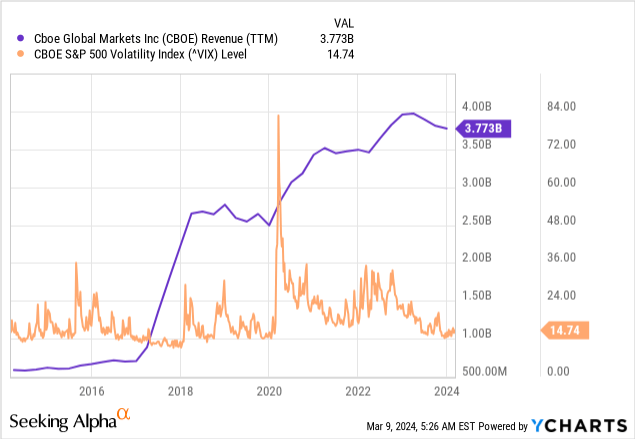
Unfortunately, we cannot backtest the Great Financial Crisis, as the company was not a public company back then.
Last month, the company reported its 4Q23 earnings, which confirmed its fantastic growth profile - especially in a market like this, where risk tolerance is seemingly higher.
In 4Q23, the company saw a 9% increase in net revenue, reaching a record $499 million.
This growth came with a 14% rise in adjusted diluted EPS to $2.06.
On a full-year basis, the company achieved even stronger results, with a 10% increase in net revenue to a record $1.9 billion and a 13% increase in adjusted earnings per share to a record $7.80.
Cboe Global Markets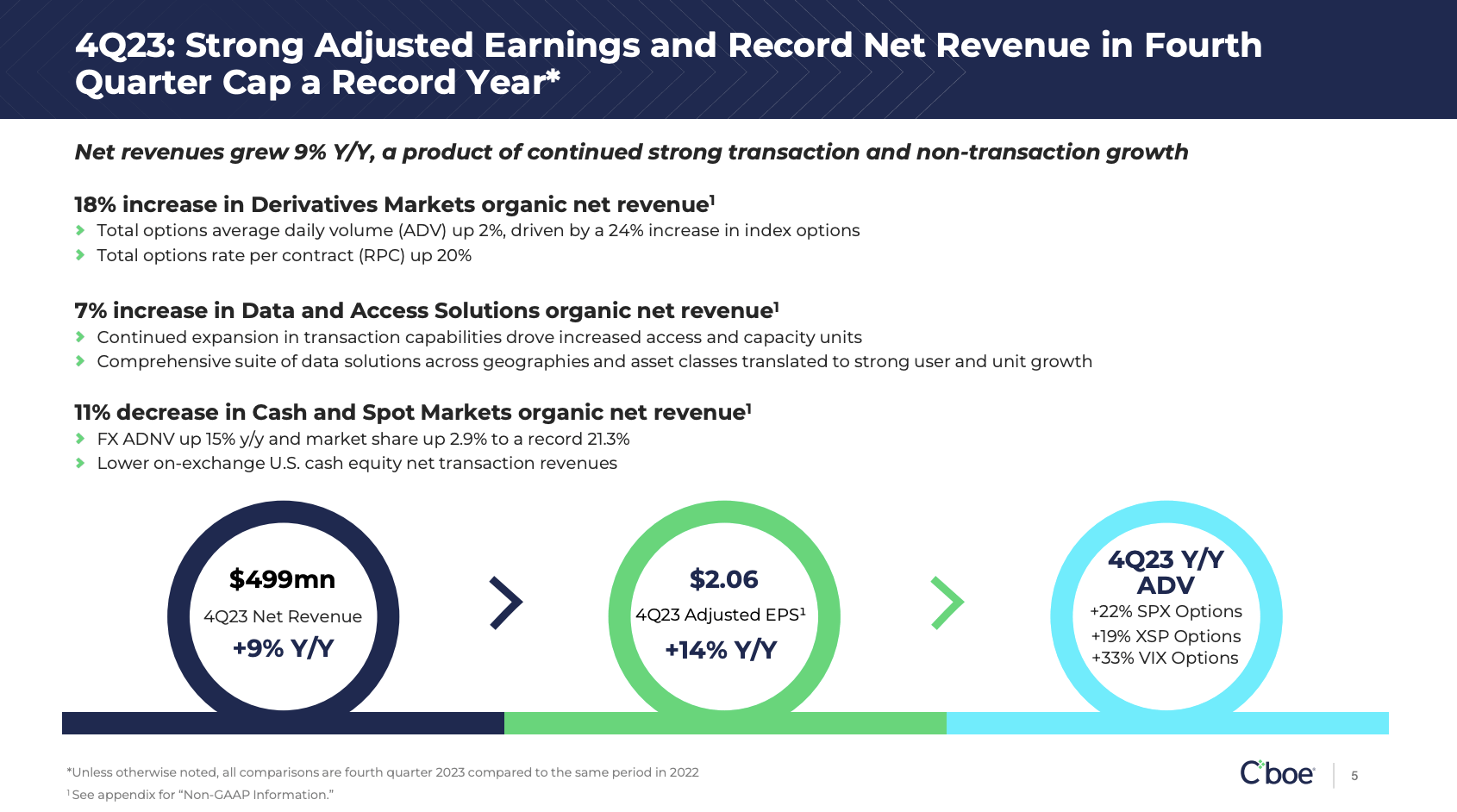
Cboe's Futures segment showed the strongest year-over-year growth rate among all segments, with net revenue increasing by 21%.
This growth was fueled by accelerated activity as volumes increased by 21% compared to the previous year. Adding to that, the rate per contract improved by 2%, which is a very important metric that displays the pricing power of a company.
Moreover, as we can see in the overview above, index options were very strong.
For example, the SPX (S&P 500 options) contract saw record volumes, rising by 22% year-over-year to 3.3 million contracts.
Moreover, the Data and Access Solutions segment continued to report strong numbers, with organic net revenue increasing by 7% during the fourth quarter.
With regard to future growth, last year, the company saw progress in strengthening its presence in cash and spot markets, particularly in the APAC region.
This was supported by successful technology improvements and the launch of the BIDS network in Australia and Japan.
BIDS is a huge deal because it disrupts the industry.
Cboe BIDS Japan is a conditional message and firm order execution platform that allows counterparties to trade large parcels of Japanese equities and ETFs without institutional investors revealing their trading intentions to the wider market. - Cboe Global Markets
In general, the company is in a good spot to grow, benefitting from technology, higher risk tolerances, disruption opportunities, and zero-margin products.
As we can see below, over the past two years, the company has consistently seen higher demand for its SPX options, regardless of the steep decline in volatility.
Cboe Global Markets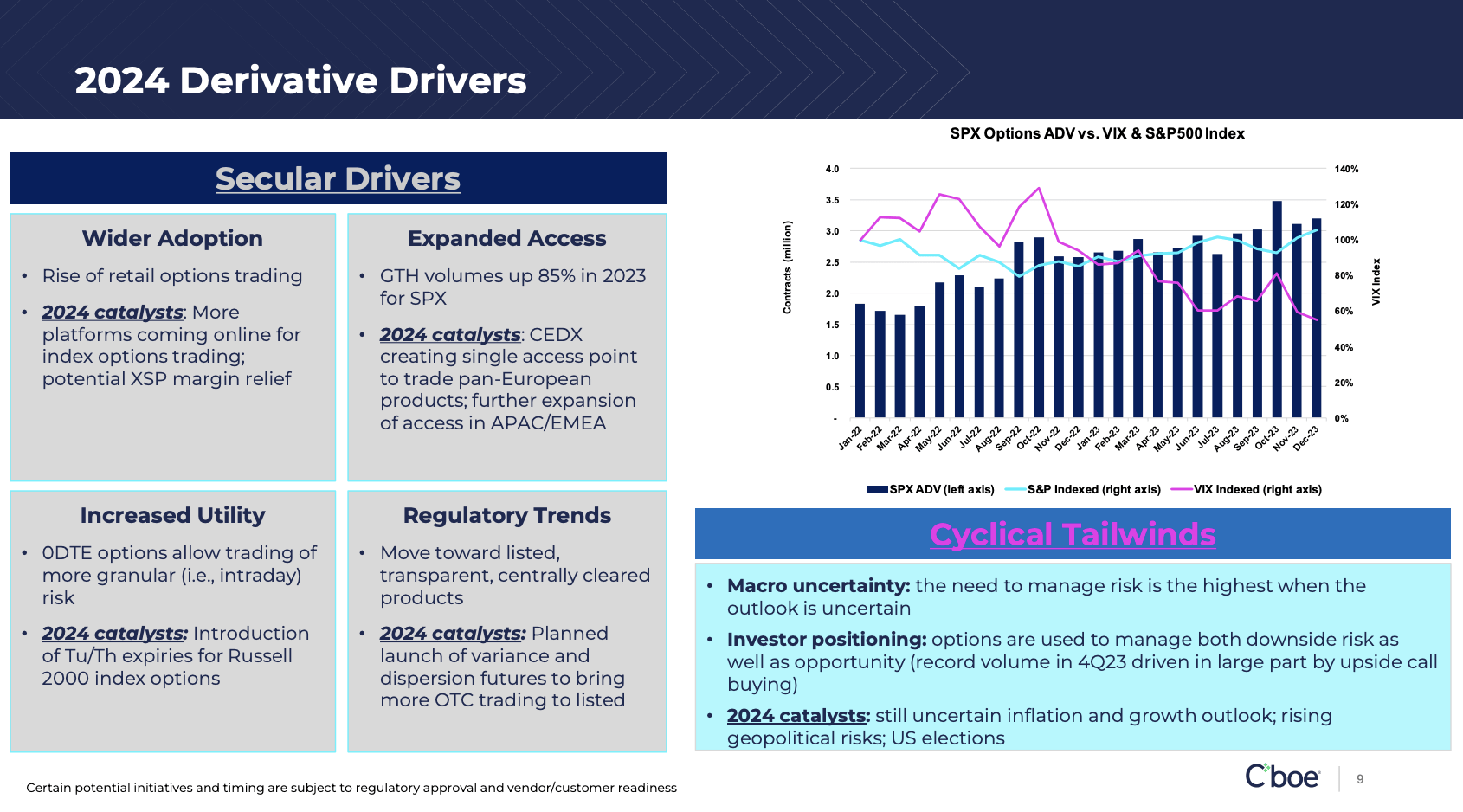
It also needs to be said that the company is expected to efficiently manage costs.
Adjusted operating expenses increased by 9% in 4Q23. This was primarily driven by higher compensation and benefits.
However, looking ahead, Cboe introduced a full-year 2024 adjusted expense guidance range of $798 to $808 million, which represents a slower pace of expense growth compared to previous years.
In general, the company expects to maintain solid organic revenue growth in 2024.
Cboe Global Markets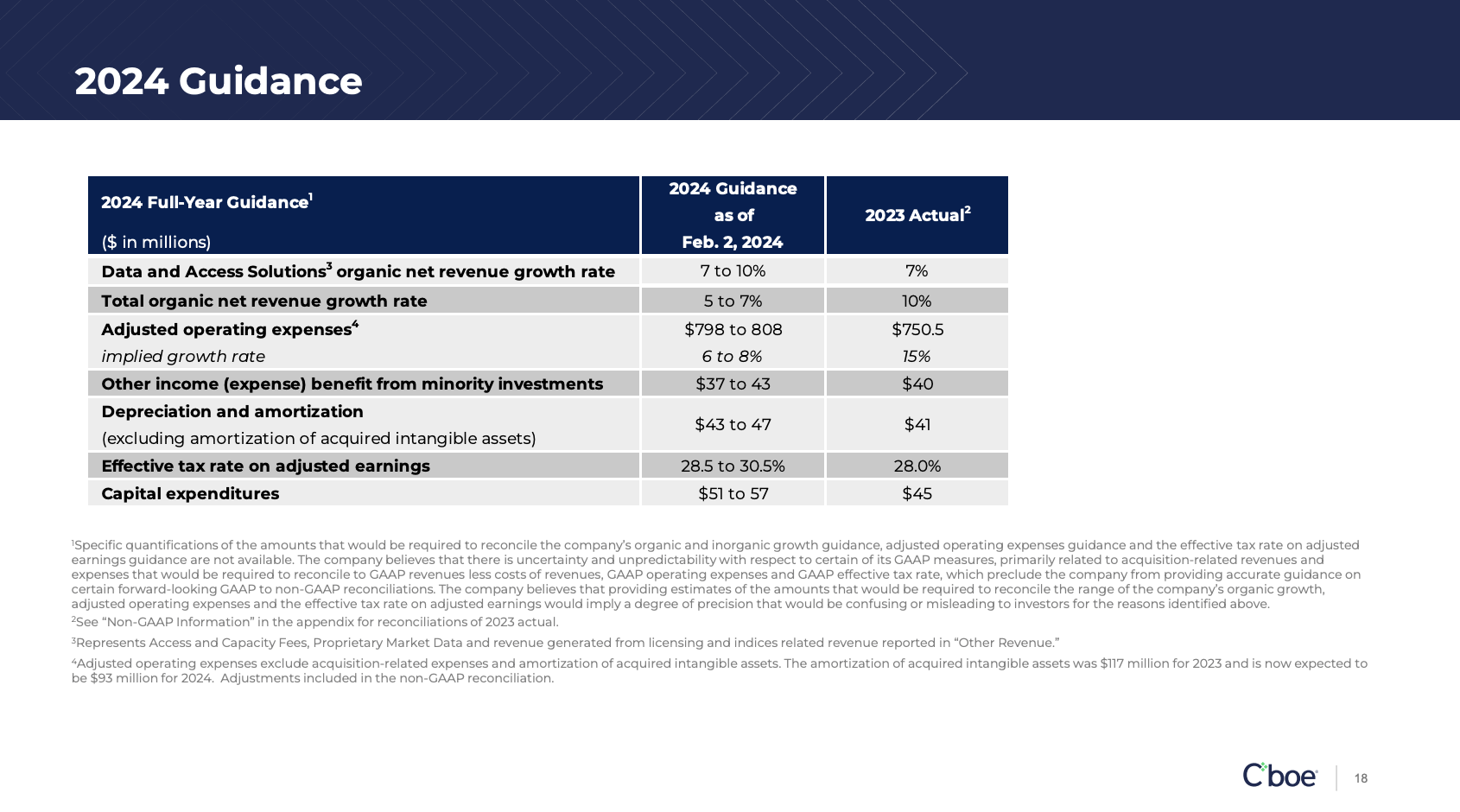
This bodes well for EPS growth, as we will discuss in a bit.
However, before we do that, I need to mention one of the most important things: dividends.
In the fourth quarter, CBOE returned close to $60 million to shareholders through dividends and buybacks. It also paid down the remaining $75 million on its term loan facility. It now has a leverage ratio of just 1.2x, which bodes well for its investors and overall financial stability.
After hiking its dividend by 10% on August 16, it currently pays $0.55 per share per quarter. That's a 1.2% yield.
While this may be a low yield, it comes with a sub-30% payout ratio, a five-year CAGR of 12.4%, and consistent growth, as the company has hiked its dividend every single year since its IPO.
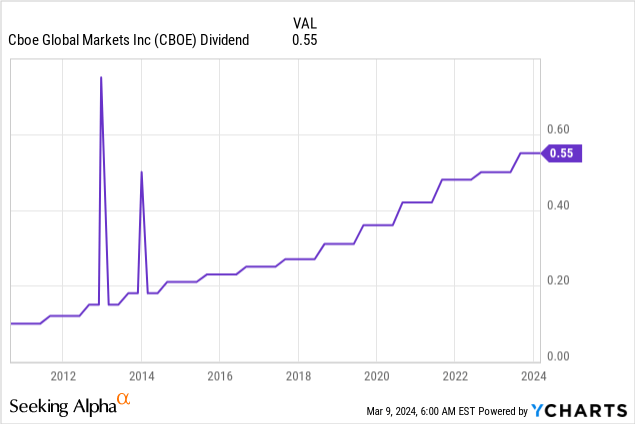
It also needs to be said that while CBOE may be wrong for income-focused investors, the low yield did not keep it from showing massive gains on a total return basis.
So, what about its valuation?
Since going public, CBOE has returned 18% per year.
Going forward, I expect that number to be lower, mainly because of its stellar stock price performance since the pandemic.
Using the data in the chart below, we see that CBOE currently trades at a blended P/E ratio of 23.6, which is slightly above its normalized multiple of 23.0x.
This year, EPS is expected to grow by 8%, followed by 6% growth in 2025 and 7% growth in the year after that.
While these numbers are subject to change, they indicate a path to 7-8% annual returns through 2026, including the 1.2% yield.
FAST Graphs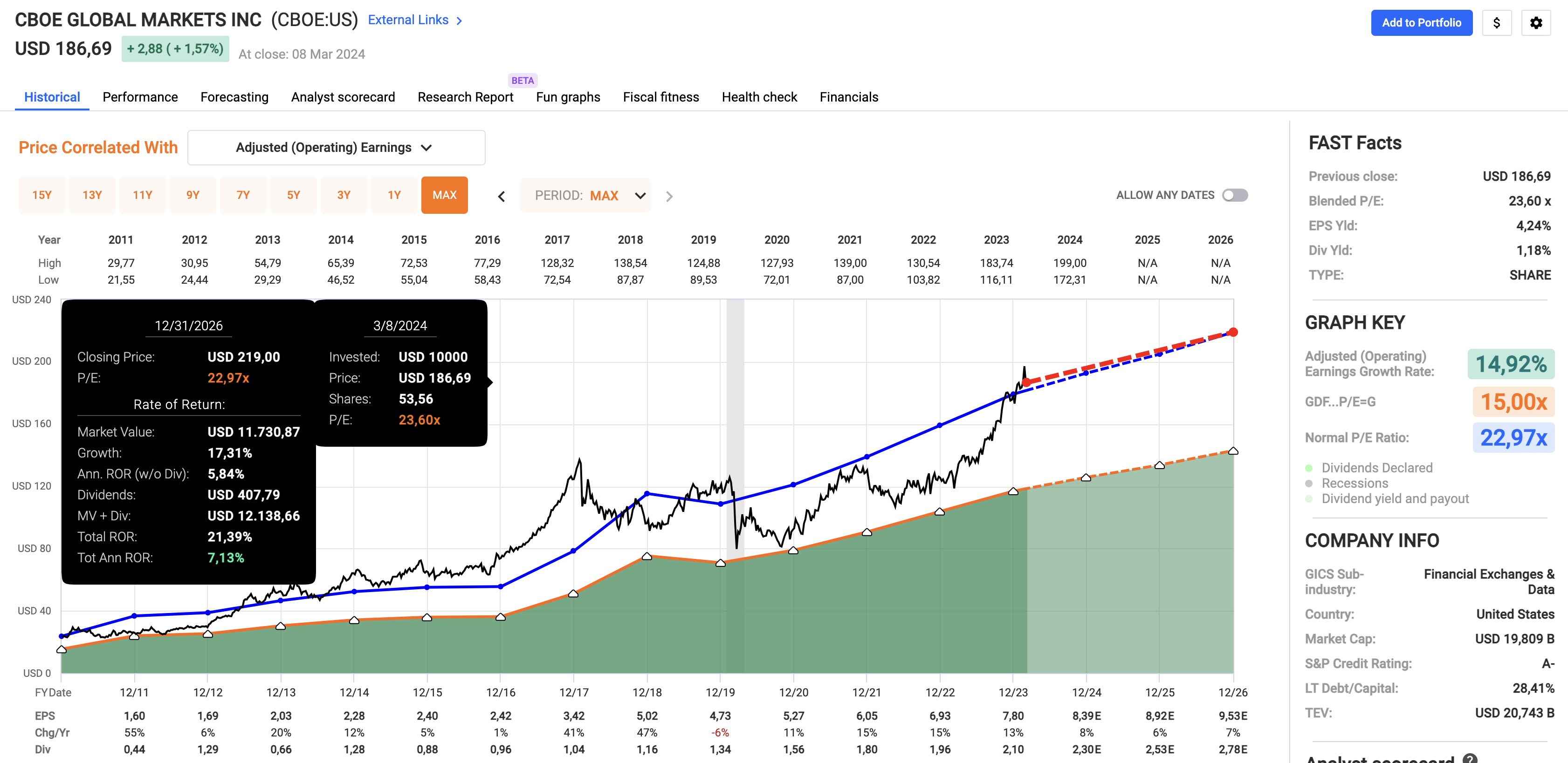
Hence, given long-term growth opportunities, I remain bullish on the stock and believe that it is 15-20% undervalued.
However, my personal opinion is that I would like to wait for the stock to come down a bit before buying.
As I believe that the market is overbought and lofty valued, I am in no rush to add stocks that do not trade in "deep value" territory.
That said, I highlighted the stock on my watchlist and will monitor it for a possible entry in the months ahead.
I have little doubt that the CBOE ticker can beat the S&P 500 on a long-term basis while growing its dividend and market share in a highly competitive industry.
Cboe Global Markets stands out as a compelling investment opportunity in the financial sector.
With a track record of impressive growth and a robust business model focused on derivatives and securities exchanges, Cboe continues to capitalize on emerging trends, such as the rise of zero-day-to-expiry options.
Despite its current valuation, which may seem slightly elevated, the company's long-term prospects remain promising, especially given its solid financial performance and commitment to shareholder returns through dividends and buybacks.
While I wait for a more favorable entry point, Cboe remains on my radar as a potential addition to my portfolio, offering the potential for strong returns and dividend growth in the years ahead.
Pros:
Cons: