
Nimito/iStock via Getty Images
Nimito/iStock via Getty Images
STOP! Stop listening to the news, stop listening to diplomatic speeches from the Federal Reserve, and stop doubting your own outlook on interest rates.
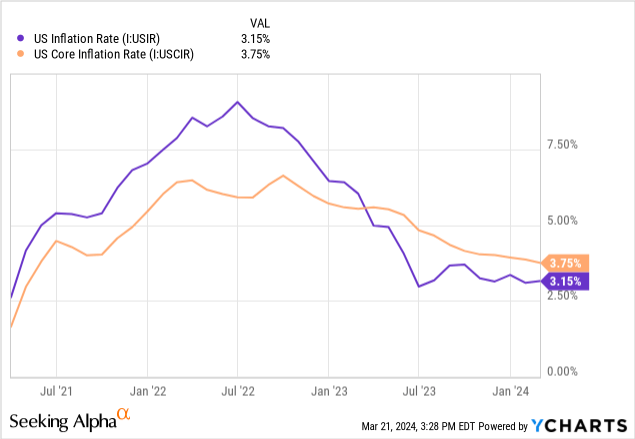
For the past year, the Fed and the media have told us that inflation is under control and that an interest rate pivot is imminent. Well, that narrative clearly hasn't aged well. In fact, we think a coin toss would've been more accurate than the Fed's forecasts.
This article focuses on future U.S. interest rates and their subsequent effect on the SPDR Bloomberg 1-3 Month T-Bill ETF (NYSEARCA:BIL). Moreover, the asset's distinctive features are assessed in detail, and its portfolio value-additivity is delineated.
Without further ado, let's traverse into today's analysis.
Before delving into the broader analysis, I wanted to ensure everyone knows what the SPDR Bloomberg 1-3 Month T-Bill ETF is.
BIL ETF tracks the Bloomberg 1-3 Month U.S. Treasury Bill Index to provide investors with access to the money market. As visible in the diagram below, BIL ETF is essentially an income pure play. This is because its short duration has infinitesimal interest rate price sensitivity.
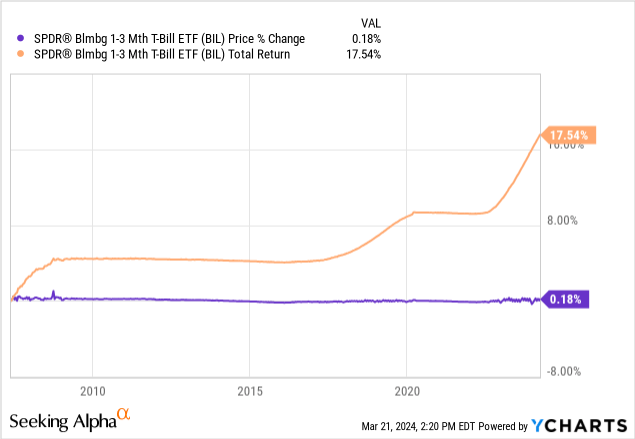
The ETF's fund managers rebalance monthly to ensure the vehicle's maturity target is maintained. Although not explicitly stated within the fund's literature, we think the managers use a mix of on-the-run and off-the-run government bonds to maintain their maturity structure.
As communicated below, BIL ETF has a low expense ratio. While most bonds are illiquid instruments, short-term sovereigns hold adequate liquidity to reduce the risks of excessive trading costs.
Seeking Alpha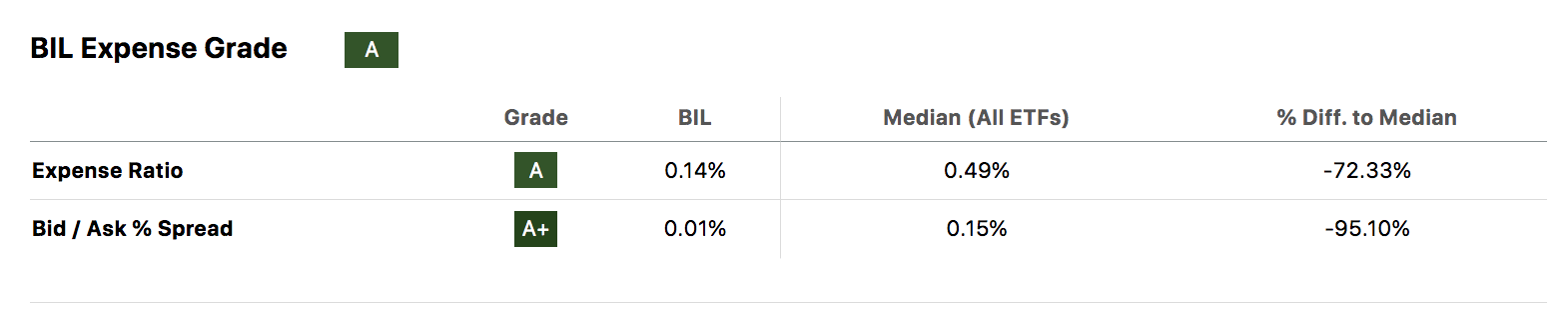
Lastly and probably most importantly, it is worth mentioning that interest rates, or, more specifically, money market rates, drive BIL ETF's dividend distributions. The ETF's trailing dividend yield is 5.1%. However, it had a yield close to zero when interest rates bottomed in early 2022.
Seeking Alpha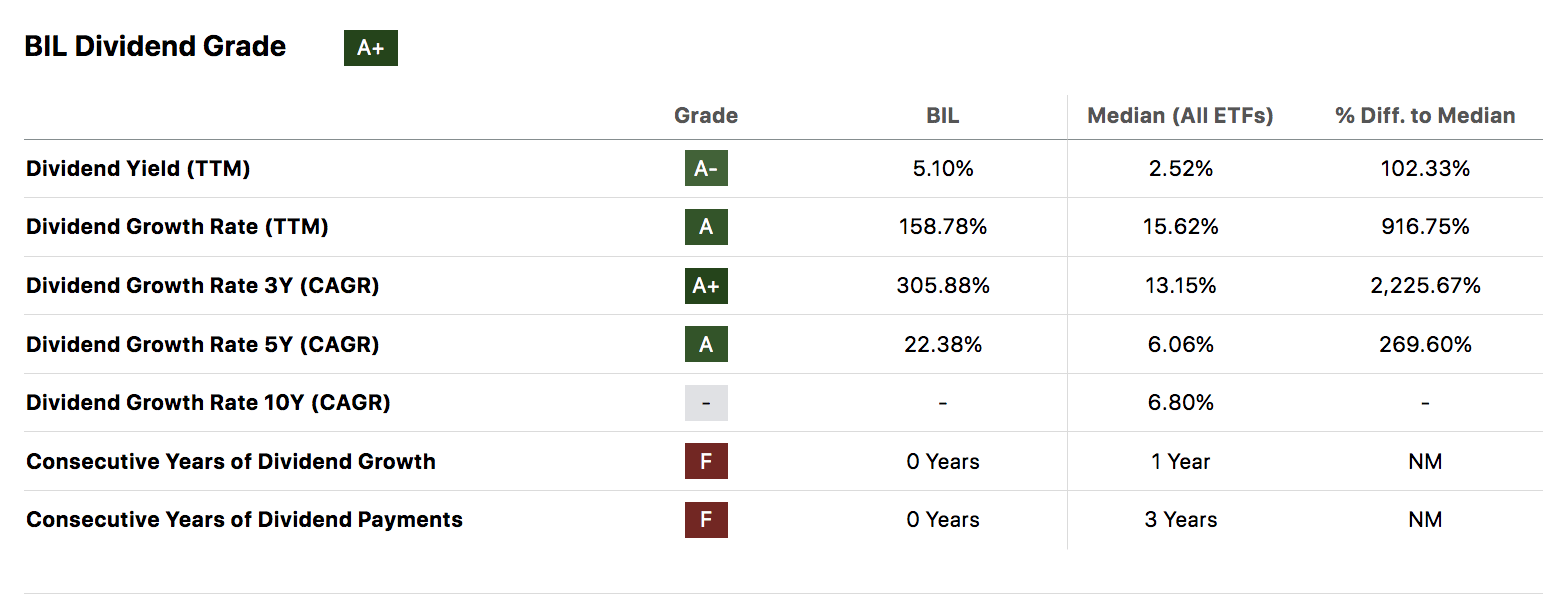
The Federal Reserve's dot plot shows that most committee members expect rates to decrease toward the latter stages of the year. I just added this in for exposition and don't want to get stuck on their views, but consider that many market participants will consider this dot plot as a baseline.
Dot Plot (Federal Reserve)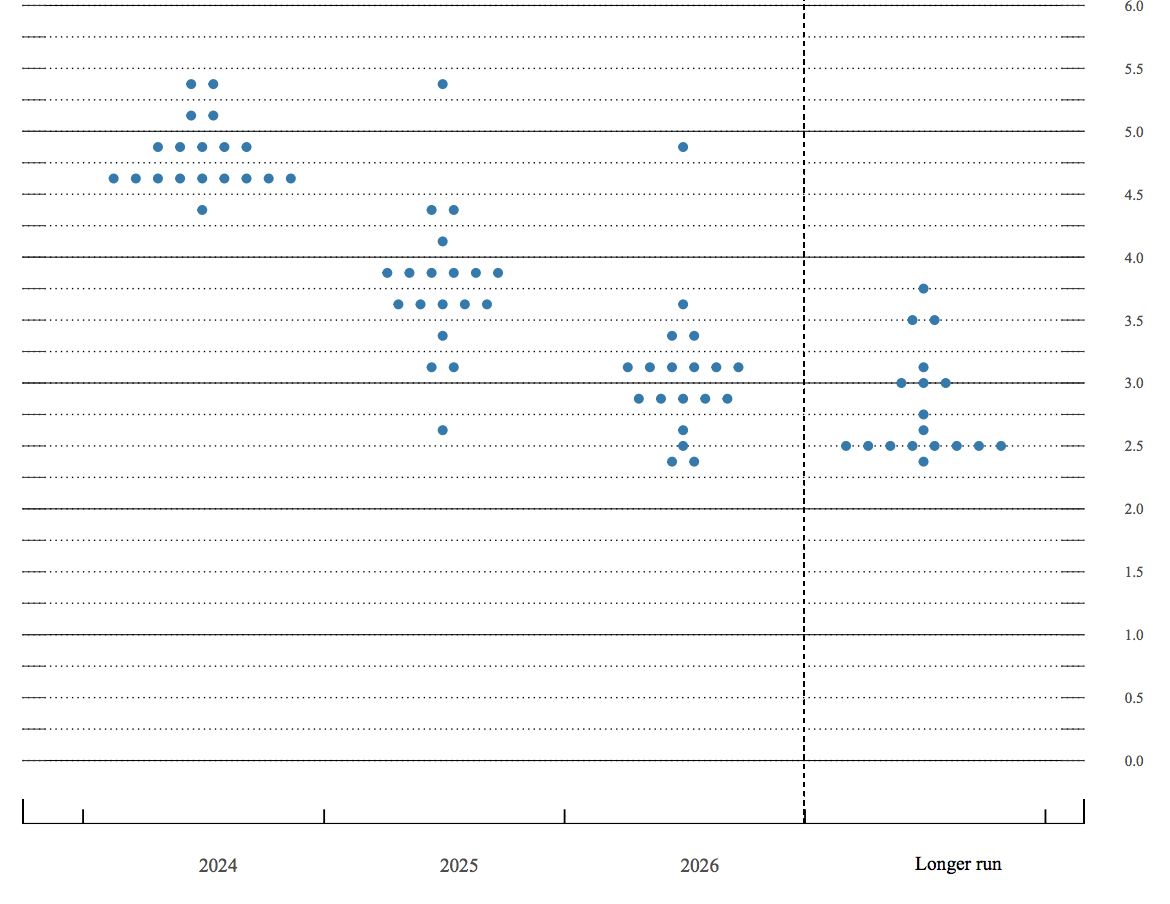
The yield curve has dropped significantly in the past six months. In fact, it is lower than a month ago despite inflation remaining resilient. The slope and the curvature of the yield curve remain largely unchanged, but we think movement will occur in due course.
U.S. Yield Curve (worldgovernmentbonds.com)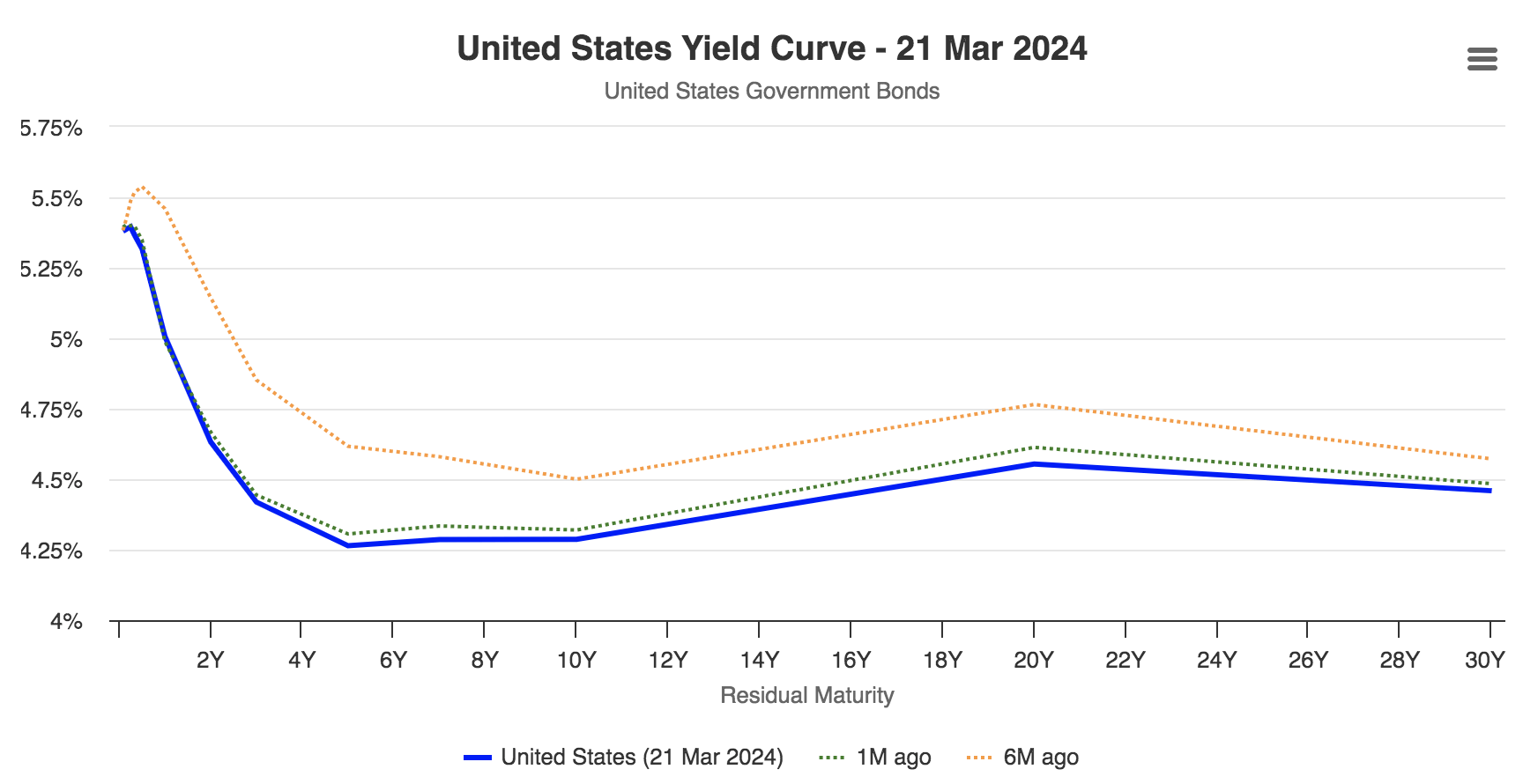
Let's examine real economic factors to see where we are heading with interest rates.
According to the Atlanta Fed's GDPNow, U.S. economic growth will slump in late 2024, driven by lower consumer spending, slower demand for private inventories, and softer residential investment. We agree with GDPNow's outlook and think a slowdown will occur in late 2024, concurrently sending money market rates and interest rates spiraling.
GDPNow (Atlanta Federal Reserve)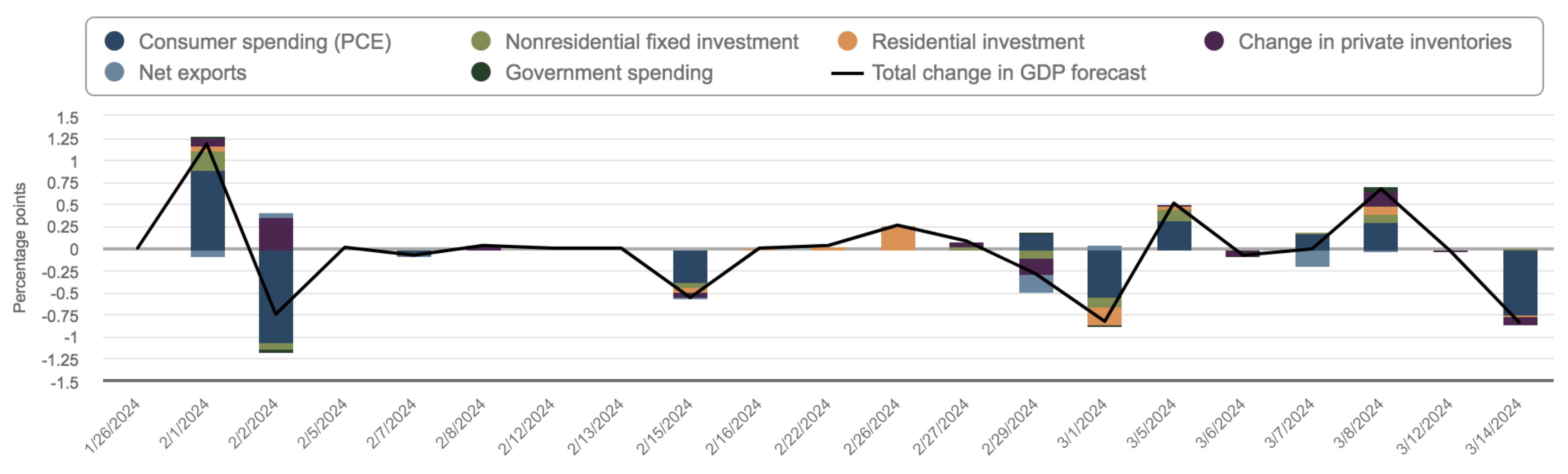
As already mentioned, we think broad-based economic growth will lead interest rates downward, but there are other economic factors worth considering as well (In addition to GDP Now).
Unemployment Rate (U.S. Federal Reserve)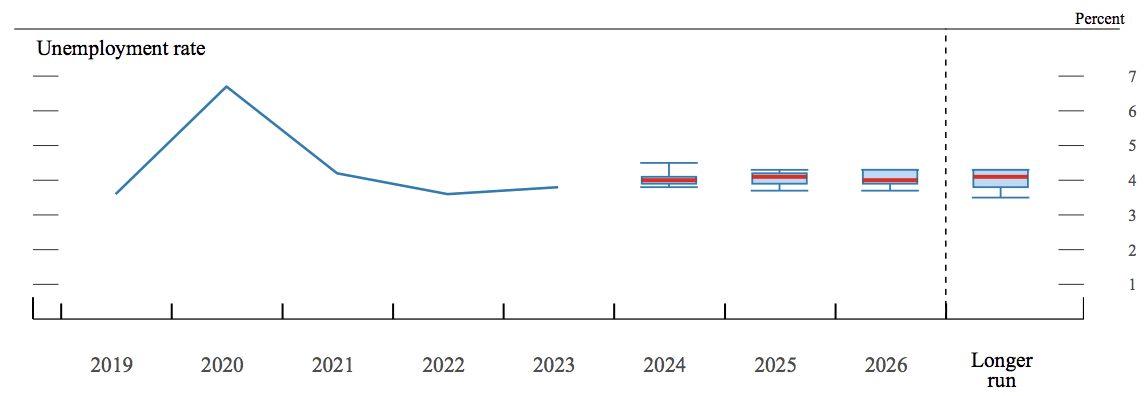
I mentioned a few factors that could contribute to a higher-for-longer interest rate environment. However, our view is that the net impact of real economic factors will lead to a slowdown in late 2024, contemporaneously suppressing money market rates.
Let's consider the economic factors mentioned in the previous section and return to discussing the yield curve and the short end in particular.
We anticipate the yield curve experiencing additional parallel drops throughout the year, which coincides with our economic outlook. In addition, we think an economic slowdown will result in a steepened yield curve, with the short end dropping dramatically. This is a common occurrence when the economy contracts (usually post-slowdown).
If our forecast holds true, BIL ETF's dividend yield will decrease. However, as pointed out earlier, certain economic factors suggest interest rates could stay higher for longer.
Adding money market funds to your portfolio ultimately depends on your circumstances. However, in isolation, we think BIL ETF's prospects could diminish soon as money market rates look set to recede in the coming months. We don't feel that BIL ETF is a hard sell, but we warn investors that its trailing dividend yield probably won't be sustained.
Consensus: Hold Rating Assigned